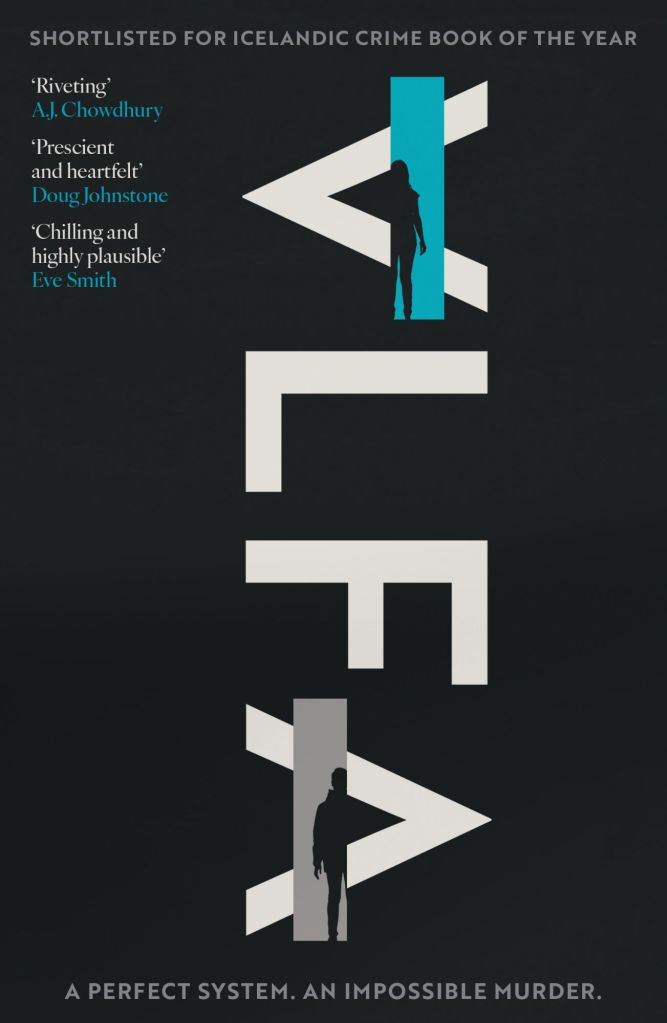
Reykjavík, 2052. Europe is peaceful, prosperous and almost crime-free, governed by Ɐlfa, the artificial intelligence that manages infrastructure, safety and daily life.
Mekkín works at the Ministry, close to the core of the system that keeps society running. She lives with her partner, Sabína, an artist. When Sabína’s brother Birkir, a committed dissident who lives beyond the reach of Ɐlfa, is found brutally murdered, that fragile sense of order begins to fracture.
Violent crime has effectively been eliminated, and Birkir’s death is not just shocking, but inexplicable. What was he involved in, and who would dare to commit murder in a world designed to prevent it?
As the investigation unfolds, Sabína is drawn ever deeper into the case. Mekkín’s position at the Ministry brings scrutiny she cannot escape, their relationship begins to fracture, and their teenage son’s recent integration into the system places him uncomfortably close to the forces now circling the family.
As Sabína pieces together Birkir’s final days, the answers begin to point far closer to home than either of them ever expected, forcing her to decide what she is prepared to sacrifice to uncover the truth…
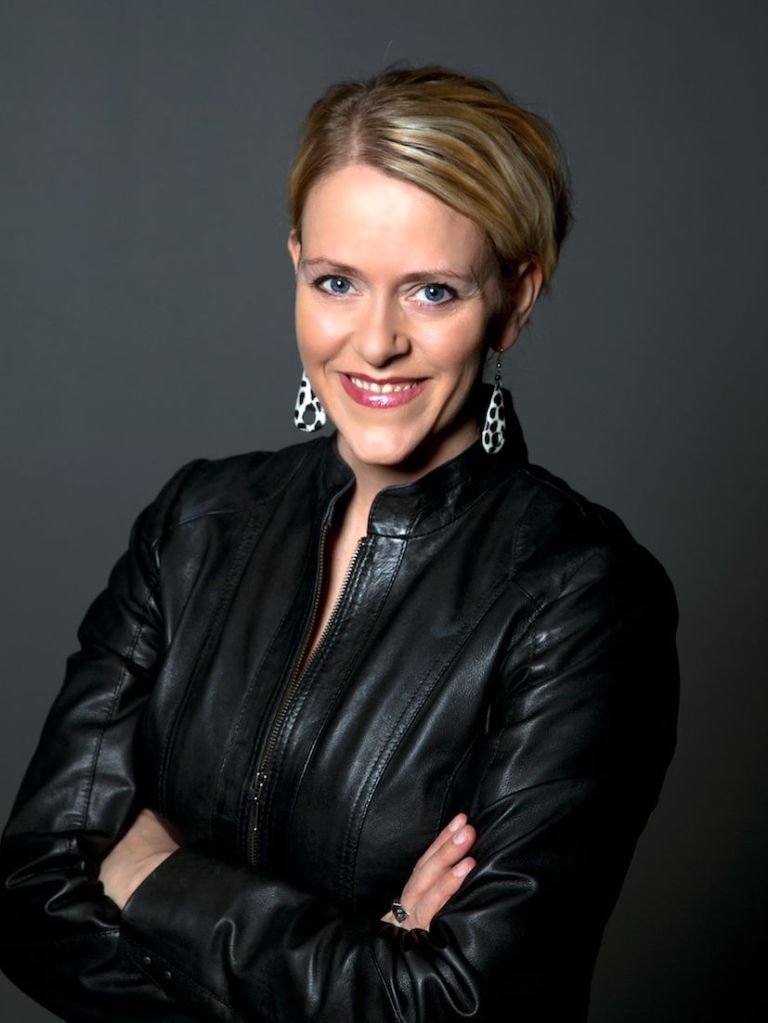
Icelandic crime-writer Lilja Sigurðardóttir was born in the town of Akranes in 1972 and raised in Mexico, Sweden, Spain and Iceland.
An award-winning playwright, Lilja has written eleven crime novels, including Snare, Trap and Cage, making up the Reykjavík Noir trilogy, and her standalone thriller Betrayal, all of which have hit bestseller lists worldwide.
Snare was longlisted for the CWA International Dagger, Cage won Best Icelandic Crime Novel of the Year and was a Guardian Book of the Year, and Betrayal was shortlisted for the prestigious Glass Key Award and won Icelandic Crime Novel of the Year.
The film rights for the Reykjavík Noir trilogy have been bought by Glassriver. Cold as Hell, the first book in the An Áróra Investigation series, was published in the UK in 2021 and was followed by Red as Blood, White as Snow, Dark as Night and Black as Death. TV rights to the series have been bought by a major studio.
Lilja lives in Reykjavík with her partner and a brood of chickens.
My thoughts: I’m very ambivalent about AI and this book doesn’t offer much reassurance. Alfa might be running Europe but it feels a lot like control and a loss of free will. At sixteen you’re chipped and then the system tells you what job you will do, not letting you decide. It monitors your health, tracks your movements. I can see why Birkir and others choose to live outside the system, we all have enough apps, bank cards and mobile phones tracking us as it is.
Birkir’s murder is shocking, in an AI controlled world there is little crime, but clearly a large police force is still needed. As with any system created by humans, it requires attention from its programmers to keep it running and feed it more data to “learn” from. When the truth about Alfa is revealed, people are angry, why should so few be allowed to make decisions for so many?
A prescient warning, as people increasingly rely on these AI systems and even their creators admit they cause harm. But also an interesting and enjoyable crime read. Ultimately human emotion is still the problem.
*I was kindly gifted a copy of this book in exchange for taking part in the blog tour, but all opinions remain my own.
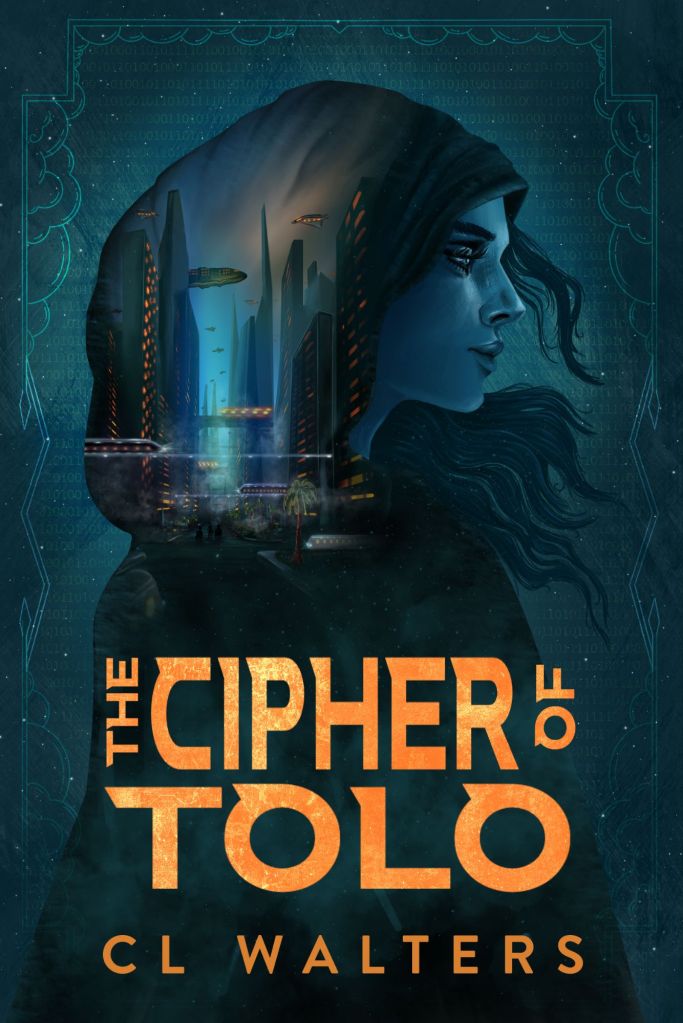
Hunger Games meets Fourth Wing meets Red Rising Found Family World building Trials/Tests The Underdog Survival Secrets & betrayal: Who to trust? Secret codes & code breaking Corrupt society Yearning High Stakes action
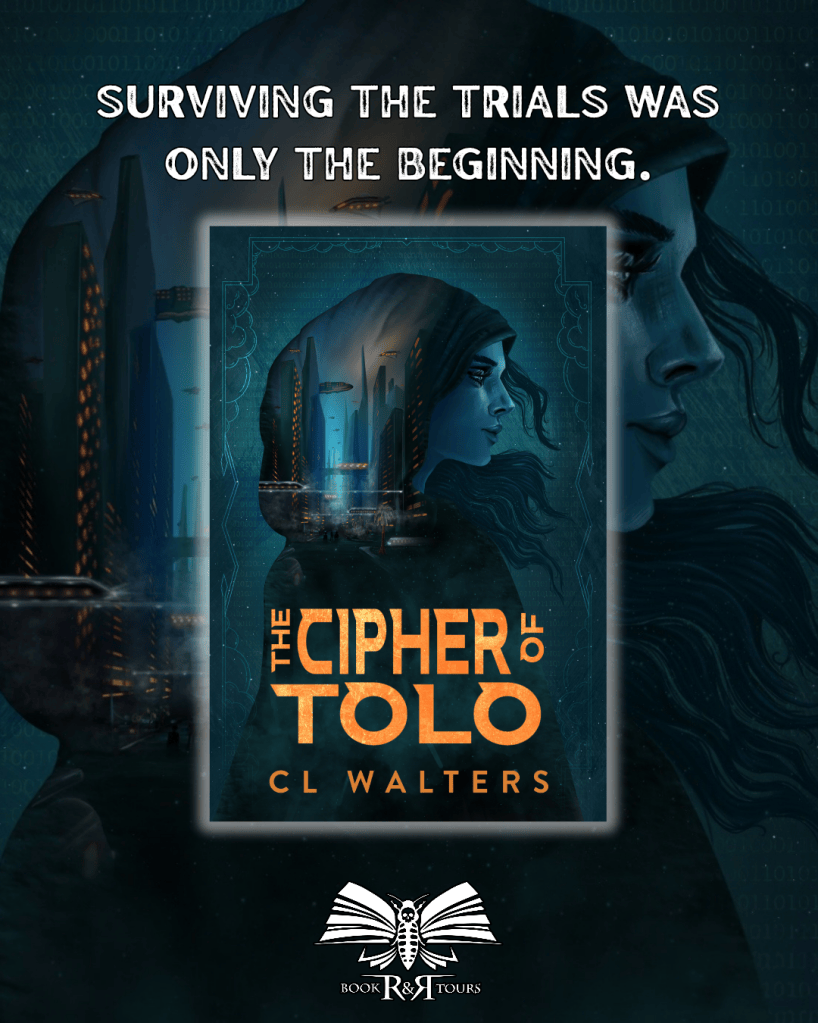
Surviving the trials was only the beginning. Having made it through her academy trials, Imogene is determined to uncover the truth about what really happened to her parents, to prove the Sol name isn’t as heinous as the galaxy believes. She’ll do anything to discover what happened, but the more she digs, she realizes she might have awoken a more dangerous enemy. Hunted by a faceless adversary, Imogene disappears into the Bellenium Galaxy, relying on the few people she trusts. Decoding the truth becomes crucial and the key to something far bigger. The Cipher of Tolo is a secret that could rewrite the Federation and this time, and survival won’t be enough.
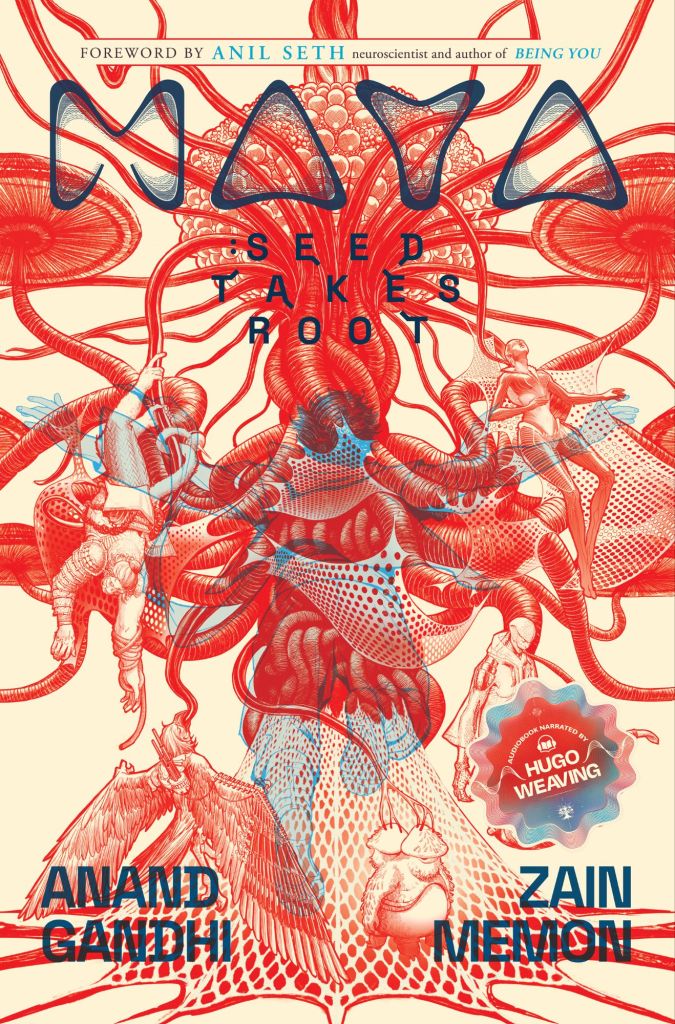
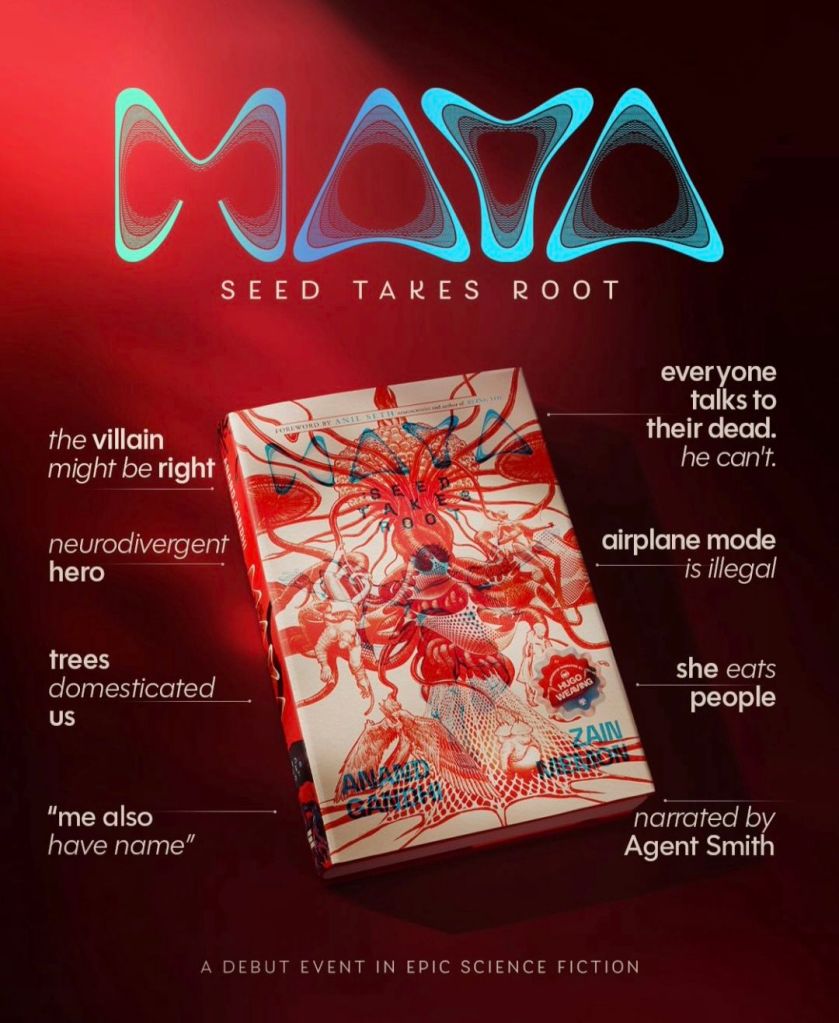
Audiobook Narrated by Hugo Weaving (The Matrix, The Lord of the Rings) South-asian mythology Caste Romantasy Biopunk Metaverse A science fiction epic about a world where the internet grows from trees. Its rulers control billions without armies; they shape desire itself. One boy never logged in.
An insect will soon go extinct. Seven years later, this will cause a civil war that kills millions.
The Divyas know this. Through their planetwide network of Maya trees, they can see all that is, and therefore, predict all that will be. They intervene invisibly. The insect will survive. The war will never happen. No one will ever know.
On Neh, seven species tether daily to Maya. The trees immerse them in play, fable, and the company of the living and the dead. The Divyas rule all of Neh without armies. Why force obedience when you can shape desire itself?
Now, the Divya Trials have been announced. Billions will compete. One will ascend to godhood. In every future predicted by the Maya network, the outcome is certain: the son of a god will win.
Kshar disagrees. He has rehearsed the scion’s assassination a hundred times in Maya’s simulations. In seventeen minutes, a single fruit will begin a cascade that ends in a riot. The plan is perfect. Every move predicted. Every breath choreographed.
Except one. Yachay. Nineteen years old. Maker of riddles. His grandfather has staked their lives on him winning the Trials. But Yachay seeks what he has been kept away from. Maya. He doesn’t know: When you gaze into Maya, Maya gazes back into you.
MAYA: Seed Takes Root is systems fiction for the age of big data, artificial intelligence, and institutionalized extraction. It asks the questions that define our time: Who controls our stories? Who profits from our data? And in an age of perfect prediction, is freedom still possible?
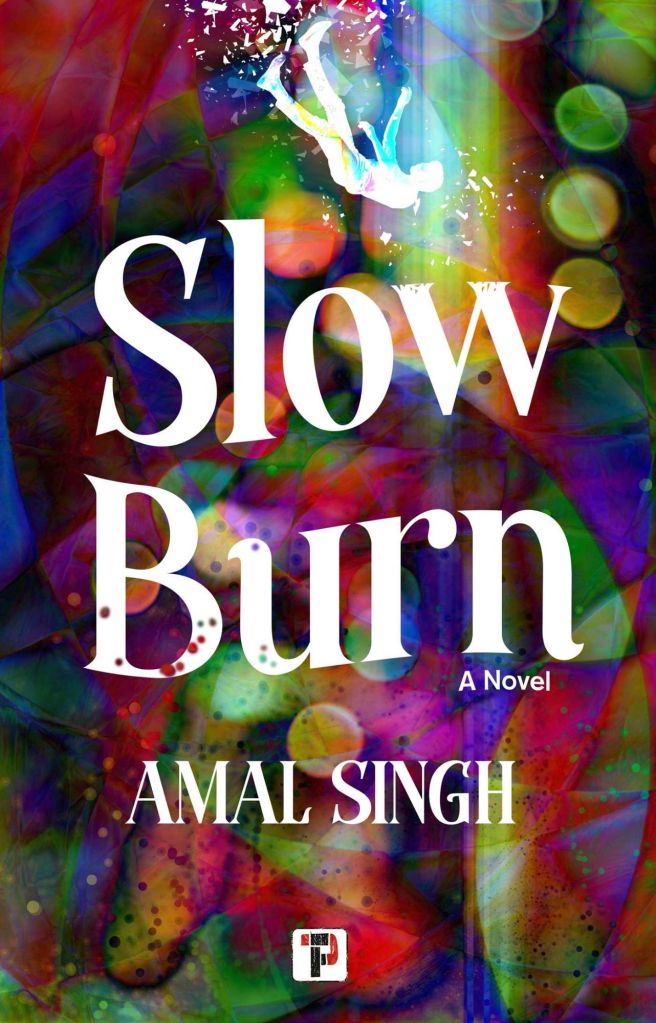
Slow Burn is published this August and available in the usual places.
Rishi Tripathi has failed as an actor. When an important audition doesn’t go as planned, rage consumes him and he punches a mirror. But instead of getting hurt, he slips right through and arrives in the Mumbai of his dreams.
In this inverted city, Rishi is a superstar, a critically acclaimed darling. Success kisses his feet, and producers flock at his doors. But success, too, comes at a cost, and behind the twinkling arc lights of showbiz is chaos and a sinister scheme.
When this dark reality catches up with him, he wants to leave this new Mumbai right away. But is Rishi truly ready to go back to the life he left? Is he ready to go back to being a failure? And will fate stand in the way of his return?
About the Author
Amal Singh is a Sturgeon Award-nominated writer of science fiction and fantasy from Mumbai, India. His short fiction has appeared in venues such as Reactor, Clarkesworld, Asimov’s and Himal Southasian, among others. His debut novel, The Garden of Delights, was on the Locus Recommended Reading List for 2024.
My thoughts: This reminded me a little of Dostoevsky’s The Double, which I read years ago as a student. The concept of the doppelganger exists in many cultures, often as a fear, something that will take you over. The appearance of your double is usually a harbinger of death or disaster.
Here, aspiring actor Rishi Tripathi slips through a mirror, much like an Indian Alice, and finds himself in a different version of Mumbai, one where he’s a huge film star Rrish Kumar, a man adored by millions but with plenty of dark secrets.
As Rishi attempts to make sense of this new world, and the man he is in it, Rrish finds himself in Rishi’s Mumbai, unknown, poor and invisible. At first he struggles but then he embraces the opportunity to reinvent himself.
Rishi, however, soon tires of the new Mumbai and the life he is living, determined to return to his “real” world, he seeks out the mirror maker himself and asks for a way home.
The book is intelligent, well written and thought-provoking, as both versions of Rishi/Rrish come to terms with their new reality, and what they can make of it. But only one of them is unhappy in the end, and when you come face to face with your double, it always ends badly.
*While I was kindly gifted a copy of this book in exchange for an honest review, all opinions remain my own.
A ship, a gun, and a nice teal robe to find one killer on a planet of criminals: will Qays Mendoza get the answers he is looking for? New novel from the bestselling author of the Coronam series.
On the edges of mankind’s domain there is a penal planet called Fresh Start where a sentence is at best exile to five generations, but more likely death in its harsh unforgiving wastes. It is to this planet the empire sends the worst of the worst and it is on this planet that Qays Mendoza searches for his old captain.
The galactic empire is falling, civilization contracts. Fresh Start is abandoned. Without oversight, the planet is wild, without guards; the Oubliette, the supermax prison on the supermax planet, lies open, and the Butcher of Raznak, a killer worse than the one Qays seeks, is on the loose.
With the help of a street waif called Patience, Qays seeks answers. His soul is stained with guilt and his spirit broken by complicity. Religion did not have the answer; duty did not explain it. Birthright and station were not enough. His answers lie somewhere on Fresh Start.
Johnny Worthen is an award-winning, multiple-genre, tie-dye-wearing author, voyager, and damn fine human being! Trained in literary criticism and cultural studies, he writes upmarket fiction, long and short, mentors others where he can and teaches at the University of Utah.
My thoughts: This was a lot of fun, I really liked Qays and Patience and their mad adventure across a penal planet gone rogue. Qays is searching for the captain of a ship he served on as a marine. Along the way there are run-ins with dangerous mad men and helpful and fairly well behaved criminals and their descendants, who help them out and even save their lives.
Qays might not be as holy as his monk’s robes suggest, but he is trying to figure things out and would rather not kill anyone, but unfortunately he has to contend with a former military captain who was sent to Fresh Start for the massacre he led.
It was a funny book, lots of humour, mostly in the relationship between Qays and Patience as they get to know one another and dodge death. I’d love a sequel that chronicles the adventures the two of them get up to as they travel the slowly disintegrating Empire and try not to get into too much trouble.
*I was kindly gifted a copy of this book in exchange for taking part in this blog tour, but all opinions remain my own.
Welcome to the tour for The Malfunction, a dystopian sci-fi by Orval Wax! Read on for more details!
The Malfunction (Deilonium Trilogy Book 1)
Release Date: February 1, 2026
Genre: Science Fiction
Robot-hunter
Technology out of control
Billionaire oligarch taking over the world
Robots becoming human through uncontrolled AI learning
Nature vs. AI
Humans playing God and destroying the world
It was only supposed to be a simple intelligence boost – a routine procedure to make the lovebot better company outside of the bedroom.
And then something went wrong.
Whether it was through mathematical probability, or divine intervention, Lance the LUV U-69 amorous companion droid has accidentally been downloaded with enough brainpower and free will to crack open the lid on a very dangerous can of worms.
Unless AWOL Retentions Agent Charlie Bear Claw can stop him.
In Book One of The Deilonium Trilogy, the primitive hunter with a troubled past stalks his high-tech prey on a secret mission. But their personal struggles soon become trivial in light of the unholy force they find undermining the fabric of the world. As the pair draws closer to their showdown, both man and robot come to realize they are ultimately at war with a common maniacal enemy.
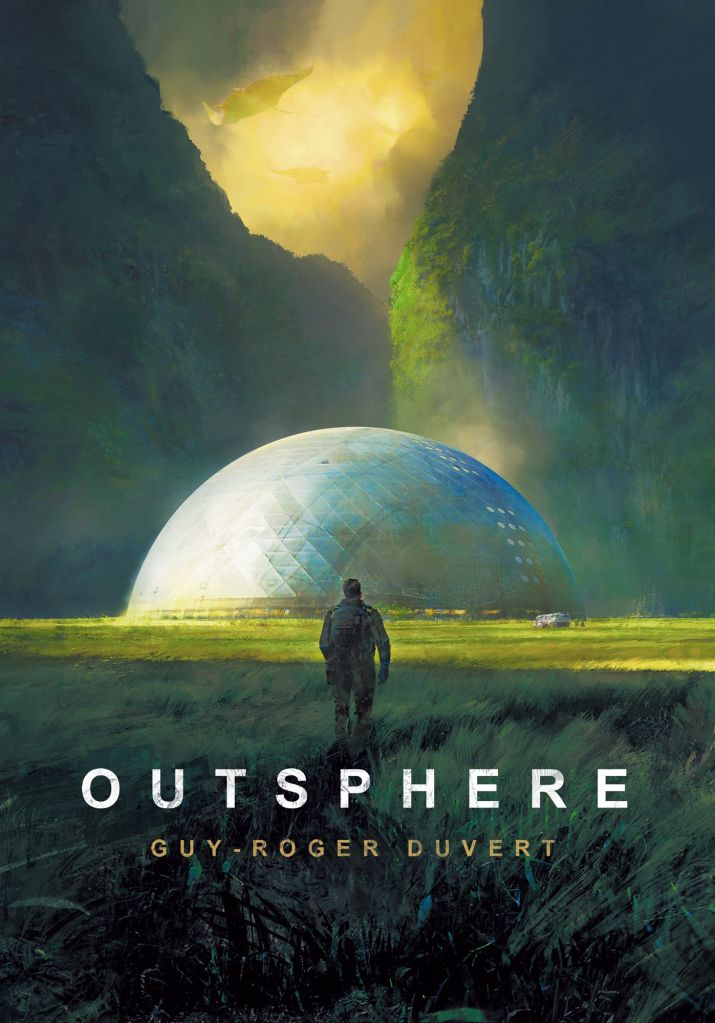
The central question behind Outsphere by Guy-Roger Duvert asks whether humanity would truly make different choices if given another opportunity to begin again. The story explores that idea through competing societies, uncertain alliances, and a world shaped by forces neither side fully understands.
Synopsis
On Eden, the first settlers attempt to build stability after crossing the stars to preserve humanity’s future. The planet was meant to offer a clean beginning, but what they discover instead is a world filled with remnants of an unknown civilization and systems left behind for reasons no one can explain.
Their fragile efforts are disrupted when a second ship arrives carrying a transformed version of humanity. More advanced and completely unified, these newcomers approach civilization in ways that challenge everything the original settlers still value. Neither side fully trusts the other, yet both are forced to share the same uncertain future.
As Eden reveals more of its hidden past, the struggle becomes larger than territory or survival. Outsphere examines the tension between individuality and control while asking what humanity might lose in the pursuit of peace, order, and a future worth inheriting.
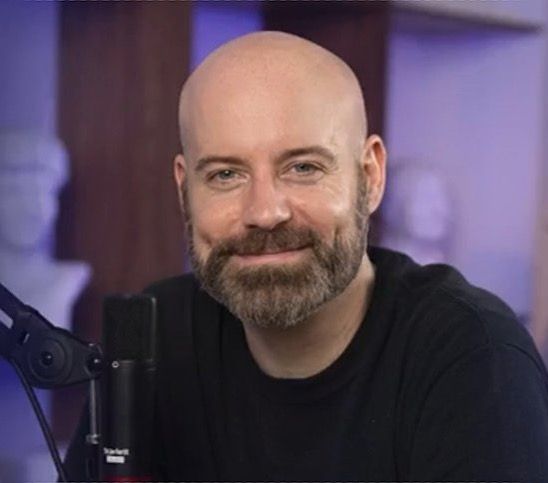
Guy-Roger Duvert is a French science fiction author, filmmaker, and composer whose work spans literature, cinema, and interactive media.
After studying political science and business, he began his career composing music for films, television, and video games before writing and directing the cyberpunk feature Virtual Revolution (released internationally as 2047: Virtual Revolution).
He made his literary debut with Outsphere, which became a bestseller in France and was later named by Audible France as one of the Top 10 Greatest Science Fiction Novels of All Time, alongside Dune, 1984, and Foundation. Duvert has since published around twenty novels, establishing himself as a prominent voice in contemporary European speculative fiction. His work is recognized for its scale, layered world-building, and exploration of power, technology, and human evolution.
He is currently based between Los Angeles and France. Follow Guy on Instagram.
Chapter 2
The corridor was narrow and short. At one end, it stopped abruptly at a bare, flat wall. At the other end, it appeared to open to emptiness, but the darkness made it impossible to judge. As in the rest of the ship, red pilot lights installed at the foot of the walls bathed the surroundings in a reddish hue. On either side of the corridor, cylinders made of metal and glass were encrusted into the walls. Some of them started to vibrate and lower, slowly. Once they were almost horizontal, lids opened in a cloud of vapor. At the same time, powerful lights, installed equidistantly in the ceiling, popped on.
The gases gradually disappeared, allowing the place to return to its previous stillness. But it did not last. Jake Bowman opened his eyes; beautiful, gray, hard eyes on a square face. Cropped hair. His muscular frame almost naked, except for plaid boxer shorts. He sat up and exited his cryogenic capsule. Once standing, it took him a moment to regain control of his senses. He thought the worst had passed, before being violently struck by a massive headache. He couldn’t suppress a grunt.
“They told us the awakening would be difficult.”
Bowman turned around to see who had spoken, and saw Tanakashi Yamakama, also getting out of his metallic coffin. Although he looked a bit fragile, he appeared to have tolerated the after effects of the awakening well, in spite of his smaller build. They were calm, having prepared for this situation. But experiencing it for the first time felt new, strange. He smiled at Bowman, as if to help him with his headache, which was already starting to vanish.
“I’ve never had a hangover like this!”
“Let’s see if Suleiman is awake.”
Tanakashi quickly reverted to protocol, which was a good sign, Bowman thought. He didn’t feel any particular affinity for the Japanese man, but he knew he was reliable, and that was more than enough for him.
Bowman took a few steps, passing before a capsule where Leo Folks was slowly emerging. Much less brawny than his companions, the pilot was his usual self: gentle, smiling, a man of few words. He merely observed his senior officer, while focusing on his own awakening.
Bowman leaned on another capsule, its occupant having more difficulty than the others in coming to his senses, most likely due to his age. Well into his fifties, Admiral Abdelrahman Suleiman was a handsome man who exuded natural authority. Normally, he was quite elegant, though wearing only boxer shorts like the others didn’t exactly flatter him.
“Admiral? How are you feeling?”
Suleiman tried to focus on Bowman, but his eyes kept fluttering. It took a few moments before he could stabilize them.
“Colonel…” he started, then hesitant, as if his memories were slowly coming together “…Bowman?”
“Yes, Sir.”
“What day is this?”
“No idea, Sir. I was just awakened.”
“Let’s check.”
Bowman was surprised; he had expected that the ship’s captain would take longer to regain full consciousness. But the man was strong.
Bowman helped him to his feet, while Folks was doing the same with another traveler, Ivan Igovitch, who smiled when he saw the Admiral.
“Happy to see you again, Admiral.”
“Colonel Igovitch.”
After a salute to his second in command, the Admiral looked at his four companions, taking stock of the situation.
“Well it looks like we’re all here.”
Tanakashi tapped buttons on one of the walls, and a small computer appeared, sliding toward him. Tanakashi tapped quickly on the keyboard, looked at the screen, before concluding: “Everything has gone according to plan, Sir. Estimated time of arrival forty-eight hours…”
The Admiral took note of the information, and headed toward the end of the corridor, followed by the others.
What’s a detail, theme, or clue in your book that most readers might miss on the first read—but you secretly hope someone notices?
The genetically engineered humans, called Atlanteans, have weird names such as S2113 or M1645. There is a logic, but in France, only a very small fraction of readers guessed it, before I actually revealed it in the second tome.
When did this story or idea “click” into place for you—was there a single moment you knew you had to write it?
It was actually a TV show concept at first, that I wrote in 2007. I wrote the novel in 2013, but no publisher got interested. I finally released it in 2019, and it became a best seller since then, with awards and recognition such as Audible France.
The ideas that started it are: (1) the idea of 2 ships leaving at two different times but arriving at the same moment, which brings the question of what defines us as mankind and how that can evolve with time, (2) I’ve seen movies and read books about Earth trying to defend itself against invaders. I found it interesting to imagine how aliens could plan to defend against us.
Which character or real-life person surprised you the most while writing this book, and why?
Saying his name would actually be a spoiler, but there is one character who is important in this first volume, but couldn’t be described as a main character, while they clearly end up being one of the saga’s main characters. I ended up liking them more than the official main characters, with time.
If your book had a soundtrack, what three songs would be on it and what scenes or moments would they pair with?
I wouldn’t put songs, but movie score tracks:
– Interstellar (Main Theme): arrival of the first spaceship, the Ark, and preparation of the colonization of the planet
– Homeworld (Turanic Battle Music): arrival of the second ship, the Utopia, and the climax during the last part of the novel.
– Assassin’s Creed 3 (An Uncertain Present): exploration of the aliens’ ruins.
What’s one belief, question, or emotional truth you hope readers carry with them long after they finish your book?
I hope readers feel the tension between hope and repetition — the idea that even when humanity gets a second chance, it may still make the same mistakes. The book asks whether survival is enough, or whether change is the real challenge.
Tell us about a moment during the writing process when the story (or message) took an unexpected turn.
The way I write, I spend a lot of time working on my structure before the writing process itself. Which means that once I start writing per se, the plot doesn’t change. Before starting the first word, I knew how volume 5 would end. The characters, however, may change partially. As said above, one of them became fascinating in a way I hadn’t expected at first.
If your protagonist could give the reader one piece of advice, what would it be?
Know your strengths but don’t forget your weaknesses. Tame them.
What real-world place, object, or memory helped shape a key element in your book?
Good question. Some Chinese landscapes, with these very pointy peaks, like in Huangshan, clearly inspired me for the general look of the planet where the novel is set.
What’s something you had to research, learn, or experience to write this book that genuinely shocked you?
Outsphere was written in 2013 and published in France in 2019. One section of the novel deals with a pandemic, and in the years that followed I was struck by how closely real-world debates around COVID-19 echoed the book’s tension between individualistic and collectivist responses to crisis.
If your book were invited to join a shelf with three other titles, which ones would make you happiest—and what would that shelf say about your story?
I’d be happiest to see Outsphere on a shelf alongside Dune, Foundation, and The Expanse.
That shelf would signal a story that blends big ideas with momentum: science fiction driven by political tension and world-building, but also by a fast pace, constant reversals, and large-scale action. Like those novels, Outsphere balances ideology and spectacle, pairing philosophical stakes with twists, conflict, and epic set pieces.
A wandering black hole is approaching Earth, and soon, everything will be gone. For husbands Don and Rodney, forty years of marriage suddenly feels like no time at all.
One last road trip. One final chance to say goodbye.
From the Sunday Times bestselling author of The House in the Cerulean Sea comes a story about what we owe the people we love when time runs out. Don and Rodney are in a race against the clock, driving from Maine to Washington State to settle unfinished business before the sky breaks.
Is it enough to burn bright, even if nothing remains of the ashes?
Along the way, they encounter a world choosing how to spend its final moments―from impromptu weddings and bright bonfires to those simply sharing a final meal. Under a kaleidoscope sky and a cracked moon, Don and Rodney must look back on a lifetime of highs and lows and ask the ultimate question: was our best good enough?
A bittersweet, life-affirming masterpiece about love, legacy, and the beauty of a life well-lived.
My thoughts: As the end of the world approaches, married couple Don and Rodney decide to carry out a promise they made to someone they both loved. They hope there’s enough time to carry out this final journey, driving from their home in Maine across the country to Washington state.
It’s not a long book, but it is a bittersweet one as Don and Rodney encounter people all trying to get through the last week before the world ends in their own ways. As they go, the two remember their long years together, some happy, some full of pain. They still have a great love and affection for one another, and there’s no one else they’d rather spend the end of the world together.
Some of the people they meet are struggling with the future, others are embracing their last few days, getting married, spending it with their loved ones (human or otherwise). It’s quite a heartwarming, life affirming book, despite the impending apocalypse.
*I was kindly gifted a copy of this book in exchange for taking part in this blog tour, but all opinions remain my own.
We don’t often get mashups like Loman Master but we’re here for it! Dystopian mafia romance? Let’s go!
Loman Master
Release Date: March 20, 2026
Genre: Sci-Fi/ Dystopian/ Mafia Romance
Touch her and die energy
Forced proximity
Morally gray MMC
Possessive/Ruthless mob boss
Strong FMC but with amnesia
One bed
Who did this to you
Hurt/comfort
Contract marriage
Forced proximity
She doesn’t know who she is.
He’s a brutal mob boss.
Joon Ren maintains perfect, sadistic control of his planet Kryo… until he buys a young woman with amnesia from militants pursuing her. He names her Ha-Yun, and she turns into the eye of a deadly storm when his people object to her presence and a mysterious rival threatens Ren’s leadership.
Stubborn and resourceful, Ha-Yun struggles to recover her memory while working as Ren’s servant. Flashbacks of harrowing experiences come to her as she navigates his hostile world. Painful memories trickling back help her rediscover herself: her precise aim with throwing knives and her comprehensive weapons knowledge. As Ren’s competitors lash out she must choose between Ren’s obsessive protection and the traumatic past she escaped.
And she must choose soon. Kryo won’t wait for her to decide, and her past is close behind her.
Welcome to the tour for newly released, COURIER by Wes Dyson! Read on for more details!
COURIER
Release Date: March 23, 2026
Genre: Sci-Fi/ Rogue AI
FMC
Artificial intelligence
Family issues
Conspiracy
Espionage
In a future where secret messages are trafficked through encoded viruses carried by infected Couriers, a dying woman discovers that her DNA hides her father’s final truth—a secret powerful enough to destroy a rogue AI’s hold on humanity, if she can outrun her past and live long enough to deliver it.