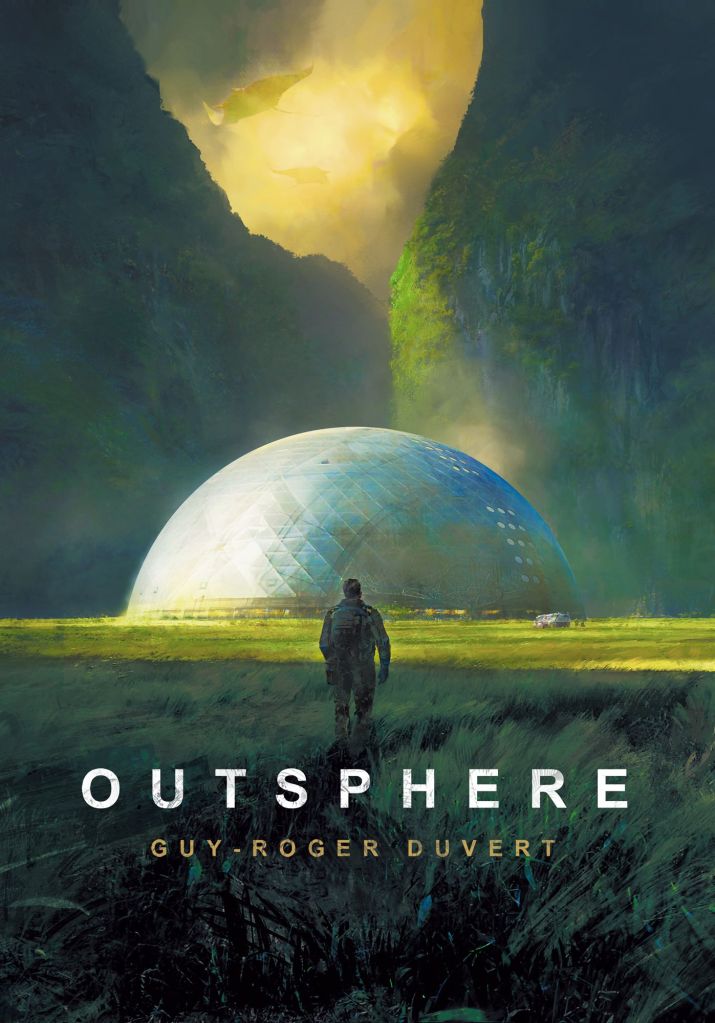
The central question behind Outsphere by Guy-Roger Duvert asks whether humanity would truly make different choices if given another opportunity to begin again. The story explores that idea through competing societies, uncertain alliances, and a world shaped by forces neither side fully understands.
Synopsis
On Eden, the first settlers attempt to build stability after crossing the stars to preserve humanity’s future. The planet was meant to offer a clean beginning, but what they discover instead is a world filled with remnants of an unknown civilization and systems left behind for reasons no one can explain.
Their fragile efforts are disrupted when a second ship arrives carrying a transformed version of humanity. More advanced and completely unified, these newcomers approach civilization in ways that challenge everything the original settlers still value. Neither side fully trusts the other, yet both are forced to share the same uncertain future.
As Eden reveals more of its hidden past, the struggle becomes larger than territory or survival. Outsphere examines the tension between individuality and control while asking what humanity might lose in the pursuit of peace, order, and a future worth inheriting.
About the author:
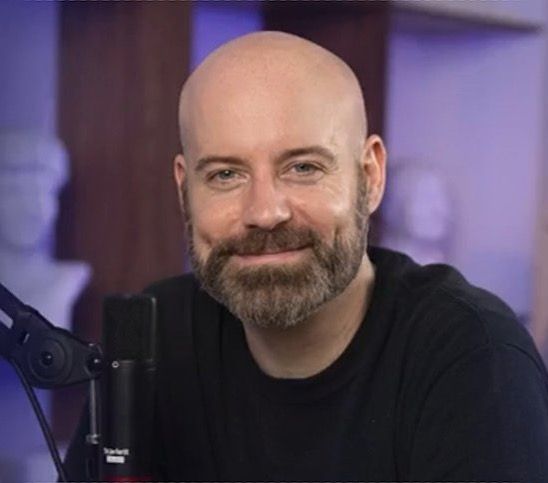
Guy-Roger Duvert is a French science fiction author, filmmaker, and composer whose work spans literature, cinema, and interactive media.
After studying political science and business, he began his career composing music for films, television, and video games before writing and directing the cyberpunk feature Virtual Revolution (released internationally as 2047: Virtual Revolution).
He made his literary debut with Outsphere, which became a bestseller in France and was later named by Audible France as one of the Top 10 Greatest Science Fiction Novels of All Time, alongside Dune, 1984, and Foundation.
Duvert has since published around twenty novels, establishing himself as a prominent voice in contemporary European speculative fiction. His work is recognized for its scale, layered world-building, and exploration of power, technology, and human evolution.
He is currently based between Los Angeles and France. Follow Guy on Instagram.
Chapter 2
The corridor was narrow and short. At one end, it stopped abruptly at a bare, flat wall. At the other end, it appeared to open to emptiness, but the darkness made it impossible to judge. As in the rest of the ship, red pilot lights installed at the foot of the walls bathed the surroundings in a reddish hue. On either side of the corridor, cylinders made of metal and glass were encrusted into the walls. Some of them started to vibrate and lower, slowly. Once they were almost horizontal, lids opened in a cloud of vapor. At the same time, powerful lights, installed equidistantly in the ceiling, popped on.
The gases gradually disappeared, allowing the place to return to its previous stillness. But it did not last. Jake Bowman opened his eyes; beautiful, gray, hard eyes on a square face. Cropped hair. His muscular frame almost naked, except for plaid boxer shorts. He sat up and exited his cryogenic capsule. Once standing, it took him a moment to regain control of his senses. He thought the worst had passed, before being violently struck by a massive headache. He couldn’t suppress a grunt.
“They told us the awakening would be difficult.”
Bowman turned around to see who had spoken, and saw Tanakashi Yamakama, also getting out of his metallic coffin. Although he looked a bit fragile, he appeared to have tolerated the after effects of the awakening well, in spite of his smaller build. They were calm, having prepared for this situation. But experiencing it for the first time felt new, strange. He smiled at Bowman, as if to help him with his headache, which was already starting to vanish.
“I’ve never had a hangover like this!”
“Let’s see if Suleiman is awake.”
Tanakashi quickly reverted to protocol, which was a good sign, Bowman thought. He didn’t feel any particular affinity for the Japanese man, but he knew he was reliable, and that was more than enough for him.
Bowman took a few steps, passing before a capsule where Leo Folks was slowly emerging. Much less brawny than his companions, the pilot was his usual self: gentle, smiling, a man of few words. He merely observed his senior officer, while focusing on his own awakening.
Bowman leaned on another capsule, its occupant having more difficulty than the others in coming to his senses, most likely due to his age. Well into his fifties, Admiral Abdelrahman Suleiman was a handsome man who exuded natural authority. Normally, he was quite elegant, though wearing only boxer shorts like the others didn’t exactly flatter him.
“Admiral? How are you feeling?”
Suleiman tried to focus on Bowman, but his eyes kept fluttering. It took a few moments before he could stabilize them.
“Colonel…” he started, then hesitant, as if his memories were slowly coming together “…Bowman?”
“Yes, Sir.”
“What day is this?”
“No idea, Sir. I was just awakened.”
“Let’s check.”
Bowman was surprised; he had expected that the ship’s captain would take longer to regain full consciousness. But the man was strong.
Bowman helped him to his feet, while Folks was doing the same with another traveler, Ivan Igovitch, who smiled when he saw the Admiral.
“Happy to see you again, Admiral.”
“Colonel Igovitch.”
After a salute to his second in command, the Admiral looked at his four companions, taking stock of the situation.
“Well it looks like we’re all here.”
Tanakashi tapped buttons on one of the walls, and a small computer appeared, sliding toward him. Tanakashi tapped quickly on the keyboard, looked at the screen, before concluding: “Everything has gone according to plan, Sir. Estimated time of arrival forty-eight hours…”
The Admiral took note of the information, and headed toward the end of the corridor, followed by the others.
What’s a detail, theme, or clue in your book that most readers might miss on the first read—but you secretly hope someone notices?
The genetically engineered humans, called Atlanteans, have weird names such as S2113 or M1645. There is a logic, but in France, only a very small fraction of readers guessed it, before I actually revealed it in the second tome.
When did this story or idea “click” into place for you—was there a single moment you knew you had to write it?
It was actually a TV show concept at first, that I wrote in 2007. I wrote the novel in 2013, but no publisher got interested. I finally released it in 2019, and it became a best seller since then, with awards and recognition such as Audible France.
The ideas that started it are: (1) the idea of 2 ships leaving at two different times but arriving at the same moment, which brings the question of what defines us as mankind and how that can evolve with time, (2) I’ve seen movies and read books about Earth trying to defend itself against invaders. I found it interesting to imagine how aliens could plan to defend against us.
Which character or real-life person surprised you the most while writing this book, and why?
Saying his name would actually be a spoiler, but there is one character who is important in this first volume, but couldn’t be described as a main character, while they clearly end up being one of the saga’s main characters. I ended up liking them more than the official main characters, with time.
If your book had a soundtrack, what three songs would be on it and what scenes or moments would they pair with?
I wouldn’t put songs, but movie score tracks:
– Interstellar (Main Theme): arrival of the first spaceship, the Ark, and preparation of the colonization of the planet
– Homeworld (Turanic Battle Music): arrival of the second ship, the Utopia, and the climax during the last part of the novel.
– Assassin’s Creed 3 (An Uncertain Present): exploration of the aliens’ ruins.
What’s one belief, question, or emotional truth you hope readers carry with them long after they finish your book?
I hope readers feel the tension between hope and repetition — the idea that even when humanity gets a second chance, it may still make the same mistakes. The book asks whether survival is enough, or whether change is the real challenge.
Tell us about a moment during the writing process when the story (or message) took an unexpected turn.
The way I write, I spend a lot of time working on my structure before the writing process itself. Which means that once I start writing per se, the plot doesn’t change. Before starting the first word, I knew how volume 5 would end. The characters, however, may change partially. As said above, one of them became fascinating in a way I hadn’t expected at first.
If your protagonist could give the reader one piece of advice, what would it be?
Know your strengths but don’t forget your weaknesses. Tame them.
What real-world place, object, or memory helped shape a key element in your book?
Good question. Some Chinese landscapes, with these very pointy peaks, like in Huangshan, clearly inspired me for the general look of the planet where the novel is set.
What’s something you had to research, learn, or experience to write this book that genuinely shocked you?
Outsphere was written in 2013 and published in France in 2019. One section of the novel deals with a pandemic, and in the years that followed I was struck by how closely real-world debates around COVID-19 echoed the book’s tension between individualistic and collectivist responses to crisis.
If your book were invited to join a shelf with three other titles, which ones would make you happiest—and what would that shelf say about your story?
I’d be happiest to see Outsphere on a shelf alongside Dune, Foundation, and The Expanse.
That shelf would signal a story that blends big ideas with momentum: science fiction driven by political tension and world-building, but also by a fast pace, constant reversals, and large-scale action. Like those novels, Outsphere balances ideology and spectacle, pairing philosophical stakes with twists, conflict, and epic set pieces.