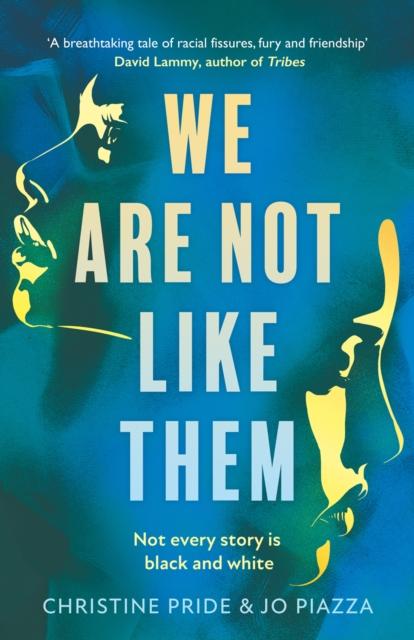
Three women. Three different stages of life. United by one thing: the chance to start again.
‘Uplifting, emotional and brimming with warmth and humour’ – Cathy Bramley
When Elizabeth’s husband dies, leaving her with crippling debt, the only person she can turn to is her friend, Jo. Soon Jo has called in her daughter, Lucy, to help save Elizabeth from bankruptcy. Leaving her old life behind, Lucy is determined to make the most of her fresh start. As life slowly begins to return to normal, these three women, thrown together by circumstance, become fast friends. But then Jo’s world is turned upside down when she receives some shocking news. In search of solace, Jo and Elizabeth find themselves enjoying midnight dips in the freezing Irish Sea. Here they can laugh, cry and wash away all their fears. As well as conjure a fundraising plan for the local hospice that will bring the whole community together…
From bestselling Irish writer Faith Hogan, The Ladies’ Midnight Swimming Club is an emotional story about finding new friends and living life to the fullest, that will appeal to fans of Sheila O’Flanagan, Heidi Swain and Liz Fenwick.
Faith Hogan is an Irish award-winning and bestselling author of five contemporary fiction novels. Her books have featured as Book Club Favorites, Net Galley Hot Reads and Summer Must Reads. She writes grown up women’s fiction which is unashamedly uplifting, feel good and inspiring. She is currently working on her next novel. She lives in the west of Ireland with her husband, four children and a very busy Labrador named Penny. She’s a writer, reader, enthusiastic dog walker and reluctant jogger – except of course when it is raining!
My thoughts: this was a lovely, heartwarming story of family and friendship. Do have the tissues handy as there is a weepy bit.
Set in a small village in Western Ireland, the story revolves around the recently widowed Elizabeth and her friend Jo, the founder of the Ladies’ Midnight Swimming Club. As Elizabeth adjusts to her new life, Jo’s daughter and grandson move to the village, looking to make a change.
I loved the characters, Elizabeth experiences a late blossoming after her husband dies and finds a new purpose, Jo is a delight, always full of joy. Lucy, Jo’s daughter, is a great addition to their gang and the other characters, Dan and Niall, are always interesting.
The story is sweet and enjoyable, the women’s friendships, Niall’s coming out of his shell and Dan’s journey are all tender and touching.
*I was kindly gifted a copy of this book in exchange for taking part in the blog tour but all opinions remain my own.
Today author Paul Maunder has kindly written about his experience writing new book The Atomics and I’ve been lucky enough to have read it (Thank you Lightning Books for my copy). My review follows after Paul’s essay. Enjoy!
A GOTHIC STORY OF MADNESS, REVENGE AND URANIUM-235 Midsummer, 1968. When Frank Banner and his wife Gail move to the Suffolk coast to work at a newly built nuclear power station, they are hoping to leave violence and pain behind them. Gail wants a baby but Frank is only concerned with spending time in the gleaming reactor core of the Seton One power station. Their new neighbours are also ‘Atomics’ – part of the power station community. But Frank takes a dislike to the boorish, predatory Maynard. And when the other man begins to pursue a young woman who works in the power station’s medical centre, Frank decides to intervene. As the sun beats relentlessly upon this bleak landscape, his demons return. A vicious and merciless voice tells him he has an obligation to protect the young woman and Frank knows just how to do it. Radiation will make him stronger, radiation will turn him into a hero…
A Productive Mid-Life Crisis
My winding path to publishing The Atomics
Paul Maunder
When I started writing fiction in my early twenties, I had no idea what I was doing. I’m sure many fiction writers will recognise that feeling, but my ignorance ran especially deep. Throughout my teenage years I was engaged in, obsessed by, cycle racing. My dream was to win the Tour de France not the Man Booker Prize. I read nothing but cycling magazines. But cycle racing is a cruel sport; I discovered the sizeable gap between my ambition and my ability, and at eighteen, tempted by the opportunity to reinvent myself at university, I gave up the lycra.
At university I studied politics. Literature was only a very faint beep on the edge of my radar screen. I still wasn’t reading novels (I was barely reading the politics books required for my course), yet in the third year, when allowed to choose a course from another department, I went for an English Literature course about the American city. Perhaps that was the first glimmer of an interest in books, though I was too busy organising raves and other nefarious pursuits to really think about it.
The crucial moment came in the summer after leaving university. A friend lent me his copy of American Psycho by Bret Easton Ellis. I read it quickly and was absorbed, appalled, exhilarated. It was not the sex and violence that attracted me but the idea of what a novel could be. It was so different to my preconception of what constituted ‘literature’. Immediately I thought, I can do that. And I started doing just that.
It only took a few days for me to realise that I could not do anything remotely like that. But by then the addiction had taken hold. I was a writer. I knew that with absolute certainty.
Over the following two decades I wrote five novels, plus a couple of false starts. I enrolled on the MA in Creative Writing at Royal Holloway, where I studied with Andrew Motion. I consumed books on the craft of writing and ploughed my way through dozens of novels. My ignorance about literature had allowed me to start writing without the sense of inadequacy that cripples many aspiring writers who know what a good book is. I saw this happening in my MA classes – the older, more experienced readers in the group would produce ten pages of prose but condemn their own work because it didn’t live up to their idea of what they should be producing. I had no benchmarks so I arrogantly thought that everything I produced was top-notch.
I inched towards publication. Each novel I wrote was better than the last. I could always turn out a few pages of half-decent prose, but my downfall lay in bigger, structural issues. Plot, or lack thereof. Story, ditto. Characters that didn’t live and breathe. I submitted to literary agents and endured the slow drip of rejection letters.
In the year that I turned forty I signed with a fantastic literary agent, one of those big names in the industry who commands respect from publishers. I had a novel set in the Second World War that felt ready, and a couple of editors were interested. I felt certain this was the moment I would drag myself across the line (I still had the arrogance of self-belief). The editors passed. My agent encouraged me to redraft the book, and I got lost in a maze of rewriting that I didn’t really understand or believe in. I lost sight of what the book was about. By the eighteenth draft I was left with a big mess.
I gave up. Switched to journalism and non-fiction. Published two books – with relative ease – about cycling. This was my mid-life crisis, more sedate and productive than buying a sports car or having an affair. Writing non-fiction required me to pull together a lot of information then build a story out of it that would, hopefully, engage the reader and keep them turning the pages. That transformed the way I looked at fiction.
My earlier novels had been filled with all the strange and disparate ideas that had been floating around my head at that particular time – Cornish independence movements, custom coffin-makers, mobile libraries, dance music, Dad’s Army. The books had a facetious, too-clever tone. They didn’t hang together as stories, and there was no emotional truth at their core. Writing non-fiction taught me the importance of story, above all else. And the importance of considering the reader at all times. Previously I’d thought that whatever I wrote would be so perceptive, so insightful, that any sensible reader would be impressed. Now I understood just how daft that position was.
When I started The Atomics I focused on story and character. Create real characters, tell their story. That was my mantra. Now the book is about to be published by Lightning Books. I got there, eventually.
The Atomics by Paul Maunder is published by Lightning Books on May 3rd
My thoughts: this was a really interesting book about a man slowing unravelling while working at a nuclear reactor and living in a small, intense community in a remote part of Suffolk.
There’s a sense of claustrophobia and a sort of incestuousness, the employees and their families seem to only socialise with each other, and Alice, who’s from the local community feels like something of an outsider.
Frank is seriously disturbed following the events that drive him from Oxford, and this leads him to do some terrible things. He’s also convinced that the uranium used at the plant is gifting him powers, as opposed to making him ill. The quiet desperation of his wife, Gail, increases as his mania does.
I found the growing violence and strangeness in Frank fascinating but also repelling, the voice in his head is menacing but also seductive in its desire for destruction.
Alice and Gail are also interesting – neither really belong in the village, even though Alice grew up there. Both want things their current lives won’t give them and don’t really know how to get them.
Thank you to Lightning Books for my review copy and Paul for sharing his experiences with us.
A timely and powerful coming-of-age thriller from the bestselling author of The One Memory of Flora Banks.
What would you do when you hear the news that humans have done such damage to the earth that there might only be a limited amount of safe air left – a year’s worth at most? You’d work through your bucket list, heal rifts, do everything you’ve never been brave enough to do before?
Olivia is struggling to do any of this. What it is she truly wants to do? Who do she wants to be?
Then out of the blue comes contact from a long-lost cousin Olivia didn’t even know existed. Natasha is everything Olivia wants to be and more. And as the girls meet up for a long, hot last summer, Olivia finds Natasha’s ease and self-confidence having an effect on her.
But Natasha definitely isn’t everything she first appears to be . . .
My thoughts: this was an interesting take on all the apocalypse fiction around at the moment – instead of a plague, the permafrost has melted releasing tons of carbon dioxide into the air, basically suffocating the world. But before that happens, people are going all out.
Libby heads to Spain with her mum and stepdad for a once in a lifetime (literally, the world ends in a month) holiday. Where they’re joined by her estranged cousin Natasha. Who isn’t entirely who she claims to be.
Hijinks ensue and Libby winds up in Paris, where things start to unravel. Can she make it home before the air runs out?
I liked Libby, I liked her determination to do things “one day”, I recognised that feeling. She was a lot stronger and more able than she felt, and as her confidence grew and she started to come out of her shell, she became more interesting and 3D.
Natasha was an interesting foil to Libby’s innocence and book smarts, with her street hustler skills and devil may care attitude, but she’s definitely not likeable. Her “take what you can” ways are cruel and manipulative, I like to think she gets her comeuppance at some point for the way she tricks people.
As someone who would die quite early in this world ending scenario (hello asthma!) I was intrigued by the idea of everyone being smothered. What about the carbon sinks? I was reading about the peat moors the other day and how they can hold an insane amount of carbon. Wouldn’t a lot of it escape into the outer atmosphere? I wish the science had been a little clearer but I suppose that like Libby and her family I wouldn’t necessarily want all the gory details about how we’re all going to die.
*I was kindly gifted a copy of this book in exchange for taking part in the blog tour but all opinions remain my own.
When Hope loses her husband, she fears her happiest days are behind her. With her only connection to London broken, she moves home to York to be near her family and to begin to build a new life.
Taking a job at the antique shop she has always admired, she finds herself crossing paths with two very different men. Will, who has recently become the guardian to his niece after the tragic death of his parents. And Ciaran, who she enlists to help solve the mystery of an Egyptian antique. Two men who represent two different happy endings.
But can Hope trust herself to choose the right man? And will that bring her everything she really needs?
Read on for an exclusive look at chapters one and two from this fabulous new book!
Chapter One
It was the flamingo that first caught Hope Henderson’s eye.
Tall and proud and gloriously pink, it stood in the middle of the shop window demanding her attention. And it wasn’t alone, she saw as she slowed down to take a closer look – it had several feathery siblings, of varying heights and pinkness, and a grey and black heron loomed beside them, cleverly made from twisted metal. Above, a sign warned them to Mind The Gap. Another pointed cheerily to the circus, although as far as Hope could tell, the arrow was aimed directly at an ancient flowery chamber pot. And above that was a framed vintage poster advertising a balloon race to Paris.
Hope stopped walking, fascinated both by the variety of stock and the lack of any apparent design. The shop occupied a corner slot, with two wide, arched windows on each side of the glossy yellow, angled door. A magnificent grey rocking horse dominated the window next to the flamingos, its shiny black mane glistening in the late-morning sunlight. One eye seemed to fix upon Hope as she stared and she was sure she could almost hear a whinny. She had always been drawn to the shop as a child, demanding a visit to peer into its windows whenever her family came into York. And as a student in London, she had spent too many Sunday afternoons wandering up and down Portobello Market, fantasizing about what she would buy if she had any money. This wasn’t Portobello Road, though, and she was a long way from London; the gothic spires of York Minster peeking through a side street reminded her of that. She was home, after more than a decade away.
The shop’s name, picked out in cherry red and adorned with gold leaf above the bright yellow woodwork, tugged at Hope’s imagination the same way it always had: The Ever After Emporium. How could anyone fail to be enchanted by a name like that, she wondered. Underneath the name, in smaller letters, were the words Purveyors of Treasure Great and Small. And beneath that, Est. 1902. Proprietor: James T. Young Esq.
Hope spent a few minutes gazing at the windows, marvelling at the mindboggling mix of items and oblivious to the crowds of late-spring tourists jostling along the pavements behind her. Only the chimes of the Minster bells roused her, ringing out quarter to twelve and reminding her it was time to meet her sister for lunch. With a final nostalgic glance into the Emporium, she stepped back and hoisted her bag onto her shoulder, preparing to walk away. And then she saw the advert.
Part-time Staff Required.
No Experience Necessary.
Apply Within.
It was handwritten in a vibrant turquoise ink, and the extravagant loops and swirls of the cursive script suggested to Hope that the writer was the kind of person to imbue even the most practical things with a sense of style. For a moment, she was tempted to push open the door and go inside. She had never been allowed to go in when she was younger but there was nothing stopping her now. Besides, hadn’t her family been suggesting for a while that she found a new job? It had been a few months since she’d taken redundancy, after all, and she’d been too busy with the sale of her home in London and the move north to think about what might come next. But they meant a proper job – in an office, with people she could get to know over chats about their weekend and the boxsets they’d binged. They didn’t mean a part-time role in an antique shop, no matter how much she’d loved it as a child.
Reluctantly, Hope turned away from the Ever After Emporium and made her way through the cool and shaded Minster Gates alleyway towards the cathedral, where Charlotte would be waiting. Maybe she would pop back to the shop after lunch; there must be something inside she could buy to brighten her new apartment. And maybe she’d ask about the job too.
*
‘So, how have you been?’
To a casual observer, Charlotte’s attention seemed to be fixed on spooning apple puree into her daughter’s mouth faster than the toddler could spit it out but Hope wasn’t fooled by her sister. She’d seen the way Charlotte’s gaze had sharpened as they’d greeted each other outside the Minster and that watchfulness hadn’t dissipated as they’d strolled to Lucia in Swinegate Court and settled into their seats in the sun-dappled courtyard. Not even the cute waiter or the buzz of their fellow diners could distract her; she’d placed her order and resumed her barely concealed appraisal of Hope without missing a beat. It was the way Hope’s entire family regarded her and she knew that the details of how she looked and behaved today would be shared. Not in a gossipy or unkind way, but with love and concern and born from a desire to help. And Hope loved them all the more for it, even as she wished they’d accept her assurances that she was fine.
‘I’m all right,’ she replied, pushing some haddock puttanesca onto her fork. ‘Starting to settle in. I’ve unpacked most of the boxes, at least.’
Charlotte glanced across the table, briefly, then focused on her toddler, Amber, once more. ‘You’re still too thin. Are you eating?’
That was also a regular on the ‘Is Hope Okay?’ bingo card. She lifted the forkful of haddock into her mouth and chewed. ‘Yes, I’m eating,’ she said, once she’d swallowed. ‘Getting my five a day and plenty of exercise. Staying off the drink and drugs.’
‘Glad to hear it,’ Charlotte said, and frowned. ‘Although there’s no shame in taking anti-depressants, if you need them.’
Trust Charlotte to turn a flippant remark into a nudge about her mental health, Hope reflected. But it wasn’t a surprise; she’d known how it would be if she moved back to York and subtlety had never been Charlotte’s strong point. ‘I know,’ she said softly and tried to catch her sister’s eye. ‘I’m fine, Charlotte. Honestly, don’t worry.’
Whatever Charlotte had been about to say next was lost as Amber blew a full-lipped raspberry, spraying apple puree across the wooden tabletop. The hubbub of the busy courtyard seemed to quieten a little and there was a brief silence around the table, punctuated by the toddler’s delighted giggles and a weary sigh from Charlotte. ‘It’s a good job I chose the pork belly,’ she said, looking down at her plate. ‘At least apple goes with it.’
Raising her napkin, she started to remove globules of apple from the coppery fuzz that covered Amber’s head. Hope took the opportunity to change the subject. ‘I can’t believe how much she’s grown. Last time I saw her she was barely crawling.’
Charlotte gave a wry nod. ‘That’s babies for you. I wish someone would invent clothes that grow with them.’
Hope grimaced in sympathy. Charlotte often grumbled that their older brother, Harry, had been inconsiderate enough to have two sons, with a third on the way, which meant very few hand-me-down outfits for Amber. ‘I’m sure Mum is happy to help – you know she loves shopping for the kids.’
‘She does,’ Charlotte agreed. ‘And I’m very grateful. It’s just that Amber seems to grow overnight – what fits her one day is too small the next and I’ve got so many things she’s only worn once. I’m keeping them all for—’ She stopped and wiped her daughter’s face, not looking at Hope. ‘For whoever has the next baby.’
The unspoken words hung in the air. Harry and his wife had declared three boys was enough for any sensible parent and weren’t planning any more children once the newest one arrived. Charlotte had been through a difficult pregnancy with Amber, which had culminated in an emergency caesarean, and had repeatedly said she never wanted to go through anything like it again. Logically, the baton to produce the next grandchild should be handed to Hope – it was certainly the way she’d expected things to go when she’d married Rob five years earlier. Then the diagnosis had come and everything had fallen apart. And now she wasn’t sure she’d ever get close to kissing another man, let alone doing what needed to be done to make a baby.
‘As long as it’s not Joe,’ Hope said, keeping her tone light.
Joe was their nineteen-year-old brother – a surprise arrival all those years ago – who was currently in his first year of university in Edinburgh and widely considered to be a responsibility-free zone. Charlotte shuddered. ‘Can you imagine? He’s still a baby himself.’
And that was the lot of many ‘happy surprise’ kids, Hope supposed; Joe would always be the baby of the family, even if he had children of his own. She pictured him, his russet curls so like her own, albeit much shorter, and smiled. ‘He’s a good lad. He’d cope.’
‘And he’d have all of us to help.’
With a side order of meddling, Hope thought, hiding a grin. She’d counted her family among her blessings a thousand times over the last few years, but there was no denying their well-meaning ministrations could also be a bit overwhelming. ‘Luckily, Joe is eminently sensible and knows all about the birds and the bees,’ she said mildly. ‘I don’t think you’ll be handing over Amber’s baby clothes any time soon, unless there’s someone in the village who needs them.’
Charlotte was quiet for a moment as she scraped the last of the puree from the container. ‘Speaking of the village, I ran into Simon Wells last week. He asked after you.’
The sentence itself was innocuous enough and it was said in a tone that dripped innocence. But Hope was used to this game too. Simon Wells was an old schoolmate who lived in Upper Poppleton, where she’d grown up. The same village her parents and Charlotte still lived in, where everyone kept a friendly eye on their neighbours and asked after family members who might have moved away. It was perfectly possible that Simon had politely enquired how Hope was doing, especially since she was sure the whole population knew she’d moved back to York. But that wasn’t what her sister meant. ‘Charlotte—’
‘I’m just saying,’ her sister said, wide-eyed. ‘He’s a nice guy – single and not too difficult to look at. You could meet him for a drink, chat about old times.’
‘I’m not interested in going on a date with him,’ Hope said flatly.
‘Okay,’ Charlotte said, unperturbed. ‘I get that. How about online dating – didn’t you download Bumble?’
Hope swallowed a sigh. She had and the app had sat there on her phone, unopened and faintly accusing, until she’d deleted it. ‘I’m not ready.’
Charlotte took a mouthful of cannellini beans and chewed with a meditative air, her gaze fixed on Hope. ‘But you went on a few dates in London, didn’t you?’ she said once she’d swallowed. ‘I know these dating apps are a bit hit-and-miss but was it so awful that they put you off meeting anyone entirely?’
Hope fought the urge to shake her head and instead watched the summer sun play on the amber sandstone walls of the courtyard. She’d been up for dating at first – not exactly enthusiastic but willing to accept that after eighteen months it might be time to start living her life again and knowing she had to start somewhere. And one or two of the dates had gone well, leading to second and third dates. She’d allowed one of them to kiss her, a guy called Matt, and it hadn’t felt awful. Just odd, as though it was happening to someone else. On their next date she’d opened up about her relationship history and the ground had suddenly shifted. He’d listened in horrified sympathy, had rallied for the remainder of the date, and then simply stopped replying to her messages. Next had been Adam, who’d puffed out a long breath on their second date and said he wasn’t sure he was ready to be the man who followed Rob. She’d begun to gloss over the subject after that, giving vague answers that hinted at a failed marriage, and then cried into her pillow when she got home because it felt wrong to pretend. And, eventually, she decided her heart had been bruised enough. She hadn’t dated since.
‘I’m just not ready,’ she told Charlotte again and then sought something to soften the words. ‘I want to get myself settled here first, find my feet and spend some time rediscovering the city. Maybe look for a job.’
Charlotte’s face lit up. ‘That’s a great idea. I saw something the other day that would be perfect for you – good money with a decent company—’ she said animatedly, then seemed to notice Hope’s expression. ‘But I’m sure you know what you’re looking for.’
That was half the trouble, Hope thought. She had no idea what she was looking for. Except for an unspoken desire to get away from who she had been before, to try something new. Her mind strayed back to the looping turquoise ink on the advert in the Ever After Emporium’s window and she felt something flutter deep inside her, a tiny ripple of something that might have been excitement.
She smiled at Charlotte. ‘Haven’t a clue,’ she said, as a burst of optimism warmed her heart. ‘But I’m hoping I’ll know when I see it.’
*
A bell rang as Hope pushed open the door of the antique shop. It didn’t tinkle, as shop bells usually did; this sound was deeper, almost too loud, and she wasn’t sure if she imagined the hum of vibration as the ringing died away. Glancing up, she saw a large, perfectly polished brass bell coiled inside an ornate framework over the door.
‘Sorry about that.’ A rich, broad Yorkshire accent cut through the dust motes dancing in the disturbed air and caused Hope to look around to see who was speaking. ‘Our bell once adorned the door of Figgis and Blacks in Mayfair. I’m afraid it has delusions of grandeur.’
A man rose from behind an old-fashioned dark oak counter, a cardboard box in his hands. He had an abundance of neatly combed white hair, with a pair of golden wire-rimmed spectacles perched on his nose, and wore a tweed jacket that was certainly vintage, if not quite antique. His appearance was somehow familiar and strange at the same time and Hope knew that if she’d been challenged her to come up with someone who looked like they might own an antique shop, she would probably have described the man before her now, gazing at her with an enquiring expression.
‘Is there something in particular I can help you with?’ he asked, placing the box on the counter. ‘Something you’re looking for? Or would you prefer to browse?’
Now that it came down to explaining that she was interested in the job, Hope felt a little of her confidence drain away. Was she crazy to be even thinking about working there?
‘I suppose I’m looking for Mr Young,’ she said slowly, fighting the urge to seize the ready-made excuse and spend a happy twenty minutes wandering around the shop.
‘Then you’re in luck.’ He smiled and held out a hand. ‘I’m James Young, owner of the Ever After Emporium. Welcome!’
Too late to back out now, Hope thought as she walked forwards to shake his outstretched hand. ‘Hope Henderson. It’s about the advert in the window. For the part-time assistant.’
If he was surprised, he didn’t show it. ‘Of course. Would you like to hear more about the role?’
She nodded and felt her apprehension ease. He hadn’t laughed, that was a good start. Although that might follow when she revealed her total lack of relevant experience. ‘Yes, please.’
‘Why don’t we start with a quick tour? I can fill you in on the way round.’
He raised a solid-looking flap in the counter and pulled back a carved door panel beneath to make his way out to stand beside her. She noticed an understated forest green waistcoat beneath the tweed jacket and caught the gleam of gold at waist height. Of course, Hope thought, almost nodding to herself. Of course he has a pocket watch.
‘It sounds grand, describing it as a tour, but the Emporium is bigger than it looks from the outside,’ Mr Young went on, waving a hand that took in the full length and breadth of the shop, spanning the two sets of windows on either side of the door. ‘There’s another room through the back where the books are kept, and a small kitchen, plus the storerooms upstairs. Over the years I’ve experimented with trying to organize the stock into eras but people seem to prefer a more higgledy-piggledy approach.’
Which explained the gloriously mismatched window displays, Hope mused. ‘I suppose they don’t always know what they’re looking for – browsing and discovering a hidden treasure is half the fun.’
Mr Young’s eyes gleamed. ‘Exactly so. Besides, I’m not totally sure the shop doesn’t rearrange itself overnight. It would certainly solve one or two mysteries.’
His voice was so matter of fact that Hope wasn’t sure he was joking. But he didn’t elaborate. Instead, he pointed to an aisle that ran parallel to the window with the flamingos. ‘We’ll start this way.’
Hope followed, hardly believing she was inside the Ever After Emporium. The shop was blessedly cool, a welcome relief on a warm April afternoon, and she realized she’d expected it to be gloomy, like something from a Dickensian novel. But it wasn’t like that at all; the natural light from the windows was perfectly complemented by discreet modern spotlights in the ceiling, bathing everything on display in a clean silvery light. Her attention was instantly caught by an exquisite bone china tea set laid out on an occasional table to their right. Delicate yellow and pink roses wound their way around the teapot and cups, spilling across the saucers and plates and climbing around the milk jug and sugar bowl. She let out a delighted puff of appreciation as she stopped to stare.
Mr Young glanced over his shoulder. ‘Beautiful, isn’t it? It’s Wedgwood, you can tell from the quality but the three-letter code on each piece removes any doubt. This particular set dates back to 1934.’
She had been about to reach out to lift one of the teacups but withdrew her hand hurriedly. If she dropped it, the interview would be over before it had even begun and she’d have to buy the set, broken cup and all. This must be why she hadn’t been allowed inside the shop as a child; she was less likely to break something now but decided it was best not to take any chances and thrust her hands into her pockets.
‘Over here, we have a pair of chairs by Charles Rennie Mackintosh,’ Mr Young continued. ‘Beside them, you’ll see a working gramophone but that’s not for sale. There are a few items like that – marked with a red dot and just for display. Production companies sometimes get in touch to enquire about hiring things and the gramophone is popular.’
Again, Hope made sure she stayed in the centre of the aisle as she followed him, but her gaze flicked left and right as they walked. A glossy grandfather clock ticked to one side, its walnut case burnished to a mirror-like gleam, and she was tempted to stop and study the sunlit ship sailing sedately through a wedge-shaped panel in the ivory clock face. It reminded Hope of the one Rob’s grandmother had kept; she had always insisted it would come to him, when she died, never dreaming for a moment that she’d outlive her grandson. Hope pushed the memory aside and forced herself to focus on the here and now. The shop was everything she’d imagined it would be, a treasure trove of delights, and she longed to linger over some of the things Mr Young led her past. If she didn’t get the job, she’d certainly be back to browse. Possibly every day.
‘The position is for twenty hours a week, Monday to Friday, with the occasional weekend to cover the other staff,’ Mr Young said. ‘I’m fairly flexible and happy to work around family commitments, if you have them.’
He waited and Hope thought of her too quiet apartment. ‘No commitments,’ she said with what she hoped was a brisk smile.
‘The work is mostly customer-facing on the shop floor but there’ll be a bit of inventory and record-keeping when things are quiet. We offer generous annual leave, on-the-job training and a competitive salary, plus there’s a staff discount scheme.’ He led her through a crooked wooden doorway into a softly lit square room. ‘This is where we keep the books.’
The breath caught in Hope’s throat as she stepped inside. It was the kind of room every book lover dreamed of; the walls were lined from ceiling to floor with shelves, and every shelf was filled by spines of all colours and sizes. The walls on her left had glass doors on the top half of the shelves – some of the books inside were wrapped in clear covers and she assumed they were valuable first editions. To her right, she saw a mahogany ladder that rolled parallel to the stacks, giving access to the upper shelves. The air was heavy and still, filled with the unmistakeable scent of old paper, old print, old words. She inhaled deeply, drinking it in, and allowed herself a contented sigh. The Emporium held more treasure than she’d ever imagined.
‘Are you a reader?’ Mr Young asked, and Hope realized he’d been watching her reaction closely.
‘Absolutely,’ she replied and her eyes wandered to the shelves again. ‘Anything and everything.’
He nodded. ‘We’ve a number of excellent first editions here, including a wonderful Pride and Prejudice and a mint copy of Bram Stoker’s Dracula.’ His eyes twinkled. ‘As well as some lesser-known classics – are you familiar with A History of British Carpets by C.E.C. Tattersall?’
She hesitated, once more unsure whether he was joking. ‘Er . . . not really.’
Mr Young laughed. ‘Consider yourself lucky. But you never know, one day a historical carpet enthusiast might walk into the shop and we’ll have exactly what they’re looking for.’
Hope looked more closely at the nearest shelf, imagining herself opening a worn leather cover, turning the age-tinted pages and breathing in their distinctive smell. If she hadn’t been in love with the Ever After Emporium before, she was now. Although she was beginning to suspect that if she worked there, she’d have very little of her wages left at the end of the month, in spite of the staff discount Mr Young had mentioned.
‘The first floor is home to the store rooms and the office and the second floor is home to me,’ he said as they left the book room and continued to the last corner of the shop, where he paused beside an ornate dark wood staircase marked Staff Only. ‘But I’m sure you must have questions. Is there anything you want to know?’
Hope cast her mind back to her last job application, some seven years earlier. It had been a well-paid, responsible position and had therefore involved a lengthy and stressful process. She was sure there’d be no psychometric testing for this role but it would be useful to know what she could expect. ‘Do you know when the interviews might be?’ she asked.
He shook his head, causing Hope to immediately assume he hadn’t been planning to interview her at all. But he surprised her. ‘We’re not big on formality here. I find it often works better to have a nice chat. A bit like the one we’re having now.’
‘Oh,’ Hope exclaimed, wrong-footed again. ‘I’m sorry, I didn’t realize.’
Mr Young waved a hand apologetically. ‘My fault – I should have explained. But now that you’ve had a look round and got a rough idea of what the job entails, are you still interested?’
The Emporium was everything she’d anticipated and more, Hope thought, remembering the delicate floral tea set, the arching chairs and, most of all, the room full of books. And then she recalled how little she knew about any of them. ‘Yes, I’m interested, but . . . ’ She trailed off, filled with certainty that she was wasting both their time. ‘Look, I’ll be honest – I used to pass this shop when I was growing up and always loved looking in the windows. And seeing the advert today reminded me of that. But I have to admit I don’t know anything about antiques.’
Mr Young studied her for a moment. ‘I’m not necessarily looking for someone who knows the business. I like to think I’m pretty good in that department.’
Hope puffed out a breath. ‘I don’t really have any shop experience, either.’ She offered him a self-conscious grimace. ‘Sorry, I shouldn’t have troubled you.’
‘It’s no trouble,’ he replied easily. ‘Truth be told, I’ve never been one for judging people solely by their CV and qualifications and it sounds like the shop has been calling you for a long time – you just didn’t know it. So how about a different approach? Why don’t you choose an object – anything you like – and tell me about it.’
Confusion swirled in Hope’s brain. Hadn’t she just explained she knew nothing about antiques? ‘But—’
He gave her an encouraging smile. ‘I don’t mean the manufacturer or provenance or anything like that. Just have a look round, find something that speaks to you, and tell me its story. Whatever you think that might be.’
Immediately, Hope’s thoughts flew to the book room, where hundreds of stories were patiently waiting to be told. But she knew it would be cheating to choose one of those; Mr Young wanted something that came from her, from her own imagination. The trouble was, now that she needed it her mind had gone completely blank. Mr Young waited – it felt to Hope as though the whole shop was waiting – and the steady tick-tock of the grandfather clock seemed impossibly loud in the silence, although she worried her thudding heart might give it some competition. Taking a deep breath, Hope forced herself to remember the items that had caught her eye. The Wedgwood tea set had been first – she could imagine that being used to serve afternoon tea in the parlour of a well-to-do 1930s house . . . Hope frowned. No, not a wealthy family, perhaps one that didn’t have much money but saved what they could and used the tea set on special occasions. And then there was the gramophone – she could almost hear it playing at a wartime tea dance, with that distinctive faint crackle as the needle travelled along the groove. But although she could picture both items being used, neither gave her anything more – a story she could tell. She felt the hot rush of failure burn her cheeks and was about to shake her head when her gaze fell on the clock again. Rob had once told her that, as a child, he’d believed his grandmother’s clock hid a secret door leading to another world.
‘Like the wardrobe that goes to Narnia,’ he’d said with a self-deprecating head shake. ‘I must have been reading the books.’
‘Did you ever find it?’ Hope had asked, and he’d smiled.
‘Would you believe me if I said yes?’
That had been the moment she’d known she loved him – really loved him – and his refusal to elaborate, because he’d sworn an oath never to reveal the secret, only delighted her more. And now, listening to the tick of the clock in this quirky, magical shop, she could half-believe that all grandfather clocks hid doors to other worlds. Here was a story she could tell, although she doubted she’d do it justice.
Taking a moment to calm her racing heart, she gathered her thoughts. ‘I’d like to tell you about the clock,’ she began, clearing her throat. ‘It was made centuries ago for a duke and duchess and stood in the hallway of a grand house for many years, although they never really noticed it until it was gone. Even then, it was the absence of the tick they noticed, which was a great shame, because the clock had a secret that might have changed their lives.’
Hope paused and risked a glance at Mr Young but he gave no indication whether this was what he’d been expecting. Instead, he tipped his head to indicate she should continue.
‘The clock was given to a boarding school, where it stood for many years, watching children hurry past on their way to and from classes. Until one day, a child didn’t hurry past. This child stopped and studied the clock. That evening, at midnight, he crept downstairs when everyone else was asleep and lifted the hook at the side of the door.’
Now when Hope looked at Mr Young, she thought she detected a spark of interest in his expression. ‘Inside the clock, the child found another doorway – one that led him to a world of adventure and enchantment.’ She hesitated and swallowed the lump that had suddenly appeared in her throat. ‘And when he ran out of time in this life, far sooner than anyone expected, he breathed his last breath without sadness or complaint, knowing he’d lived a thousand lives in the world through the clock.’
The words seemed to hang in the air for an age as Mr Young regarded Hope steadily. ‘Wonderful,’ he said at last, with the gentlest of smiles. ‘Just wonderful. When can you start?’
Chapter Two
One month later
It had been raining for three days. Hope watched rivulets of water cascade from the awning over the florist’s shop opposite the Ever After Emporium and sighed. The River Ouse was fuller than normal for the time of year and the Foss seemed higher too. If it didn’t stop raining soon, Hope thought she might actually need the faded orange and white lifebuoy that was propped against a battered ship’s chest opposite the counter. In fact, it was just possible they might need to drag the Noah’s ark from the window display.
High Petergate was uncharacteristically empty of its usual horde of May tourists, although Hope knew they were rarely deterred for long. The occasional car splashed through the puddles and any pedestrians who had braved the deluge hurried along with their heads hidden by umbrellas or tucked inside hoods. No one was stopping to gaze into the windows of the Ever After Emporium, let alone come inside. It was the quietest Thursday morning Hope had experienced since she’d started work there three weeks earlier and she was starting to wonder whether she’d see a single customer before lunch. Of course, it meant she had plenty of time to study the book Mr Young had given her on Victorian furniture but although she was keen to learn, it wasn’t the most engrossing read she’d ever picked up.
The Minster chimed outside, accompanied by the faint call of the cuckoo clock that hung on a wall deeper inside the shop, and Hope saw the time was 11.15. Stretching her arms over her head, she bookmarked the page and considered making a cup of tea. Mr Young was in the store rooms upstairs, undertaking some restoration work with a local craftsman, but she didn’t want to disturb him. Surely it would be fine to leave the till unattended for a few minutes while she nipped into the tiny kitchen tucked away beneath the curving staircase at the rear of the shop . . .
No sooner had she clicked the kettle on than the bell above the door jangled. Swallowing a huff of disbelief, Hope dropped the teabag she held into a cup and hurried back to the shop floor. A man stood in front of the door, his umbrella dripping onto the mat. Beside him was a blonde-haired little girl of around four or five, dressed in a bright yellow raincoat, with yellow wellington boots.
‘Good morning,’ she said, smiling. ‘There’s an umbrella stand by the door if you’d like to use it.’
The man looked up as she approached but the child’s eyes stayed firmly downcast. ‘Thanks,’ he replied. ‘Although I’m bound to forget it on the way out.’
She watched as he slotted the folded umbrella into the stand. ‘Don’t worry, I’ll remind you. Is there anything in particular you’re interested in or would you prefer to browse?’
His gaze flickered to the little girl as he wiped the rain from his fingers. ‘Brodie was very taken with the rocking horse in your window. And the flamingos next door.’
Hope’s smile deepened. ‘Ah, the flamingos are my favourites too,’ she said, trying to catch the girl’s eye. ‘Would you like a closer look?’
But Brodie didn’t look up or respond. Instead, one yellow-booted foot turned inwards to rub against the other.
‘I think she’d like that very much,’ the man said, moving away from the doorway and into the aisle that led deeper into the shop. ‘Thank you.’
Hope lifted the counter and slipped through the gap to join them. ‘I hope they’re going to behave themselves,’ she said gravely. ‘Last time I took someone to meet them they caused a dreadful hullaballoo.’
This time she did get a reaction but it wasn’t the one she’d anticipated. Rather than laugh, Brodie moved closer to her father’s leg and hid her face. He threw Hope an apologetic look. ‘She takes things a bit literally, I’m afraid.’ He dropped down to the child’s level and spoke in a soothing voice. ‘It’s okay, the lady was only joking. The flamingos aren’t going to hurt you.’
Hope shook her head in dismay. ‘No, they absolutely won’t. I was being silly – I’m sorry.’
This met with silence, although a tell-tale wobble of the shoulders suggested it wouldn’t last long, and Hope felt a scarlet flush of consternation start to creep across her cheeks. Any minute now the child was going to burst into tears and it would be all her fault.
‘I’m really sorry—’ she began, as the man straightened up and looked around.
His gaze came to rest on a small North African puzzle box that sat on the counter beside the till. ‘Look, Brodie, it’s a secret keeper,’ he said. ‘Like the one Grandma has.’
He glanced at Hope, as if asking permission to pick it up, and she hesitated. The polished cedarwood puzzle box was one of the items that wasn’t for sale – Mr Young had given her a list and reminded her that a red dot meant ‘Do Not Sell’. But it wouldn’t hurt to let Brodie look at it, would it? Especially since the box didn’t open. Little fingerprints could be polished away and no one would be any the wiser. ‘Go ahead,’ she said.
Brodie’s focus changed the moment her father held out the box. She let go of his leg and took it, stretching her small hands around the ornate cube and tilting it this way and that. A faint rattle from inside seemed to catch her attention and she raised the box to her ear, shaking it gently. A moment later, she sat cross-legged on the floor and began to probe the carved cedarwood surface with deft fingers.
Disaster apparently averted, the man relaxed and studied Hope with fresh curiosity. ‘You’re new here, aren’t you?’
She nodded. ‘Yes, I started a few weeks ago. Look, I’m really sorry for upsetting your daughter. I was just trying to be friendly.’
An odd look crossed his face and Hope cringed inside, wondering if she’d made another faux pas. But then he glanced down at the girl, engrossed in the puzzle box, and he offered Hope a wry smile. ‘No harm done. Brodie is – well, I suppose you might say she’s sensitive.’ He held out his hand. ‘I’m Will Silverwood. I own Silverwood’s jewellery shop, over in the Shambles.’
Something in the way he spoke suggested there was more to Brodie’s reaction than simple sensitivity. For a split second, Hope was tempted to ask what he meant but it wasn’t really any of her business. She shook his hand instead. ‘Hope Henderson. Pleased to meet you.’
His fingers were still cool from the rain and the skin felt the tiniest bit rough against hers. But it was his smile that really caught her attention – the kind that was so warm it was like coming in from the cold on a frosty day. She liked the way it made his eyes crinkle at the edges, as though she was an old friend he hadn’t seen for ages. His eyes were nice too, she decided – hazel, framed with generous lashes – and he had good hair, golden brown with a hint of curl, although it was touching the collar of his coat and looked in need of a trim.
Will cleared his throat, a gentle, barely there sound that brought Hope back with a jolt. With an icy rush of horror, she realized she’d been staring dreamily at him for an embarrassingly long time. And worse – so much worse – she was still holding his hand. ‘Sorry,’ she said, letting go as though his fingers had burned her. ‘I didn’t mean to – I’m so sorry!’
‘Don’t apologize,’ he said, and the crinkles at the corners of his eyes deepened. ‘I’ve been known to daydream mid-conversation too. I like to think it’s the sign of a creative mind.’
His generosity made Hope cringe even more, because she hadn’t been daydreaming, she’d been – what, exactly? Not perving, she thought with an inward shudder, but definitely . . . admiring. And that wasn’t something she wanted to admit to a total stranger – to a customer, no less. ‘Ha ha,’ she said weakly. ‘I’ll have to remember that for the next time I – er – drift off.’
‘It’s a useful explanation,’ he agreed. ‘So what brings you to the Emporium? Have you always worked in antiques?’
Praying she didn’t look as flustered as she felt, Hope wondered how to reply; admitting she’d applied for the job on a whim would make her seem even flakier than she already appeared and it was hardly a professional response. ‘I’ve always had an interest in old things,’ she answered, choosing her words with care. ‘And who could resist the opportunity to spend every day somewhere like this?’
‘Not me,’ Will said. ‘Or Brodie, for that matter.’
They both glanced down at the girl, who was still absorbed in her task. ‘I’m afraid the box isn’t for sale,’ Hope said. ‘It’s a bit of an enigma – no one’s been able to work out how to open it.’
He nodded. ‘My mother has one. I remember spending hours trying to get into it and was ready to take a hammer to it until my brother revealed the secret.’
‘Which was?’
‘A few impossible-to-detect sliding panels and cleverly hidden compartments,’ he replied. ‘But each box is individually crafted – what opens one won’t work on another. They wouldn’t be much good for keeping secrets if they all worked in the same way.’
Hope smiled and felt the last vestiges of embarrassment fade away. ‘Well, this one seems set to keep its secrets forever. I don’t think Mr Young would appreciate us taking a hammer to it.’
Will laughed and Hope decided she liked that too. They stood for a moment, smiling at each other, until the bell over the door jangled again and a tall woman with a hood over her eyes hurried inside. ‘Hells bells, Hope, is it ever going to stop raining?’
She paused in the doorway, shaking down her hood to reveal a mane of lustrous dark hair as she took in the scene. ‘Oops, I didn’t realize you had a customer.’ And then her expression lit up. ‘Oh, but it’s only Will. I don’t have to mind my manners after all.’
Hope had to swallow a grin; she’d met Iris on her second day at the Ever After Emporium, when the florist had hurried across the road and begged to borrow an Art Deco vase for the Blooming Dales window display. From that first whirlwind encounter, Hope had formed the distinct impression that Iris wasn’t really one for observing the social rules that governed most people’s behaviour. She was forthright and bold, wore scarlet lipstick and winged eyeliner as though she woke up that way every day, and had the kind of irrepressible smile that hinted she might bubble up into laughter at any moment. Hope had warmed to her immediately and thought she might be on her way to making her first new friend in York. It wasn’t surprising that Iris would know Will – Hope got the impression that there was a real sense of community within the ancient walls that surrounded the city’s heart. There was probably a traders’ association, where the glamorous florist must turn heads and steal hearts in equal measure.
‘Not just me,’ Will said, shifting slightly so Iris could see the child at his feet.
‘Oh,’ she breathed, walking towards them. ‘This must be Brodie.’
‘It is,’ he replied. ‘So, minding of manners is definitely still required.’
Not that Brodie was paying any of them the least bit of attention. She was still poking and prodding at the box, turning it over and over in her small hands, and Hope could almost feel the girl’s determination to solve the riddle. But the secret had eluded all the adults of the Ever After Emporium – was it possible that a child would succeed where they had failed? Hope pictured her nephews and their boisterous, exuberant approach to play; the box would have been discarded in favour of a football within seconds. But Brodie was entirely different – all her concentration was focused on the job and she seemed to be enclosed in her own little world. It was remarkable.
‘How is she coping?’ Iris asked, lowering her voice. ‘More to the point, how are you coping?’
Will smiled but this time it didn’t reach his eyes. ‘Oh, you know. Taking it one day at a time.’
Wary of being caught staring again, Hope let her own gaze drift around the shop as she wondered about the exchange. There’d been sympathy in Iris’s tone and sadness in Will’s. Hope recognized the vagueness of his reply too, using the sort of words she had when she’d needed to politely fend off well-meaning enquiries after Rob’s death. A failed marriage, perhaps, and all the heartache and adjustments that brought. It would certainly explain the way Iris was watching Will, as though he might break at any moment. Hope was familiar with that look as well, although thankfully not from Iris or anyone else in York, apart from her family. She’d told Iris she was single, when the florist had asked what her partner did, and then deflected the conversation onto safer ground. Another coping mechanism.
‘How’s business?’ Will asked, glancing at Blooming Dales through the rain-speckled window. ‘I suppose the flowers don’t mind the wet weather.’
‘They might not but I do,’ Iris said, wrinkling her nose. ‘Walk-in trade is down this week – it’s a good thing we’ve got plenty of wedding orders to keep us busy.’
His eyes drifted to Brodie once more. ‘Your windows always look so amazing. Maybe we’ll pop in and pick up a bouquet for home, to remind us it’s almost summer.’
Iris dipped her head. ‘I could deliver it, if you like, save you having to carry it in this rain. Do you have a favourite flower, Brodie?’
That got the little girl’s attention. She raised her blonde head to study Iris, then flicked her gaze towards the window.
Hope thought she understood. ‘Pink, like the flamingos?’
Brodie gave a shy nod.
‘Flamingo pink,’ Iris repeated approvingly. ‘Very nice. I’m thinking gerbera, roses and maybe some alstroemeria. Tall and graceful, just like the birds.’
Will gave her a helpless look. ‘They won’t look graceful if I have to arrange them. Do they come in a vase?’
Iris winked at Brodie. ‘I’ll take care of everything. All you’ll have to do is put the bouquet into water.’
‘I can probably manage that,’ Will said. ‘With Brodie’s help, obviously.’
‘Then how does a Saturday morning delivery sound?’ Iris asked. ‘You can drop me a message later with the address for delivery.’
‘Sounds like the perfect way to start the weekend,’ Will said. ‘Thanks, Iris. This is very kind of you.’
The florist waved away his thanks. ‘It’s no trouble. I deliver all over the city – have bike, will travel.’
Hope blinked as she tried to build a mental picture. ‘You deliver flowers by bike? How?’
‘Of course,’ Iris said, grinning. ‘We’re very eco-conscious. I attach a lightweight trailer to the back, load it up and off I go.’
‘In all weathers?’ Hope said, with a dubious glance at the rainy street outside.
‘Us Yorkshire women are made of stern stuff,’ Iris replied. ‘But we’re practical too – I also have a cosy little Volkswagen van for when the weather is really grim.’
Hope was about to say that she was a Yorkshire woman too, although her years in London had worn her accent away, but Brodie stood up abruptly and handed the puzzle box to Will. He checked his watch. ‘You’re right – we should probably think about lunch.’ He gave the box to Hope. ‘Thanks for letting her handle it.’
‘It’s a shame she didn’t crack the mystery,’ Hope said. ‘Mr Young would have been delighted.’
His eyes creased at the edges as he smiled. ‘I’m sure we’ll be back.’
‘Maybe next time, then,’ Hope said. ‘I’ll have a word with the flamingos too.’
It was only after Will and Brodie had made their way back out into the rain, with the umbrella safely in hand, that Hope realized what had been troubling her. In the whole time they’d been in the shop, she’d hadn’t heard the little girl make a single sound.
Iris puffed out her cheeks when Hope mentioned Brodie’s silence. ‘No, she doesn’t speak. Not since the accident.’
Cold dread settled in Hope’s chest. Maybe Will wasn’t newly separated. Maybe it was more awful than that. ‘The accident,’ she repeated slowly.
‘The car crash,’ Iris said. ‘Back in February, on the A64. You might remember – the road was closed for the best part of a day.’
Hope swallowed, her mouth suddenly dry. ‘I wasn’t living here then.’
The florist sighed. ‘It was terrible, one of those freak accidents that doesn’t seem to be anyone’s fault. You only needed to glimpse the car to know no one could have survived.’
One hand flew to Hope’s mouth as Iris confirmed her worst fears. ‘Oh no.’
‘Brodie was devastated, as you’d expect. Will’s doing his best but it takes time, doesn’t it? I know kids are resilient but that’s an impossible hole to fill.’
Especially when he’d be struggling with the loss of a partner himself, Hope thought as sympathy and pity welled up inside her. It was a miracle he was coping as well as he was; she certainly hadn’t after Rob’s death.
‘Poor Brodie,’ Iris went on, with a sorrowful shake of her head.
‘Poor Will too,’ Hope said. ‘He must be grieving as well.’
A frown creased Iris’s forehead. ‘Of course. Losing a brother is awful. But Brodie lost both her parents – I’m not surprised she’s retreated into herself.”
The words crashed over Hope like a wave. Had Iris said Brodie had lost both parents? ‘But I thought . . . isn’t he—’
Iris stared at her for a moment, then slapped her own forehead. ‘Oh, I’m an idiot! Of course you assumed Will was Brodie’s dad – why wouldn’t you?’
Bewildered, Hope pieced together the evidence. ‘So he’s her . . . uncle?’
‘And her closest living relative,’ Iris replied. ‘Or at least, the only one capable of looking after a five-year-old. His mother has dementia, I think, and lives in a care home. And Will is Brodie’s godfather – there was no question of her going anywhere else.’
Anywhere else being foster care, Hope guessed, or a distant relative or family friend who were virtual strangers. Another wave of pity swept over her. ‘That poor girl.’
‘Yeah,’ Iris agreed. ‘Obviously, it’s been tough for Will too. It’s not as though he’s got anyone to help him. Imagine going from being a single bloke to a surrogate parent overnight.’
While dealing with his own loss too, Hope thought. Although she could imagine having someone else to care for might help with the grief; plenty of people had suggested she get a puppy or a kitten in the months after she’d lost Rob but it hadn’t seemed fair when she’d be out at work every day. A child was another ballgame entirely. The sense of responsibility must be overwhelming.
‘He took a shine to you, though,’ Iris went on, a smile playing at the corners of her scarlet lips. ‘And you’re single too. New in town.’
Hope’s face bloomed with sudden heat. ‘What? That’s not true. I mean, yes I am single and new here but he definitely wasn’t . . . he didn’t—’
She broke off as Iris threw her a disbelieving look. ‘Hope. You could have cut the tension between you with that silver letter-opener over there.’
‘But –’ Hope flailed in mortified bewilderment, thinking back to the moment Iris had burst into the shop. ‘But there was no tension – we were chatting about the puzzle box.’
‘It looked like more than that to me. You were both smiling for a start.’ Iris waggled her eyebrows. ‘Really smiling.’
She couldn’t deny that, Hope thought, resisting an urge to fan her overheated cheeks. ‘Maybe we were,’ she said. ‘But it was on a strictly professional basis.’
The other woman nodded. ‘I’m sure it was. But even so, I know chemistry when I see it.’ She paused to smirk at Hope. ‘Sexual chemistry.’
Hope wanted to crawl under the nearby Edwardian occasional table. Iris was sharp – of course she’d noticed her admiring Will. She might as well have been projecting an enormous cartoon love heart over her head. ‘I’m sure he has enough on his plate at the moment,’ she said, hating the stiffness in her voice. ‘And I’m not looking for a relationship either.’
Instantly, Iris looked contrite. ‘Ah, I’m getting carried away – making assumptions. It’s a weakness of mine – sorry.’
Hope took a deep breath and willed her flaming skin to cool down. ‘It’s okay. No harm done.’
‘Good,’ Iris said and paused, looking at Hope with a speculative gaze. ‘If you’re not looking for a relationship, are you at least in the market for making new friends?’
‘Yes,’ Hope said cautiously.
The florist beamed at her. ‘Great! How do you feel about dancing?’
The longlist for the Theakstone Old Peculiar Crime Novel of the Year has just been announced. There’s some fantastic books on the list and I’ve already read some of them, the rest need to be added to my tbr ASAP!
The longlist is: (I’ve starred the ones I’ve read!)
– Cry Baby by Mark Billingham (Little, Brown Book Group, Sphere)
– The Other Passenger by Louise Candlish (Simon & Schuster)⭐
– The Cutting Place by Jane Casey (HarperCollins, HarperFiction)⭐
– Fifty Fiftyby Steve Cavanagh (The Orion Publishing Group, Orion Fiction)⭐
– Black River by Will Dean (Oneworld Publications, Point Blank)⭐
– Between Two Evils by Eva Dolan (Bloomsbury Publishing, Raven Books)
– The Guest List by Lucy Foley (HarperCollins, HarperFiction)⭐
– The Lantern Men by Elly Griffiths (Quercus, Quercus Fiction)⭐
– The Big Chill by Doug Johnstone (Orenda Books)⭐
– Three Hours by Rosamund Lupton (Penguin Random House UK, Viking)⭐
– Still Life by Val McDermid (Little, Brown Book Group, Sphere)⭐
– The Last Crossing by Brian McGilloway (Little, Brown Book Group, Constable)
– Death in the East by Abir Mukherjee (VINTAGE, Harvill Secker)
– Our Little Cruelties by Liz Nugent (Penguin, Sandycove)
– A Song For The Dark Times by Ian Rankin (Orion, Orion Fiction)
– Remain Silent by Susie Steiner (HarperCollins Publishers, The Borough Press)⭐
– We Begin At The End by Chris Whitaker (Bonnier Books UK, Zaffre)⭐
– The Man on the Street by Trevor Wood (Quercus, Quercus Fiction)
Executive director of T&R Theakston, Simon Theakston, said: “The way the global obsession with the crime genre continues to grow year on year is simply astonishing and this year’s longlist proves the remarkable talent on offer in crime writing– from legends of the craft to eager-eyed newcomers. The shortlist is already too close to call so we encourage all to get voting! A hearty toast of Old Peculier to all longlisted authors for this coveted award – and we look forward to what we know will be a fiercely fought competition!”
Run by Harrogate International Festivals, the shortlist will be announced in June and the winner on 22 July, at the opening evening of the Theakston Old Peculier Crime Writing Festival – with the public able to vote for the winner on harrogatetheakstoncrimeaward.com.
The award is run by Harrogate International Festivals sponsored by T&R Theakston Ltd, in partnership with WHSmith and the Express, and is open to full length crime novels published in paperback 1 May 2020 to 30 April 2021 by UK and Irish authors.
The longlist was selected by an academy of crime writing authors, agents, editors, reviewers, members of the Theakston Old Peculier Crime Writing Festival Programming Committee, and representatives from T&R Theakston Ltd, the Express, and WHSmith.
The public are now invited to vote for a shortlist of six titles on www.harrogatetheakstoncrimeaward.com, which will be announced inJune. The winner will be revealed on the opening night of Theakston Old Peculier Crime Writing Festival, Thursday 22 July, and will receive £3,000, and a handmade, engraved beer barrel provided by Theakston Old Peculiar.
Have you read any of these books? Do you have a favourite? Let me know in the comments!
Fiona keeps herself to herself – it is safer that way. She allows few people to get close, having learned the hard way that most have their own agendas.
Lowering her barriers and trusting her husband Rob, is a decision she has reason to regret. His indiscretions were coming to light even before the news of his hit and run killing one summer afternoon.
In the aftermath, blame and hostility is shown to her by many. The relationship with her mother is unravelling and she has shut herself away from any friends she once had. Who can she turn to? Who will believe her? Other than her son Jack and her father, there is nobody she can count on.
Can Fiona stay away from her oldest and most faithful friend, the bottle? Or is her life as over as her husband’s?
Only the truth of Rob’s untimely death can decide that.
Maria Frankland’s life began at 40 when she escaped an unhappy marriage and began making a living from her own writing and becoming a teacher of creative writing.
The rich tapestry of life with all its turbulent times has enabled her to pour experience, angst and lessons learned into the writing of her novels and poetry.
She recognises that the darkest places can exist within family relationships and this is reflected in the domestic thrillers she writes.
She is a ‘born ‘n’ bred’ Yorkshirewoman, a mother of two and has recently found her own ‘happy ever after’ after marrying again.
Still in her forties, she is now going to dedicate the rest of her working life to writing books and inspiring other writers to also achieve their dreams too!
As is probably obvious from the fact that this is the fifth title I’ve reviewed, I really enjoy Maria Frankland’s dark, clever thrillers, featuring ordinary people whose lives get completely turned inside out.
In this case it’s Fiona, a wife and mother, recovering alcoholic and daughter of warring parents herself, whose life is suddenly flipped upside down after her husband Rob is killed in a hit and run.
As the police investigate, Fiona finds herself the number one suspect, but Rob had a lot of secrets and she’s sure one of those will eventually lead to his real killer. Meanwhile she’s trying to hold it all together for her young son, and resist the urge to throw away her sobriety.
Fiona is a likeable protagonist, naive and perhaps a little overly trusting, but her love for her family is genuine and her determination to find out what Rob was keeping from her is a powerful motivator to keep going.
*I was kindly gifted a copy of this book in exchange for taking part in the blog tour but all opinions remain my own.
We have a very exciting week ahead for Kristy McGinnis and her novel, Ellipis! Both a blog tour AND a bookstagram tour are kicking off today! Read on for more info!
Ellipsis
Publication Date: February 5th, 2021
Genre: Women’s Fiction/ Literary Fiction
Publisher: Glassy Lake Publishing
The future looks promising and it’s supposed to come easily.
Smart, determined and beautiful; college student and art model Nell seemed to be the girl who had it all. When she finds herself engaged in a passionate relationship with one of the art students, the future seems only brighter. Unplanned pregnancy will change everything though, and she has to find a way to build a very different life than she envisioned. For thirteen years she and her son Charlie are a unit and her world is complete. That world will stop spinning though, when there’s a shooting at Charlie’s school. As she reaches out via text in desperation, only the words and the animated ellipsis on the phone screen offer a buffer between life and death. Can she save the person on the other end of the messages in time, and in the process can she save herself too?
“Once, on a family trip to Tucson, I witnessed a blooming cereus cactus. The fragile snow-white flower bloomed just one night a year, stretching greedily for sun’s rays it would never feel. I can’t help but wonder now, did it know about its short-lived fate, or did it preen with clueless vanity under the haughty glow of moonlight?“
Kristy spent her childhood as a Navy “brat” and her adult years first as a service member and then as a Coast Guard wife. A lifelong wanderer and now emptynester, she’s set permanent anchor in Virginia Beach, Virginia with her husband and that most rascally of rascals- her cat Percy. When not plucking away at her keyboard or eagerly devouring every book she can get her hands on; she enjoys theater, beach combing, hiking, wine tasting, and obsessively planning the next journey.
Lady Annabelle Trask is missing. Unfortunately, MI6 doesn’t know if they’re looking for a woman, a cow, or something in between!
Is it real or is it fantasy? That’s the question MI6 Agent Mathilda Honoria Spencer struggles with on her latest assignment. Tasked with discovering the whereabouts of Lady Annabelle Trask, Tillie is thrust into the world of Hucows and other human animals. It’s a world that raises serious questions about sexual fetishes, intentional physical enhancements, and even pornography, but in the end, Tillie has only one mission—to rescue and return Lady Annabelle to the Queen. However, as she and her partner, Agent Abdul Ali, attempt to find Lady Annabelle and keep her out of the clutches of terrorists bent on destroying the monarchy, they must also wrestle with their feelings for each other. Can they draw the line between their duty to the Crown and their relationship with one another? Or must they embark on separate paths to continue to serve the Queen?
Award-winning author Seelie Kay writes about lawyers in love, sometimes with a dash of kink.
Writing under a nom de plume, the former lawyer and journalist draws her stories from more than 30 years in the legal world. Seelie’s wicked pen has resulted in nineteen works of fiction, including the new paranormal romance series Donovan Trait, as well the erotic romance Kinky Briefs series and The Feisty Lawyers romantic suspense series. She also authored The Last Christmas, The Garage Dweller, A Touchdown to Remember, The President’s Wife, The President’s Daughter, Seizing Hope, The White House Wedding, and participated in the romance anthology Pieces of Us.
When not spinning romantic tales, Seelie ghostwrites nonfiction for lawyers and other professionals. Currently, she resides in a bucolic exurb outside Milwaukee, WI, where she enjoys opera, the Green Bay Packers, gourmet cooking, organic gardening, and an occasional bottle of red wine.
Seelie is an MS warrior and ruthlessly battles the disease on a daily basis. Her message to those diagnosed with MS: Never give up. You define MS, it does not define you! Website * Blog * Twitter * Facebook * Instagram * Author’s Amazon Page
Read an Excerpt from Bovine Tricks
Harun stood and hugged his brother. Then he turned to Tillie. His gaze was steady, but his eyes were cold. “Forgive me if I cannot give you a similarly warm welcome, but my wife and I have not yet recovered from the brutal attack on our daughter.”
“Harun.” Marianne Benson spoke softly, but her gaze was fierce. “I believe Hope and the Agency have settled the matter. You don’t need to pursue it further.” She turned to Abdul and smiled. “I am pleased to see you, Abdul.” She cocked an eyebrow. “Though for a while there, the rumor was that you had gone rogue and were dancing with the devil.”
Abdul laughed. “I may dance with the devil occasionally, but that does not mean he owns my soul. I am still slaving away for the Queen.” He smiled at Mari. “Thank you for coming so quickly.”
“Well, it’s hard to ignore a summons from the Queen, and when your husband has a plane, it is much easier to respond quickly.” Mari motioned to the chairs at the table. “Please sit. Let’s get down to business. It was made clear that time was of the essence.”
Everyone sat, and Mari walked over to a control panel set into a console. She pushed a button, and a whiteboard lit up. “As you know, after we rescued the people off Flight Eight Seven Zero and The Mars were prosecuted, Dianna and Anders interviewed them extensively at Guantanamo Bay. We were able to collect a considerable amount of information on the organization, its members, and its financing.”
Twelve photos appeared on the screen. “These are the current members of Marwolaeth I’r Frenhines. Six are incarcerated at Guantanamo, three have been released, and three are recruits.”
Tillie leaned forward and studied the faces. It always amazed her how normal terrorists appeared. There was nothing in their faces to indicate that they were evil. Most were smiling in their photos. However, the tell was in the eyes. They were stone cold.
Mari pointed at the photos of those recently released. “These three have been fairly quiet. We could not detect any significant communication or contact between them and the new members, which makes me think this may be a new group that merely adopted the name.” She brought up a few more photos. “These gentlemen are believed to be the financiers of the new order.”
Tillie studied the group and gasped. “But that’s a former member of Parliament.”
Harun nodded. “And someone who wishes to dissolve the Monarchy. Apparently, he has put his money where his mouth is.” Another screen popped up. A bank statement.
Abdul cleared his throat. “Fifty million pounds? That’s pretty significant. Has this been verified?”
Harun gazed at Abdul. “I’m afraid so. We have transfers to the account, bank acknowledgments, and proof the newest members of The Mars have been drawing on these funds.”
Mari pulled up another screen. “Though we were a little puzzled by their purchases until now. We thought they had gone into farming.” She pointed at an invoice. “Everything you need to raise a cow, or in this case, a human cow.”
Tillie hugged herself and shuddered. “Lady Annabelle is most certainly in their sights.”
Mari gazed at her husband and nodded. Harun opened a file he had set in front of him. “Apparently, it is much worse. There were also several purchases for the care of an infant. Either Lady Annabelle is pregnant, or they intend to impregnate her.”
Abdul slammed his fist on the table. “Bloody hell. A royal baby? The Queen would move heaven and earth to protect her own blood. What a crafty way to manipulate her for their own purposes. She would be damned no matter how she responded. That could end the monarchy.”
Tillie stood. “I think I’m going to be sick.”
Giveaway: – 2 eBook Copies of Martimus (Feisty Lawyers Book 5)- eBook Copy of Bovine Tricks (Royals Gone Rogue #1)
My thoughts: this was a bit strange, the human cows aka hucows thing was creepy and weird but if you can think of it, there’s probably somebody who’s into it I suppose!
Apart from that it was quite a fun read, the agents of MI6 are determined to crack the case, even if they have to work with the Americans. Was Lady Annabelle really kidnapped or did she voluntarily get involved with the disturbing world of animal human hybrids? I liked Tillie and her utter eye rolling disbelief at how some people get their kicks and especially the super rich.
*I was kindly gifted a copy of this book in exchange for taking part in the blog tour but all opinions remain my own.
Anna wants to escape. She doesn’t know when her marriage to James began to feel like a trap or when he became so controlling. All she knows is that she needs to leave before it’s too late. And she has a plan.
When Anna reconnects with her childhood sweetheart, Sam, she sees it as the answer to her problems. Finally, they’ll have a life together, like they’d always planned – the life she was meant to have. But the lies are catching up with her . . .
On the morning of their escape, Sam goes missing. Anna knows he wouldn’t leave her, that something must have happened to him. Her search for answers will force her to confront her past, something that she has been running from for a very long time . . .
Sophie Flynn is a Cotswolds based psychological thriller author with an MA in Creative Writing from Oxford Brookes. Alongside writing, Sophie is the Head of Marketing at Jericho Writers. After being awarded a place at Swanwick Writers’ Summer School on the TopWrite scheme for young writers in 2017, Sophie began writing short fiction. She has since had many stories published and placed in competitions with organisations s uch as Writing Magazine and The Cheltenham Literature Festival.
When not writing, Sophie can mostly be found on muddy walks with her husband and rescue dog or disappearing to Cornwall whenever possible. She is represented by Kate Nash of Kate Nash Literary Agency.
To find out more, visit her website or follow her on Twitter.
My thoughts:
Everyone in this story seems to be telling lies – Anna, Sam, James, Sue, Louise, Rosie’s husband Richard. The lies range from fairly small to life wrecking. And they keep coming.
Honestly, it’s the children I feel sorry for – Rosie’s small sons, Lucy, none of them asked for such terrible adults as parents and role models.But it’s the way those lies take on lives of their own and get manipulated that leads to the tragedy in the final third of this story and almost cost Anna everything.
Those big lies, including the omitting of past secrets, can cause someone who’s already possessive and jealous to lash out and in really terrible ways.
*I was kindly gifted a copy of this book in exchange for taking part in the blog tour but all opinions remain my own.
Teen Wolf meets Emergency Contact in this sharply observed, hilarious, and heartwarming debut young adult novel about friendship and the hairy side of chronic illness.
Priya worked hard to pursue her premed dreams at Stanford, but a diagnosis of chronic Lyme disease during her sophomore year sends her back to her loving but overbearing family in New Jersey—and leaves her wondering if she’ll ever be able to return to the way things were.
Thankfully she has her online pen pal, Brigid, and the rest of the members of “oof ouch my bones,” a virtual support group that meets on Discord to crack jokes and vent about their own chronic illnesses.
When Brigid suddenly goes offline, Priya does something out of character: she steals the family car and drives to Pennsylvania to check on Brigid. Priya isn’t sure what to expect, but it isn’t the horrifying creature that’s shut in the basement.
With Brigid nowhere to be found, Priya begins to puzzle together an impossible but obvious truth: the creature might be a werewolf—and the werewolf might be Brigid. As Brigid’s unique condition worsens, their friendship will be deepened and challenged in unexpected ways, forcing them to reckon with their own ideas of what it means to be normal.
My thoughts: as someone with several chronic illnesses (so much fun guessing what’s trying to kill me today) I totally related to Priya and her friends, life is no fun when everything hurts.
The book is laugh out loud hilarious as Priya and Brigid, with the assistance of their Discord server pals and hot animal control guy Spencer, attempt to cure Brigid’s lycanthropy, and help her stop wolfing out. I loved the scientific approach they tried to take and then abandoned for slightly mad “cures” from old folkloric books in the antique shop Brigid works in.
I also loved their friendship, the way that they bonded over old TV shows and stupid internet jokes and being let down constantly by your own body – cos hard same.
I can’t believe this is a first novel, it’s so strong and well written and enjoyable, can’t wait to see what the author does next.
And now I have to go take my meds. Fun.
*I was kindly gifted a copy of this book in exchange for taking part in the blog tour but all opinions remain my own.