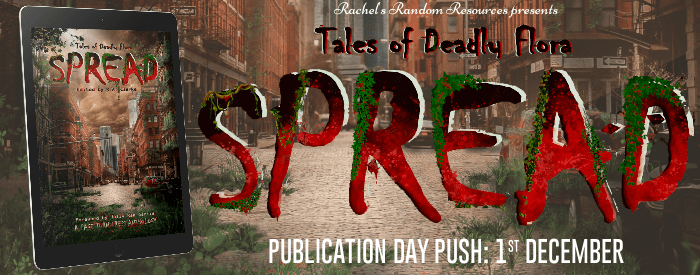
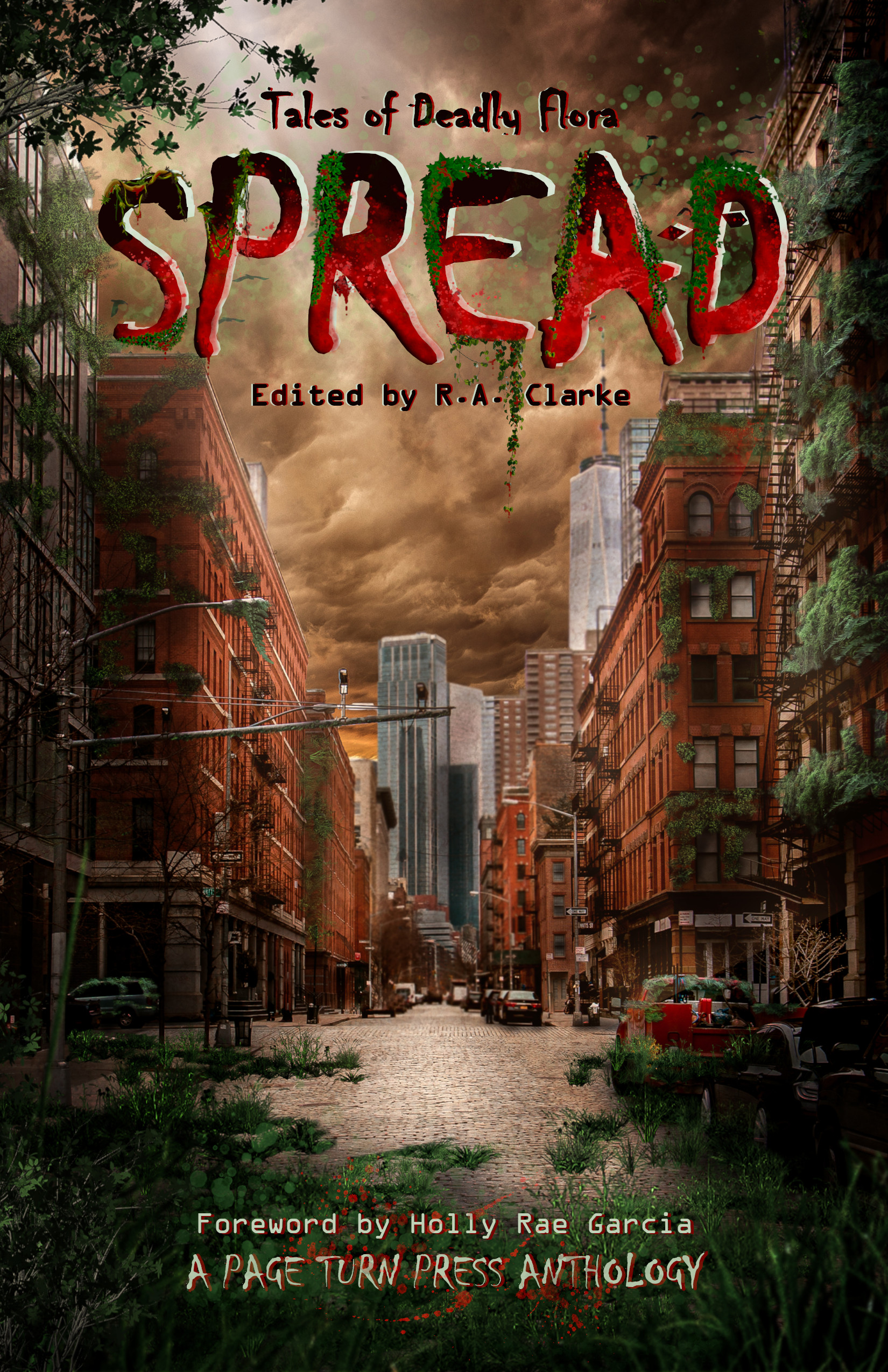
Green thumbs beware. Plants are beautiful, peaceful, abundant, and life-sustaining. But what if something sinister took root in the soil, awakening to unleash slashing thorns, squeezing vines, or haunting greenery that lured you in? Perhaps blooms on distant planets could claim your heart, hitch a ride to Earth on a meteor, or simply poison you with their essence. Imagine a world where scientists produced our own demise in a lab, set spores free to infect, even bred ferns to be our friends only to witness the privilege perverted. When faced with botanical terror, will humanity fight to survive, or will they curl and wither like leaves in the fall? Read ten speculative tales ripe with
dangerous flora to find out.
Purchase
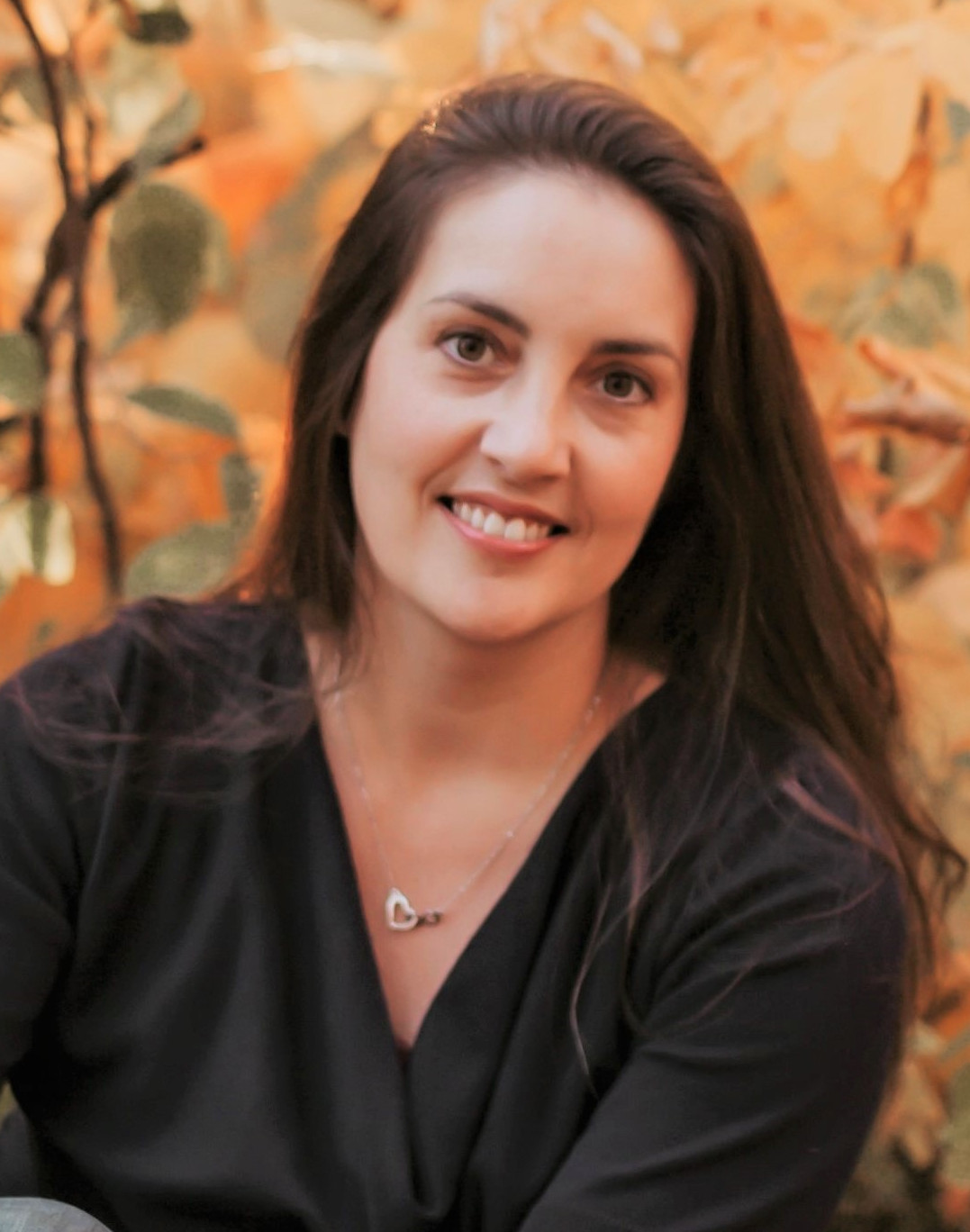
Website Facebook
Instagram & Twitter: @pageturnpress
An excerpt from Spread: Tales of Deadly Flora (Page Turn Press).
Black Thumb by Alyssa Beatty.
When a woman encounters a mysterious plant on an alien planet that can make all of her pain go away, she must decide whether to let it.
Lexa’s dirty secret: for a botanist, she had a shockingly black thumb. She could identify and classify like nobody’s business but give her an actual houseplant, and she’d kill it within a month, despite knowing its preferred soil pH level, sunlight, and watering requirements. So, it
was a bit of a surprise to see a mutated version of Nepenthes Distillatoria, a pitcher plant, sitting in the arc of her windowsill, with a red bow on it.
She tiptoed toward it. The flora on this planet was more aggressive than the plants on Earth. The ice-shard leaves of the towering trees had a nasty habit of detaching and plunging to the ground, right through the skull of an unsuspecting settler below. Then the trunk sent out
winding tendrils that drank the blood up with a truly unsettling slurping sound. On the other hand, the little purple-leaved plants near the beach sang when you stroked them, a lilting melody that Ciara, Lexa’s boss, swore was an Irish lullaby.
The plant sat placidly in its pot. It didn’t hiss or try to bite. Smaller pitchers surrounded a large central one, all facing it like children sitting around a teacher at story time. Their lids were delicate blue, a rare colour in this red-tinged world. Lexa bent to the largest pitcher to smell the
phytotelmata, the reserve of nectar resting in the bottom of the trap. It smelled like real rain on real soil. She heard the tapping of raindrops on green leaves. She bent closer, then stepped back.
“Nice try,” she told the plant.
The lid snapped down over the pitcher. A little petulantly, Lexa thought.
She fingered the bow on the pot. The thought skittered across her mind, briefly, that maybe this was some sort of peace offering from Gary. He knew her affinity for carnivorous plants. Or at least the affinity she used to have. On this planet, where every other plant harboured
a murderous urge, the bloom was off the rose for her and Dionaea Muscipula. And anyway, it was unlikely Gary was in a peace offering mood.
And there it was, that pressure in her chest again, like some unseen hand squeezing the life out of her heart. She closed her eyes and breathed. It was probably her imagination, but when she opened her eyes, she swore the little plant looked repentant.
“It’s okay, ” she told it. “It’s nothing to do with you. You’re lovely, whatever you are. This is human stuff.”
The stems straightened, and the pitchers opened, releasing the sweet scent of rain into the pod.
“Thanks,” Lexa mumbled. Then felt like an idiot. She talked to plants all the time; they
were good listeners. But this was the first time she’d thanked one.
She shut off the lights and curled into the bed, which was just large enough for one body.
She scootched until her back met the curve of the wall. It was almost like being held.


Thank you! From Page Turn Press
LikeLiked by 1 person