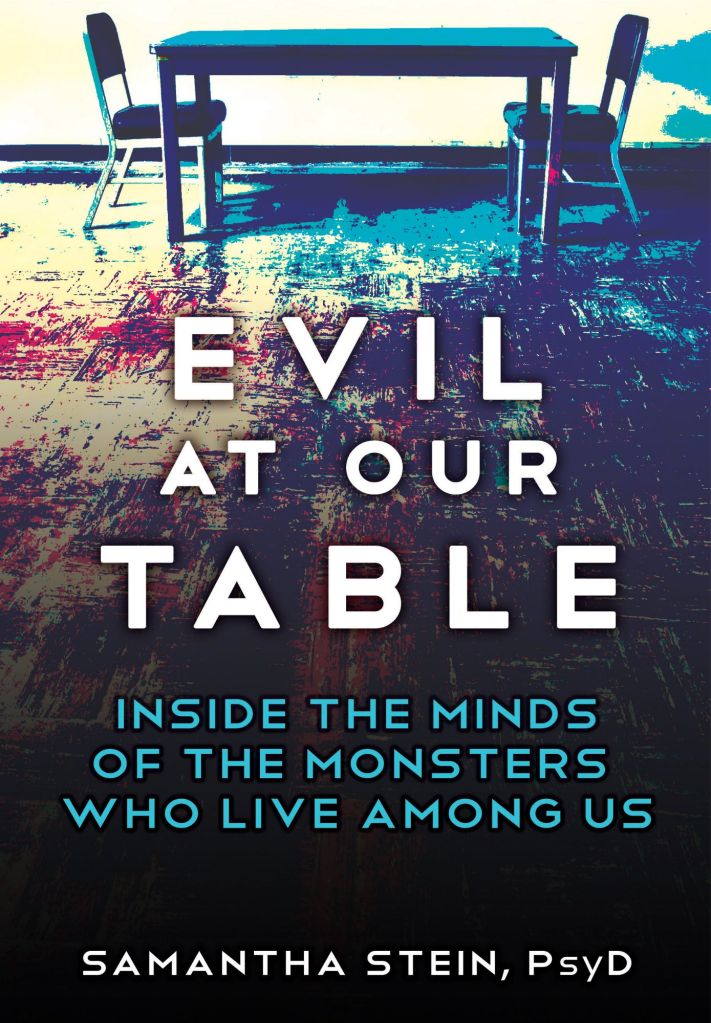
Evil at Our Table by Samantha Stein, PsyD centers on a question with no easy answer: how do we decide who is safe to release back into society? Told from the perspective of a forensic psychologist, the story explores the responsibility behind that determination.
Inside prison interview rooms, Dr. Stein evaluates individuals accused of severe sexual crimes, knowing her conclusions may determine their freedom or lifelong confinement. Operating within California’s Sexually Violent Predator Law, she must balance clinical evidence with an understanding of how unpredictable human behavior can be.
In Evil at Our Table, Dr. Stein examines crimes, psychological histories, and behavioral patterns while resisting the urge to rely on certainty that does not exist. She holds offenders accountable while acknowledging their humanity, documenting both case outcomes and the cumulative strain of such work. The book probes how justice systems attempt to manage risk and where those systems inevitably encounter limits, offering an unflinching look at the cost of deciding another person’s fate.
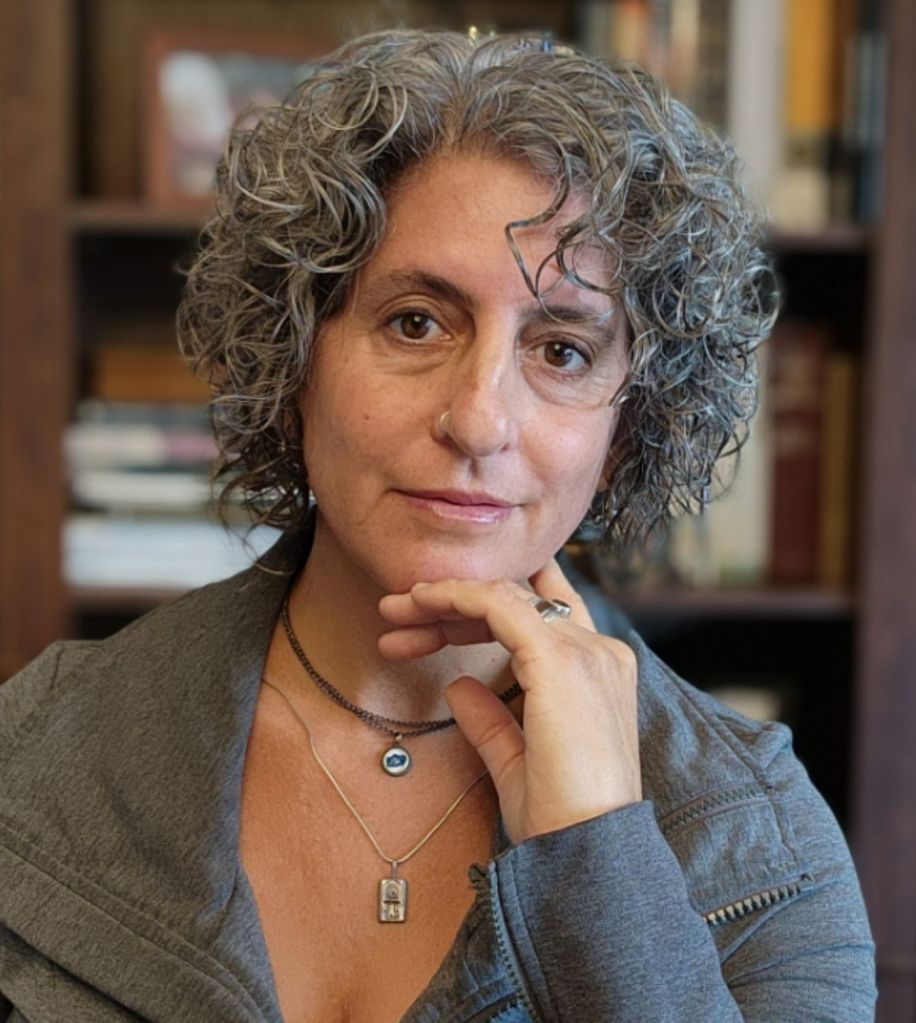
Samantha Stein Psy.D. is a forensic psychologist who specialized in sex offender and addiction treatment, court-ordered evaluations, and court testimony for nearly 3 decades. The author of a popular PsychologyToday.com column with over 2.2 million reads, her writing has been published in numerous outlets, including Flaunt Magazine, The Awakenings Review, Anxy Magazine, and The Guardian. A frequent speaker and teacher, she has presented at numerous conferences. She is also an avid photographer whose work has been exhibited in several small shows and has sold to collectors and individuals. She lives with her family in the San Francisco Bay Area. Visit Samantha at her website.
Amazon: https://bit.ly/3Z9eRfx
Goodreads: https://www.goodreads.com/book/show/221997208-evil-at-our-table
Introduction: Meeting with Monsters
I’m a forensic psychologist. This may sound glamorous, but the word “forensic simply means “the use of science in the investigation and establishment of facts or evidence in a court of law.” In other words, my job is to apply psychology to legal situations where it may be used in the courtroom. Sometimes it’s exciting; mostly, it’s just hard work. My career in psychology initially began with victims of abuse, and I assumed after receiving my doctorate I would continue that work. However, as I gained more experience, I began to recognize that often the line between “victim” and “perpetrator” was less clear than I’d thought. I worked with a boy who’d been molested as a toddler and later, in elementary school, fondled other boys. I met men and women accused of domestic violence who had powerful trauma histories—growing up in households where violence was commonplace. I learned that trauma work and prevention work were often intimately intertwined: Not every victim becomes a perpetrator, but the vast majority of perpetrators have been victimized.
Evaluating high-risk sex offenders under the SVP law is highly specialized. At the time when I conducted these evaluations, there were almost eighteen thousand licensed psychologists in the state of California and fewer than 110 who performed these evaluations. Expert forensic work as a psychologist in general is rare; expert evaluations and testimony as an SVP evaluator is even rarer. As an SVP evaluator, expertise in the statistics and science of forensic evaluations and knowledge about sex offending are necessary, and having the treatment experience is a bonus—it often helps us form a more nuanced picture of the offender. I never shy away from holding the offenders responsible for their actions and make no excuses for them. But I also have empathy and compassion for many of them as human beings. I’ve gotten to know so many of them in a deeply personal way, heard their life stories and struggles. So I do not approach my evaluations with damning preconceptions; I individually evaluate each case to determine if the man sitting in front of me is too dangerous, by legal definition, to live in our communities.
This book represents an intersection between my life and the lives of the men I evaluated. As a forensic psychologist, I have had to decide if people who have done terrible things meet the criteria to be locked up indefinitely in a mental institution. As I met with and evaluated these men who committed abhorrent acts, I strived to do my work to the best of my ability and as ethically as I can. I employed my professional knowledge and experience, and met the men with compassion, empathy, and understanding.
That said, I was and still am more than a forensic psychologist. I also have had a life outside of this work. In addition to interests, hobbies, and passions, I have a family. While I’ve tried to keep my professional and personal lives separate over the years, it is not possible to separate them completely, and in some ways, I wouldn’t want to—my growth and knowledge in one area informs the other. My experiences as a female and parent give me insight in my work, and my knowledge and my experience as a forensic evaluator give me the tools to keep myself and my children safe. As a human being, I have never stopped looking for answers about sexuality, danger, risk, humanity, parenting, and passion—ultimately gaining new perspectives.
Over my more than twenty-five years as a psychologist, my practice has expanded to include many other issues, such as addiction, couples therapy, family work, and people simply wanting to figure out how to live their best possible lives. But the SVP law has not fundamentally changed, and I believe our need to wrestle with the ethical implications has only grown more urgent. And my work with offenders continues to hold a unique place in my psyche, mind, and heart.
(Re)Defining Justice
Restorative Justice is a process to involve, to the extent possible, those who have a stake in a specific offense and to collectively identify and address harms, needs, and obligations, in order to heal and put things as right as possible.”
– Howard Zehr, 1990
Restorative (or Reparative) Justice is based on the Native American principle that criminal behaviors are offenses against human relationships and that after these behaviors are committed, there are both dangers and opportunities:
The danger is that everyone emerges further alienated, more damaged, disrespected, disempowered, feeling less safe and less cooperative.
The opportunity is that injustice is recognized, equality is restored and the future is clarified. So that participants are safer, more respectful, and more empowered and cooperative with each other and society.
Restorative justice is a process designed to try to “make things as right as possible” for everyone involved. That includes: repairing what has been broken, making society safer, attending to needs related to the behavior, and making amends.
Traditional criminal justice seeks answers to three questions: What laws have been broken? Who did it? and What do the offender(s) deserve? Restorative justice instead asks: Who has been harmed? What are their needs? Whose obligations are these?
Restorative Justice can take place in a diversity of settings, including neighborhood courts, schools, therapy groups, and nations. The 12-step community has also attempted to address the need for restoration through steps 8 and 9: making a list of the persons harmed and making direct amends to such people whenever possible. Making amends is different from an apology – one is simply an acknowledgement and expression of regret, whereas the other attempts to create restoration. Sometimes people also talk about “living” amends, which has to do with choosing to live differently so as to not create more harm.
Restorative Justice, or making amends, doesn’t require forgiveness. Forgiveness is a step that the victim(s) may or may not be able or willing to choose. Instead, Restorative Justice seeks to restore and heal, so that everyone involved may move forward less broken, and more whole.
From Psychology Today, April 13, 2013


 ramblingmads