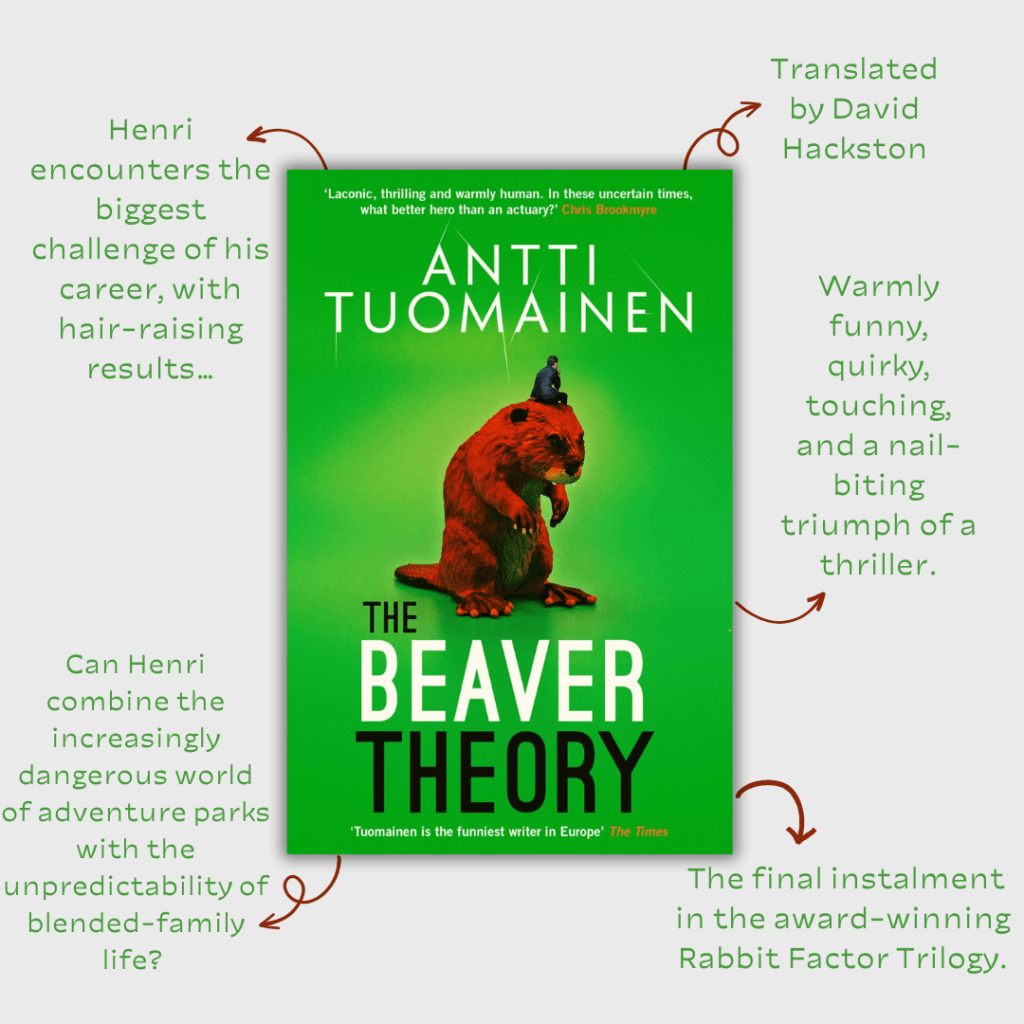
The Beaver Theory by Antti Tuomainen, translated by David Hackston
Publication date: 12th October Format: Hardback and e-book Ebook – Print
Book 3 in the Rabbit Factor Trilogy
Can everyone’s favourite insurance mathematician, Henri, combine the increasingly dangerous world of adventure parks with the unpredictability of blended-family life? He’s about to find out in the final instalment of the hilarious, nail-biting Rabbit Factor Trilogy.
Henri Koskinen, intrepid insurance mathematician and adventure-park entrepreneur, firmly believes in the power of common sense and order. That is until he moves in with painter Laura Helanto and her daughter…
As Henri realises he has inadvertently become part of a group of local dads, a competing adventure park is seeking to expand their operations, not always sticking to the law in the process…
Is it possible to combine the increasingly dangerous world of the adventure-park business with the unpredictability of life in a blended family? At first glance, the two appear to have only one thing in common: neither deals particularly well with a mounting body count.
In order to solve this seemingly impossible conundrum, Henri is forced to step far beyond the mathematical precision of his comfort zone … and the stakes have never been higher…
Warmly funny, quirky, touching, and a nail-biting triumph of a thriller, The Beaver Theory is the final instalment in the award-winning Rabbit Factor Trilogy, as Henri encounters the biggest challenge of his career, with hair-raising results…
White as Snow by Lilja Sigurdardottir, translated by Quentin Bates
Publication date: 12th October Format: e-book and paperback Ebook – Print
Book 3 in the Arora Investigation series.
Daníel and Áróra hunt a brutal killer when a shipping container with the bodies of five women is found outside Reykjavik, as Áróra continues the search for her missing sister. Book three in the addictive, chilling An Áróra Investigation series.
On a snowy winter morning, an abandoned shipping container is discovered near Reykjavík. Inside are the bodies of five young women – one of them barely alive.
As Icelandic Police detective Daníel struggles to investigate the most brutal crime of his career, Áróra looks into the background of a suspicious man, who turns out to be engaged to Daníel’s former wife, and the connections don’t stop there…
Daníel and Áróra’s cases pit them both against ruthless criminals with horrifying agendas, while Áróra persists with her search for her missing sister, Ísafold, whose devastating disappearance continues to haunt her.
As the temperature drops and the 24-hour darkness and freezing snow hamper their efforts, their investigations become increasingly dangerous … for everyone.
Atmospheric, twisty and breathtakingly tense, White as Snow is the third instalment in the riveting, award-winning An Áróra Investigation series, as crimes committed far beyond Iceland’s shores come home…
Mirror Image by Gunnar Staalesen, translated by Don Bartlett
Publication date: 31st August Format: e-book and paperback Ebook – Print Number 0 in the Varg Veum series
As Bergen PI Varg Veum investigates two different cases, it becomes clear that they are uncannily similar to harrowing events that took place thirty-six years earlier… A gripping instalment of the award-winning Varg Veum series, by one of the fathers of Nordic Noir.
Bergen Private Investigator Varg Veum is perplexed when two wildly different cases cross his desk at the same time. A lawyer, anxious to protect her privacy, asks Varg to find her sister, who has disappeared with her husband, seemingly without trace, while a ship carrying unknown cargo is heading towards the Norwegian coast, and the authorities need answers.
Varg immerses himself in the investigations, and it becomes clear that the two cases are linked, and have unsettling – and increasingly uncanny – similarities to events that took place thirty-six years earlier, when a woman and her saxophonist lover drove their car off a cliff, in an apparent double suicide.
As Varg is drawn into a complex case involving star-crossed lovers, toxic waste and illegal immigrants, history seems determined to repeat itself in perfect detail … and at terrifying cost…
A chilling, dark and twisting story of love and revenge, Mirror Image is Staalesen at his most thrilling, thought-provoking best.
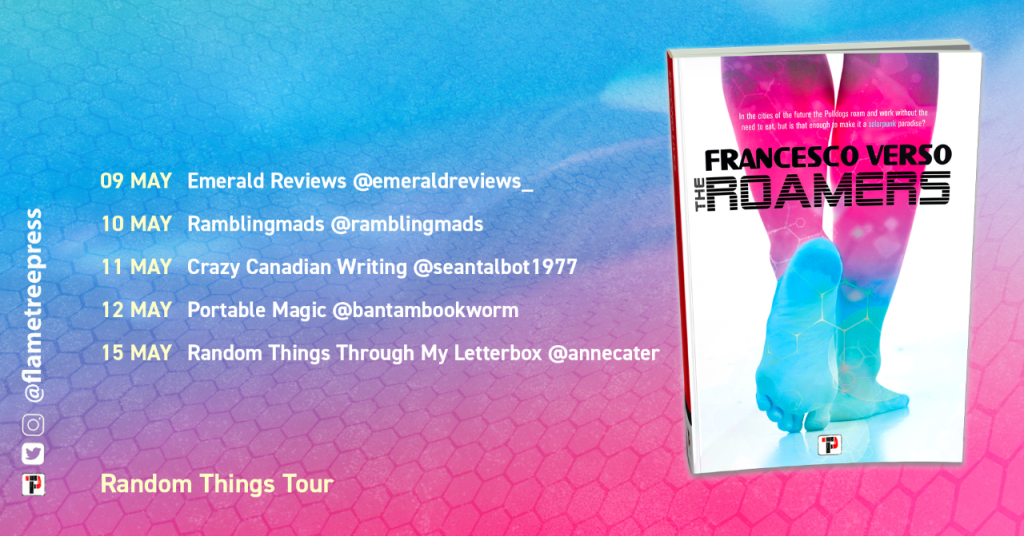
The pulldogs, a group of people at the twilight of Western civilisation, undergo an anthropological transformation caused by the dissemination of nanites (nanorobots capable of assembling molecules to create matter). This technology changes the way they eat and gives rise to a culture which, while reminiscent of an ancient nomadic society, is creative and new. Liberation from the imperative of food, combined with the ability to 3D print objects and use cloud computing, makes it possible for the pulldogs to make a choice that seems impossible and anachronistic – a new life, but is it really an Arcadia?
Francesco Verso (Bologna, 1973) is one of the most relevant voices of Italian Science Fiction and editor of Future Fiction. Over the last 12 years, he has won many SF awards (including the Best Publisher Award by the European SF Society in 2019) and for 7 years he’s the editor of the multicultural project Future Fiction. His books include: Antidoti umani, e-Doll (Urania Award 2009), Nexhuman (Odissea and Italia Award 2013), Bloodbusters (Urania Award 2015) and I camminatori (made of The Pulldogs and No/Mad/Land). His novels Nexhuman and Bloodbusters – translated in English by Sally McCorry – have been published in the US, UK, and soon in China with the translation of Zhang Fan and Shaoyan Hu for the publisher Bofeng Culture. His short stories appeared in magazines like Robot, MAMUT, International Speculative Fiction #5, Chicago Quarterly Review #20, Words Without Borders, Future Affairs Administration and international anthologies such as A Dying Earth (Flame Tree Press) and The Best of World SF (Head of Zeus).
Together with Bill Campbell he has co-edited Future Fiction: New Dimensions in International Science Fiction (Rosarium Publishing, 2018). He has also edited a SF anthology called What’s the Future Like? for Guangzhou Blue Ocean Press that has been distributed to Chinese high schools and universities in 2019. He’s a public speaker and panelist to many SF Cons across the world, including WorldCons, EuroCons, and Chinese SF Conventions. In 2020 he has organized the FutureCon an online SF convention with 67 panelists coming from more than 25 countries.
From 2014 he works as editor of Future Fiction, a multicultural project, scouting and publishing the best SF in translation from 10 languages and more than 20 countries with authors like James P. Kelly, Ian McDonald, Ken Liu, Xia Jia, Liu Cixin, Chen Qiufan, Pat Cadigan, Olivier Paquet, Vandana Singh, Lavie Tidhar, Fabio Fernandes, Ekaterina Sedia and others. He lives in Rome with his wife and daughter. He may be found online at http://www.futurefiction.org.
My thoughts: in a future version of Rome, where society has eroded, the Pulldogs, who tow rickshaws around the city, dodging in and out of the heavy traffic, have taken slightly dubiously acquired nanites that supercharge their bodies. Nico, who designs scents for his father’s business, becomes determined to use nanites to lose weight and then to become part of their off grid community.
After a standoff with the police ends in tragedy, they decide to become a nomadic society instead, and some have begun to evolve even beyond humanity.
Silvia is the Pulldog at the centre of the story – unlike some of the others, she has a link to the rest of the world – her mother, and questions the changes and increasingly antagonistic relationship between her found family and the wider world.
An interesting and at times quite complex book about community, escaping from the expected world and finding your family and home.
*I was kindly gifted a copy of this book in exchange for taking part in the blog tour but all opinions remain my own.
Winner of the Harald Mogensen Prize for Best Danish Crime Novel of 2020 Shortlisted for the Glass Key Award
A snobbish Danish literary author is challenged to write a crime novel in thirty days, travelling to a small village in Iceland for inspiration, and then the first body appears…
Copenhagen author Hannah is the darling of the literary community and her novels have achieved massive critical acclaim. But nobody actually reads them, and frustrated by writer’s block, Hannah has the feeling that she’s doing something wrong.
When she expresses her contempt for genre fiction, Hanna is publicly challenged to write a crime novel in thirty days. Scared that she will lose face, she accepts, and her editor sends her to Húsafjörður – a quiet, tight-knit village in Iceland, filled with colourful local characters – for inspiration.
But two days after her arrival, the body of a fisherman’s young son is pulled from the water … and what begins as a search for plot material quickly turns into a messy and dangerous investigation that threatens to uncover secrets that put everything at risk … including Hannah.
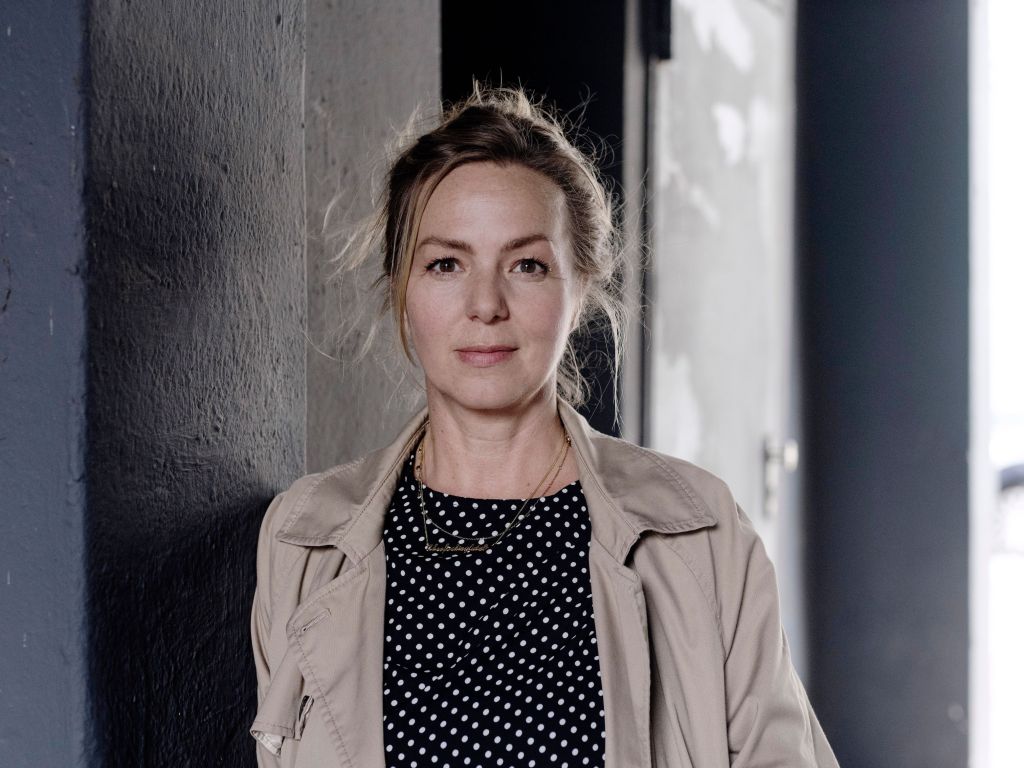
Jenny Lund Madsen is one of Denmark’s most acclaimed scriptwriters (including the international hits Rita and Follow the Money) and is known as an advocate for better representation for sexual and ethnic minorities in Danish TV and film. She recently made her debut as a playwright with the critically acclaimed Audition (Aarhus Teater) and her debut literary thriller, Thirty Days of Darkness, first in an addictive new series, won the Harald Mogensen Prize for Best Danish Crime Novel of the year and was shortlisted for the coveted Glass Key Award. She lives in Denmark with her young family.
My thoughts: come with me to an Icelandic village in the middle of nowhere, in winter, where writer Hannah is attempting to write a crime novel in 30 days to win a bet. When there’s a murder, which she gets involved in and puts her safety at risk. She doesn’t speak the language, forcing others to have to speak English or Danish, she doesn’t know the people, but she’s pretty sure she can catch the killer. As you do.
I found Hannah a bit grating, she pushes her way into people’s lives and business with little regard for their feelings and clearly thinks very highly of herself. Her career is stalling as not many people seem that keen on her literary fiction – preferring crime writers like her nemesis Jørn. Which is why she boasts she can write a whole crime novel in a month. This tickled me, I do love it when writers poke fun at the industry and their own genre.
Especially when the book is so good, like this one. Jenny Lund Madsen has written a cracking crime thriller, with all the good ingredients – remote location, nosey outsider, secrets that have been buried for years, lots of possible suspects, a conflicted community, a lone policeman, and winter closing in. Iceland’s unique geography and the fact that the sun isn’t in evidence for much of the winter adds to the sinister atmosphere – snow bound crimes are always a bit more macabre than sunny ones. The winter darkness adds to the sense of claustrophobia and paranoia, someone here is a killer. They can’t leave, but neither can anyone else.
Full of suspense, intrigue and horror, this dark and twisted tale of murder and tragedy is absolutely perfect for a dark and stormy night’s reading. Or not, if you don’t want to stay up all night!
*I was kindly gifted a copy of this book in exchange for taking part in the blog tour but all opinions remain my own.
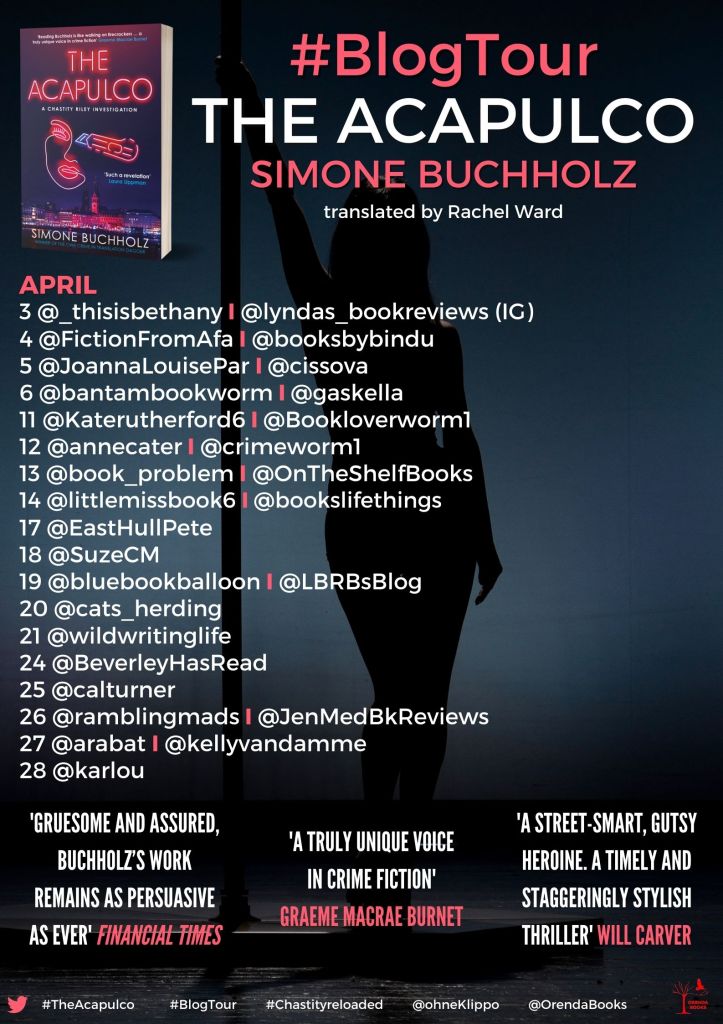
State Prosecutor Chastity Riley faces her most challenging case yet, with a violent serial killer at large, who might just be uncatchable…
A serial killer is on the loose in Hamburg, targeting dancers from The Acapulco, a club in the city’s red-light district, taking their scalps as gruesome trophies and replacing them with plastic wigs.
Chastity Riley is the state prosecutor responsible for crimes in the district, and she’s working alongside the police as they investigate. Can she get inside the mind of the killer?
Her strength is thinking like a criminal; her weaknesses are pubs, bars and destructive relationships, but as Chastity searches for love and a flamboyant killer – battling her demons and the dark, foggy Hamburg weather – she hits dead end after dead end.
As panic sets in and the death toll rises, it becomes increasingly clear that it may already be too late. For everyone…
Simone Buchholz was born in Hanau in 1972. At university, she studied Philosophy and Literature, worked as a waitress and a columnist, and trained to be a journalist at the prestigious Henri-Nannen-School in Hamburg. In 2016, Simone Buchholz was awarded the Crime Cologne Award as well as runner-up in the German Crime Fiction Prize for Blue Night, which was number one on the KrimiZEIT Best of Crime List for months. The critically acclaimed Beton Rouge, Mexico Street, Hotel Cartagena and River Clyde all followed in the Chastity Riley series, with The Acapulco out in 2023. She lives in Sankt Pauli, in the heart of Hamburg, with her husband and son.
My thoughts: Chastity Riley is back. After her travels to Scotland, she’s back at work investigating crimes in Hamburg as a prosecutor, aided by detectives from the local police. Murdered pole dancers are being found in the streets, scalped and wearing cheap wigs. They’re all young, and work in the same club – The Acapulco.
The team look into their lives and the customers at the club. Someone really wants to humiliate these women – taking their hair and scalp, replacing them with gaudy wigs that you could buy anywhere. And is there a connection to a murdered pimp?
Chastity’s relationship with her neighbour has also stepped up a notch, spending nights in each other’s beds. Then there’s the theatre director, is he connected to the killings or just after Chastity? And her best friend, possibly her only friend, is acting a bit strange. Can she solve that mystery too?
I really like Chastity, she’s a complicated person, with a weakness for drinking and staying out all night, at odds with her professional life. She doesn’t let many people in and she takes too many risks. Faller and the other detectives worry about her, but she even shrugs them off. She’s put herself in danger before and probably will again.
This was another dark, twisted, clever thriller, looking deep into the heart of the nightlife in this district of Hamburg, itself a city of many faces. I enjoyed learning more about the area and the culture, and the passion for football that a lot of the characters share. This series gets better with each book and you learn a little bit more about Chastity each time too.
*I was kindly gifted a copy of this book in exchange for taking part in the blog tour but all opinions remain my own.
Daniel Berkåk works as a courier for the Press and Military Office in Stockholm. On his last cross-border mission to Norway, he carries a rucksack full of coded documents and newspapers, but before he has a chance to deliver anything he is shot and killed and the contents of his rucksack are missing.
The Norwegian government, currently exiled in London, wants to know what happened, and the job goes to writer Jomar Kraby, whose first suspect is a Norwegian refugee living in Sweden, whose past is as horrifying as the events still to come…
Both classic crime and a stunning expose of Norwegian agents in Stockholm during the Second World War, The Lazarus Solution is a compulsive, complex, richly authentic historical thriller from one of the godfathers of Nordic Noir.
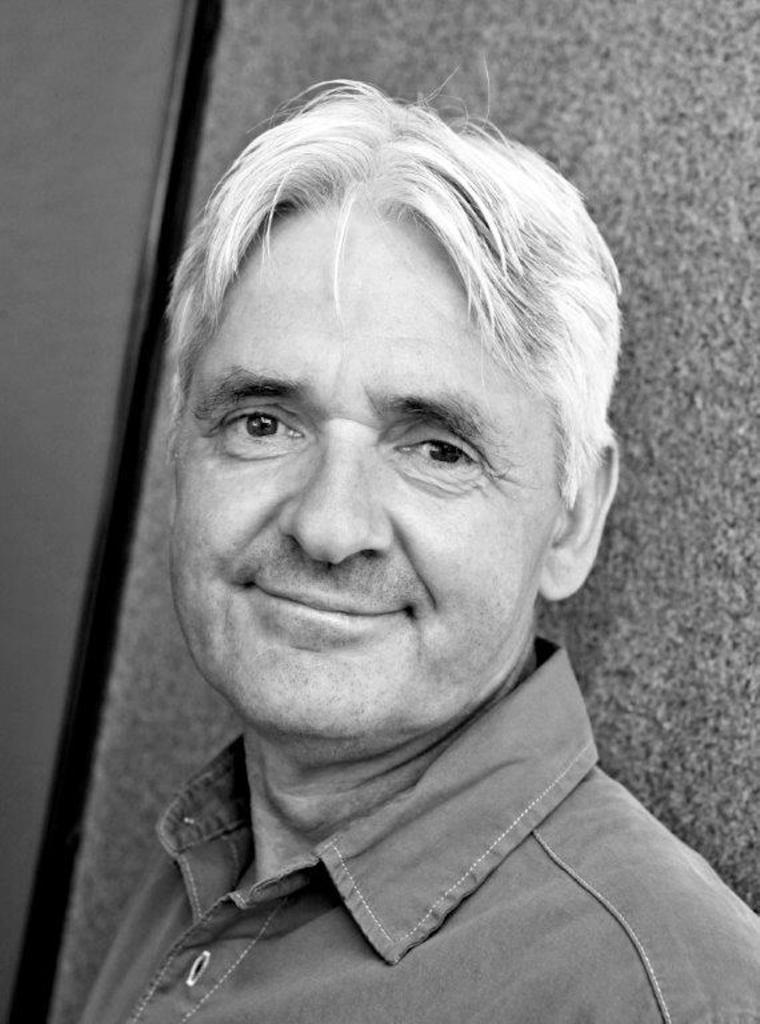
One of the fathers of the Nordic Noir genre, Kjell Ola Dahl was born in 1958 in Gjøvik. He made his debut in 1993, and has since published fourteen novels, the most prominent of which is a series of police procedurals cum psychological thrillers featuring investigators Gunnarstranda and Frølich. In 2000 he won the Riverton Prize for The Last Fix and he won both the prestigious Brage and Riverton Prizes for The Courier in 2015. His work has been published in 14 countries, and he lives in Oslo.
My thoughts: oh this is clever, sending you all over Sweden and occupied Norway, looking for a killer, a conspiracy, when actually it’s something else entirely. Nobody seems to be able to explain, people are double crossing every way, and somehow writer Jomar Kraby, who’s very good at pretending to be a bit thick, must solve it to satisfy the government in exile, and more importantly himself.
Even when he’s told to stop digging, he doesn’t, even when the Germans are on his heels, he keeps going. He wants answers and he’s not satisfied with only knowing a little. He wants the whole lot.
Dragging along behind him is the man he suspects killed Daniel Berkåk, brother to another man who is linked to this whole mess. Soldier, sailor, internment camp inmate, Kai Fredly claims to want to go to the UK and join the Norwegian army, but hasn’t left Stockholm and has some interesting acquaintances. Sucked into a conspiracy, not exactly connected to the one Kraby’s chasing, he’s afraid to leave and recruited by both sides, he’s stuck.
As the plot winds it’s way through the Venice of the North, through bars and restaurants, homes for refugees, the offices of the Norwegian delegation, apartments and parks, taking in more and more people for Kraby to wonder about, it slowly reveals who the players are and the game they’re all in. Oh, and the reason it’s called The Lazarus Solution…well maybe Kraby has the answer to that too. Deliciously ingenious and thoroughly enjoyable, a spy thriller that hooks you in and definitely not just another WW2 read.
*I was kindly gifted a copy of this book in exchange for taking part in the blog tour but all opinions remain my own.
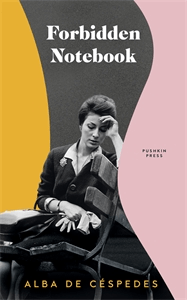
Out running an errand, Valeria Cossati gives in to a sudden impulse – she buys a shiny black notebook. She starts keeping a diary in secret, recording her concerns about her daughter, fears her husband will discover her new habit and the constant churn of the domestic routine. With each entry Valeria plunges deeper into her interior life, uncovering profound dissatisfaction and restlessness. As she finds her own voice, the roles that have come to define her-as wife, as mother, as daughter-begin to break apart.
Forbidden Notebook is a rediscovered jewel of Italian literature, published here in a new translation by the celebrated Ann Goldstein and with a foreword by Jhumpa Lahiri. A captivating feminist classic, it is an intimate, haunting story of domestic discontent in postwar Rome, and of one woman’s awakening to her true thoughts and desires.
Alba de Céspedes y Bertini (11 March 1911 – 14 November 1997) was a Cuban-Italian writer.
De Céspedes worked as a journalist in the 1930s for Piccolo, Epoca, and La Stampa. In 1935, she wrote her first novel, L’Anima Degli Altri. Her fiction writing was greatly influenced by the cultural developments that lead to and resulted from World War II. In her writing, she instills her female characters with subjectivity. In her work, there is a recurring motif of women judging the rightness or wrongness of their actions. In 1935, she was jailed for her anti-fascist activities in Italy. Two of her novels were also banned (Nessuno Torna Indietro (1938) and La Fuga (1940)). In 1943, she was again imprisoned for her assistance with Radio Partigiana in Bari where she was a Resistance radio personality known as Clorinda. From June 1952 to the late 1958 she wrote an advice column, called Dalla parte di lei, in the magazine Epoca. She wrote the screenplay for the Michelangelo Antonioni 1955 film Le Amiche. Her work was also part of the literature event in the art competition at the 1936 Summer Olympics.
After the war she went to live in Paris. Although her books were bestsellers, De Céspedes has been overlooked in recent studies of Italian women writers. (Taken from Wikipedia)
Renato Cisneros’s great-great-grandmother Nicolasa bore seven children by her long-term secret love, who was also her priest, raising them alone in nineteenth century Peru. More than a century later, Renato, the descendent of that clandestine affair, struggles to wring information about his origins out of recalcitrant relatives, whose foibles match the adventures and dalliances of their ancestors. As buried secrets are brought into the light, the story of Nicolasa’s progeny unfolds, bound up with key moments in the development of the Republic of Peru since its independence.
My thoughts: families are complicated and messy and not always proud of their origins. Secrets are part of the author’s family, no one wants to admit to where they came from and what their ancestors were doing, he has to slowly tease out the stories and details from his relatives.
But what a story. Not the tragic story of a woman who as a priest’s mistress can never announce their love and give their children legitimacy, but the incredible story of a family who are so close to greatness and instrumental in the shaping of the independent Republic of Peru. From the declaration of their separation from Spain in the 1920s to the modern day, the Cisneros family descended from Nicolasa are right at the heart of everything.
Tracing his ancestors, from great-great-grandfather down, the author fills his pages with moving and heartbreaking love stories, cycles that seem doomed to repeat, of children neglected and wives betrayed, of oceans separating generations. There’s exile and intrigue, bravery and foolishness. But the family always survive.
With uncle Gustavo on hand to fill in some of the details from his own research, Renato builds an elaborate and detailed history of an incredible family, who should be proud of their name and place in Peruvian history.
*I was kindly gifted a copy of this book in exchange for taking part in the blog tour but all opinions remain my own.
Lucinda has lived her whole life in the shadow of her glamorous and outgoing high-end model sister Viviana. But when Viviana suddenly disappears on a trip to São Paulo, Lucinda drops everything to track her down.
Met with indifference from the police, Lucinda joins forces with Viviana’s girlfriend Graziane to launch her own investigation. When she discovers that her sister had a thriving career as a sex worker, the list of possible suspects widens.
Then a cryptic text suggests that Viviana is still alive but being held hostage. With the minutes ticking by, Lucinda and Graziane must track down the men from Viviana’s past to discover who might want to do her harm.
A furiously contemporary and vibrant thriller that crackles with danger.
My thoughts: the relationships between the three women at the heart of this gripping thriller are vital to the plot. Lucinda’s decision to hunt down and rescue her sister from whatever danger she’s in, even after discovering the secrets Viviana has been keeping (sex work, a girlfriend, visiting their estranged dad) and reading the book Viviana is writing, is because of the love she has for her glamorous sister, but also the complicated childhood they shared. Graziane loves Viviana, and knows her secrets already so their connection is more straightforward.
Putting their own lives in possible danger, interviewing exes, looking into Viviana’s most recent movements, and then heading out to a remote place, where she’s most likely being held, with no real idea of the risks, is incredibly brave.
Viviana’s chapters are full of unexpected violence, terror and her desperate attempts to stay alive, escape and stop an increasingly fragile situation from falling apart. Caught in a complex web between two men, Davi and Cesar, who have clearly got a lot of their own issues, she’s afraid for good reason.
The flashbacks to how Lucinda and Viviana grew up, filling in gaps to who they are now, helps the reader understand their relationship, and as Lucinda confronts the fact that she actually doesn’t really know her sister as well as she once thought, all three women are heading for a dangerous confrontation on a remote ranch.
A short but compelling story of the dangers that lurk beneath the exterior and of the relationships that most connect us. Viviana never loses hope her sister and girlfriend will help her, even as the farmhouse becomes more terrifying.
*I was kindly gifted a copy of this book in exchange for taking part in the blog tour but all opinions remain my own.