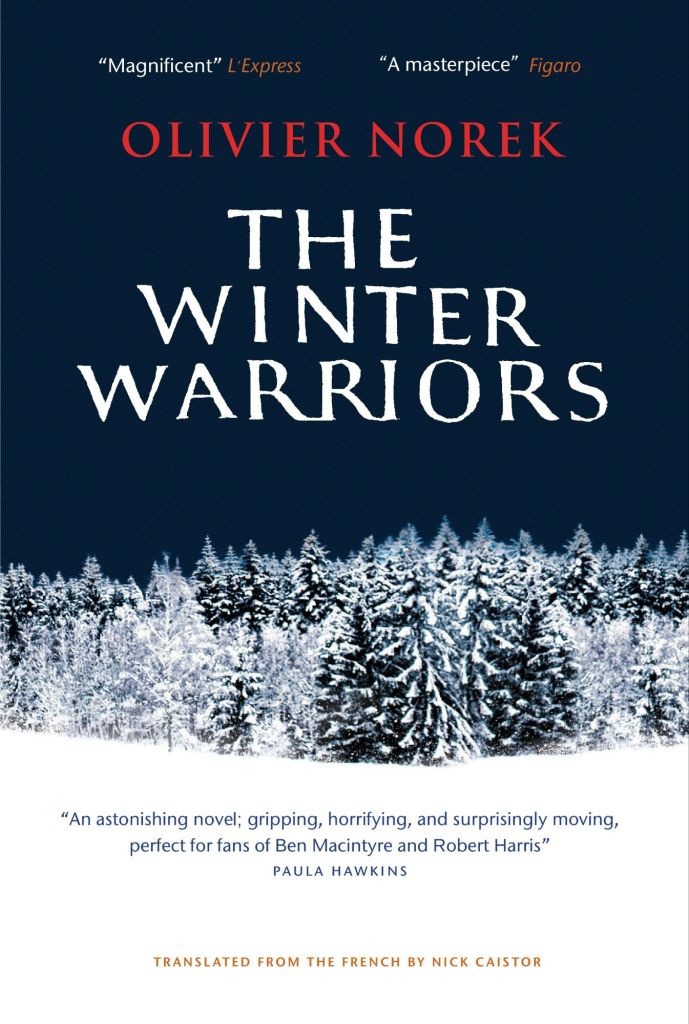
November, 1939. A conscription officer arrives in the peaceful farming village of Rautjärvi. The Soviet Union has invaded, and for the first time in its history as an independent country, Finland is at war.
Setting off into the depths of winter to face the Red Army, the small group of childhood friends recruited from Rautjärvi have no idea whether any of them will ever return home. But their unit has a secret weapon: the young sniper Simo Häyhä, whose lethal skill in the snow-bound forests of the front line will earn him the nickname “The White Death”.
Drawing on the real-life figures and battles of the Finnish-Soviet Winter War, this is a gripping, page-turning historical thriller from one of Europe’s most acclaimed storytellers.
After 18 years in the French police force, Olivier Norek turned to crime writing. Between Two Worlds was the Times and Sunday Times Crime Novel of the Year 2024.
While researching for this novel, Norek spent three months (the duration of the war itself) in Finland, experiencing the -35°C conditions in which the war was fought and in which more than 130,000 Russian soldiers died before the Soviet Union signed a peace treaty in March 1940.
My thoughts: Despite studying Russian history, I had never heard about the Winter War which Russia started in order to claim territory in their former holding – Finland. Compared to the Soviet Union, Finland was (and is) a tiny country. But it is also it seems, an incredibly brave one.
The young conscripts who head off into the winter snow to fight the Russians and the Lottas who accompany them (nurses, camp cooks etc, all female, named after a young woman who followed her man into war and despite his death, stayed to take care of the other men) have no idea what they will face and what might happen to them.
This was an incredibly fascinating, gripping read, it read like a thriller but one based on real people and events. There were a few moments that I felt like I might cry, I gasped out loud, I was horrified and enthralled all at the same time. It might be one of my books of the year – it is genuinely that good.
I don’t really know what else to say – get hold of a copy and learn about a period in history that seems to have been forgotten about, everywhere except presumably in Finland as some of the people in this book are national heroes there. Honestly, just incredible stuff.
*I was kindly gifted a copy of this book in exchange for taking part in this blog tour, but all opinions remain my own.
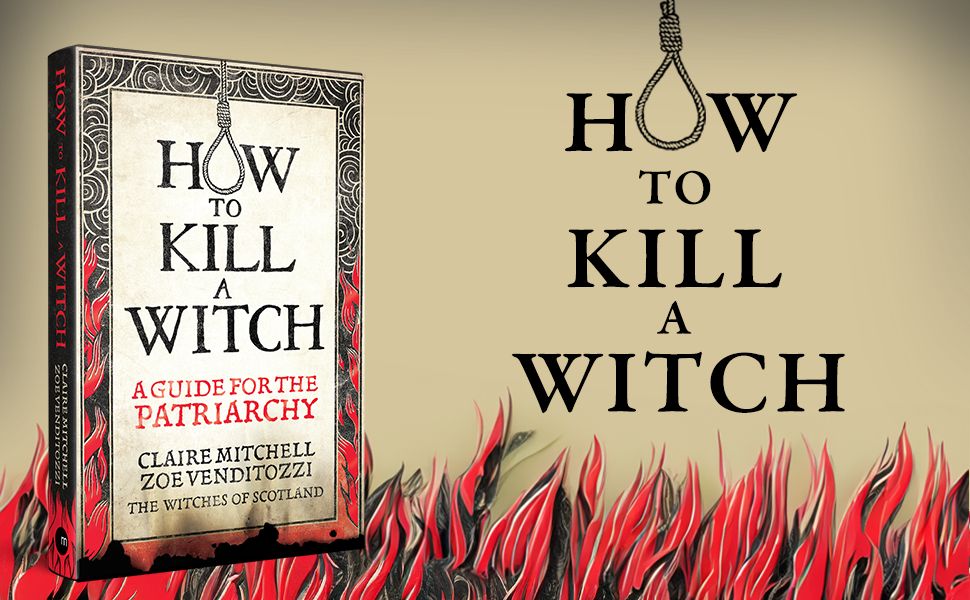
As a woman, if you lived in Scotland in the 1500s, there was a very good chance that you, or someone you knew, would be tried as a witch. Witch hunts ripped through the country for over 150 years, with at least 4,000 accused, and with many women’s fates sealed by a grizzly execution of strangulation, followed by burning.
Inspired to correct this historic injustice, campaigners and writers Claire Mitchell, KC, and Zoe Venditozzi, have delved deeply into just why the trials exploded in Scotland to such a degree. In order to understand why it happened, they have broken down the entire horrifying process, step-by-step, from identification of individuals, to their accusation, ‘pricking’, torture, confessions, execution and beyond.
With characteristically sharp wit and a sense of outrage, they attempt to inhabit the minds of the persecutors, often men, revealing the inner workings of exactly why the Patriarchy went to such extraordinary lengths to silence women, and how this legally sanctioned victimisation proliferated in Scotland and around the world.
With testimony from a small army of experts, pen portraits of the women accused, trial transcripts, witness accounts and the documents that set the legal grounds for the hunts, How to Kill A Witch builds to form a rich patchwork of tragic stories, helping us comprehend the underlying reasons for this terrible injustice, and raises the serious question – could it ever happen again?
Leading human rights lawyer CLAIRE MITCHELL, KC, and writer, ZOE VENDITOZZI formed the WITCHES OF SCOTLAND campaign with the aim of shining a light on the historic injustice of the Witch Trials. As a result, on International Women’s Day, 2022, the First Minister of Scotland, at issued a formal state apology – the first time in 300 years there had been any formal recognition of those who were most wrongly accused.
Through their tireless campaigning, regular public appearances, and highly entertaining podcast, also called THE WITCHES OF SCOTLAND, this pair of ‘quarrelsome dames’ are currently working to build a lasting memorial to the murdered women, and campaign to draw attention to the continued persecution of women as witches around the world today.
In 2022, Claire and Zoe were made Doctors of Laws by the University of Dundee in 2022 in recognition of their work. Claire lives in Montrose and Edinburgh and Zoe lives in Fife.
My thoughts: As someone with a lifelong passion for women’s history and especially the awful ways women were treated in past centuries (tbh it hasn’t really improved) I’ve been aware of the witch trials in England and Scotland (Wales doesn’t appear to have been affected by the same madness) for some time so this book was an absolute must read for me.
It is so well written, so well researched and incredibly interesting, informative and also very infuriating in a way. If I had a time machine (ok, that would be why they thought I was a witch) but things would have been very different. James I & VI especially would be getting a wallop. Awful man.
Women who were a bit different, who were vulnerable in some way – age, physicalor intellectual disability, mental illness, who looked a bit different, who were a bit “odd” were the most common targets for the hatred, ignorance and bigotry that lead to them being arrested, tortured, coerced and killed.
The sheer amount of work that has gone into what was a podcast, also campaign and now a book is incredible and the authors (and all the researchers and campaigners they consulted and worked with) must be applauded for their tireless determination to get the victims of this cruelty recognised, pardoned and commemorated.
I don’t think a similar campaign exists in England, but it needs to – if anyone knows of one, let me know, I’m definitely in.
It isn’t the easiest of reading, the awful things that these women (and a few men) went through, the violent deaths, the way even their remains were treated, is horrible, shocking even if you’re already aware of some of it. But it is important, to give a voice to the women who suffered so intensely, to give them back agency and their names to be remembered as victims of incredible injustice. Powerful, moving and rage-inducing as it is.
*I was kindly gifted a copy of this book in exchange for taking part in this blog tour, but all opinions remain my own.
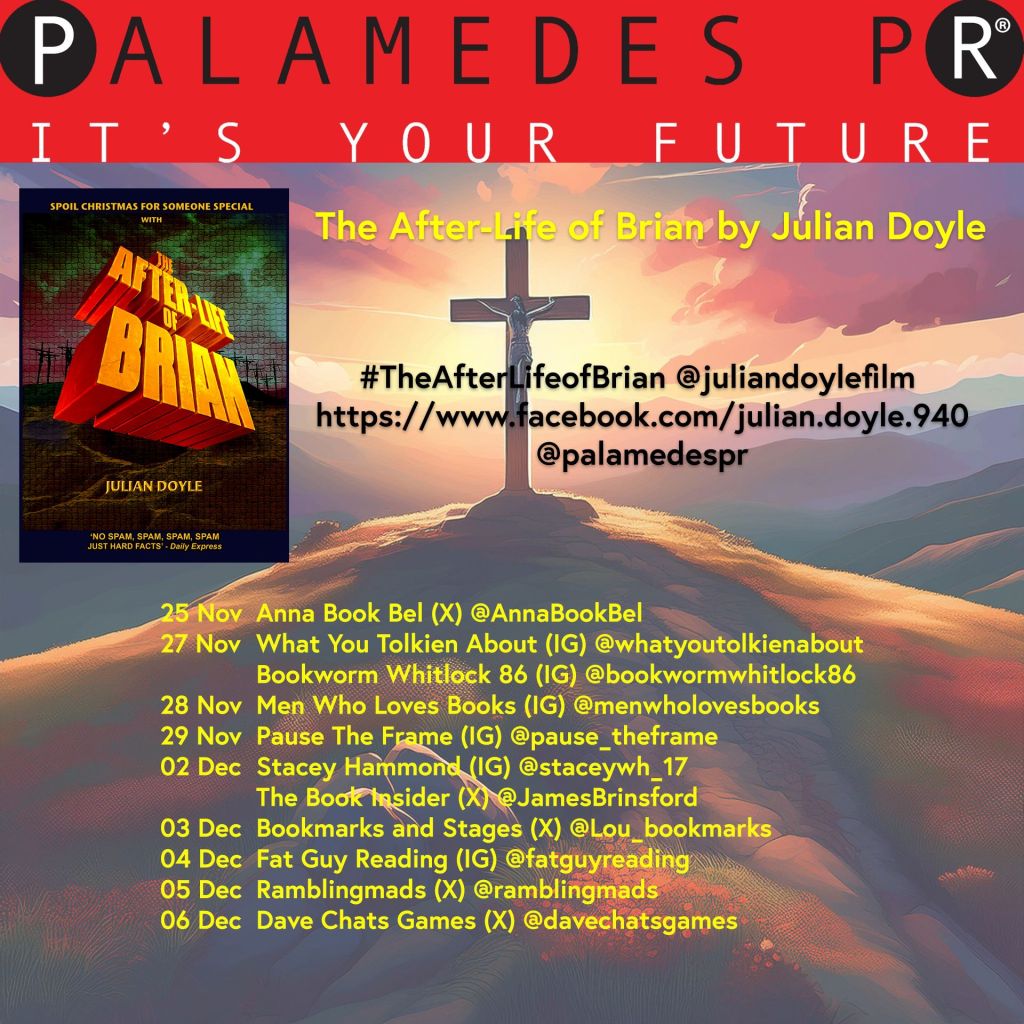
Four hundred years ago, the Monty Python team would have been burnt at the stake for making their hit movie ‘The Life of Brian’. Luckily on its release they survived the hostile reception but the film did not, as it was banned in many countries for blasphemy. But now, years later the whole controversy will be re-ignited by the most extraordinary research that was stimulated by the film’s infamous ending, where the Pythons sing “Always look on the Bright side of Life’ while being nailed onto their crosses.
It became obvious while filming that the crucifixion process does not work. But how can that be when it is reported by every Roman historian past and present, that crucifixion was the method of capital punishment used for slaves and rebels? The simple answer not only unravelled the true story of the charismatic Jew called Jesus, but also uncovered the monumental secret that has been hinted at by esoteric groups over the centuries, the implications being nothing less than earth shattering.
THE FACTS ARE UNDENIABLE
THE EVIDENCE IS COMPELLING
BUT THE CONCLUSIONS ARE ASTONISHING
Julian Doyle is a distinguished British filmmaker with an outstanding career in the film industry. He is widely recognised for his long-standing collaboration with Monty Python, where he worked on their most celebrated films including Monty Python and the Holy Grail, Life of Brian, and The Meaning of Life. In addition to his work with Monty Python, Julian has directed several acclaimed feature films including Love Potion (1987) and Chemical Wedding (2008), a supernatural thriller co-written with Iron Maiden’s Bruce Dickinson. His directorial credits also include music videos for iconic artists such as Kate Bush’s Cloudbusting and Iron Maiden’s Can I Play with Madness.
Described by Python Terry Jones as “an original polymath”, Julian is a leading expert on Christian history and mythology. His books include The Gospel According to Monty Python, Crucifixion’s A Doddle: The Passion of Monty Python, and historical mystery thriller The Jericho Manuscript. Visit www.juliandoyle.info.
My thoughts: Two things to know before I talk about this book; 1. I love Monty Python, 2. I studied Theology at A Level and know a weird amount about Biblical history. I also managed to get a Python reference into every A Level exam essay.
Right, moving on. The author very kindly wrote me a note to explain that this book is about the historical Jesus, not the Jesus of faith. I think he was worried that with my first name (Madeleine – the French version of Magdalene, who I am named for), I might be religious.
Well, I was raised in the Church of England and went to Sunday School and church schools, which were enough to put me off. I consider myself a person of faith, or spiritual rather than strictly religious. I have a very healthy dose of scepticism and have done plenty of reading around the scriptures, so this book was perfect for me. I like to question the accepted orthodoxy, and am highly suspicious about the huge amount of editing that the Bible has gone through over the centuries.
The author starts by looking at the physical act of crucifixion, which of course is how Life of Brian ends. I found this really interesting, partly because I read a lot of crime fiction and quite a few serial killers seem to crucify their victims in fiction, but having it debunked here, makes me wonder whether any of those crime writers did any research or just assumed it would work?
I enjoyed reading the different chapters on the Gospels inaccuracies, additions, erasures, and the weird ways in which the different writers (and the later editors) adjusted the stories to fit their particular viewpoint and narrative. It’s something I’ve actually studied and I was nodding my head a lot.
There’s also a chapter on my namesake – Mary Magdalene, and whether she’s also Mary, the sister of Martha and Lazarus. He also explores the later myths and beliefs about her, and the Templars fascination with her.
What she definitely isn’t is a prostitute. That comes from a misreading of John’s Gospel, where a story about an unnamed sex worker is after a story about Mary M. They are not the same woman. That’s just some lazy casual sexism and misogyny. From the church? NEVER!! This was really interesting reading too, having read a book about Jesus’ women. I won’t give you an essay here, you can read them yourself.
There’s an incredible amount of research been done here, and it is all extremely interesting. I won’t break it all down. I did get a bit confused by all the Templar Knights, Masons, references to that godawful Dan Brown rubbish (bad literature, no grasp of geography, terribly poorly researched) as though it was legitimate scholarship, I am aware there are hundreds of theories and conspiracies about these organisations, I dont know much about any of it and thought it dragged some of the very good, legitimate points being made, down.
Overall I thought this was a really interesting book that makes some interesting points and it’s very readable, which not all scholarly examinations of the Bible are, trust me. I would have liked more on making Brian, but that was the jumping off point to looking more closely at the historical records in contrast to the Bible’s versions of events. I don’t know that I’d give this book to my religious relatives, but I can think of several people I know who would really enjoy it and happily hold internal debates with it as I have.
*I was kindly gifted a copy of this book in exchange for taking part in this blog tour, but all opinions remain my own.
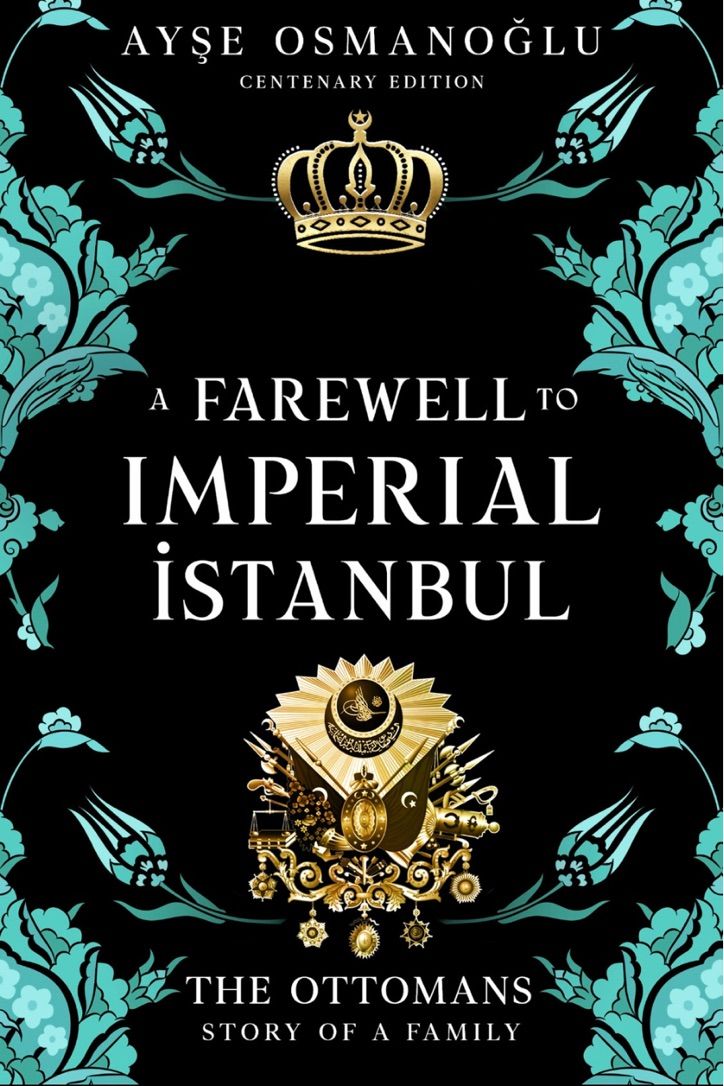
Set against the majestic backdrop of Imperial Istanbul in the aftermath of the First World War, A Farewell To Imperial Istanbul is a captivating tale of family, duty and the resilience of the human spirit.
İstanbul, 1922: As the Ottoman Empire crumbles in the wake of the Great War, the fate of the Imperial capital and the House of Osman come under threat. Emboldened following their victory in the Turkish War of Independence, the Turkish Nationalist Government in Ankara abolishes the Ottoman Sultanate, marking the end of over six centuries of Ottoman rule. The Ottoman Caliphate endures for now, but Istanbul, stripped of its Imperial mantle, mourns its lost glory. Prince Nihad fears for the nation and the fate of the Imperial family, while his son, Prince Vâsıb, envisions a hopeful future defined by peace following the signing of the Treaty of Lausanne.
As the new Republic of Türkiye emerges from the ashes of the once-mighty Ottoman Empire, Istanbul and the Ottoman Dynasty confront the crossroads of history, their destinies entwined with the shifting tides of the Bosphorus. Yet, amidst these perilous currents that separate East and West, where the deep waters threaten to engulf the city’s Imperial past and sweep away its soul embodied by the Imperial family, the Ottoman Dynasty must navigate a new and uncertain course.
The history of the Turks and their vast and powerful Empire has been intertwined with the Ottoman Dynasty for over six hundred years. But can the Imperial family survive the tempest of change as the world enters a new era?
Ayşe Gülnev Osmanoğlu is a member of the Ottoman Imperial family, being descended from Sultan Murad V through her grandfather, and from Sultan Mehmed V (Mehmed Reşad) through her grandmother. After reading History and Politics at the University of Exeter, she obtained an M.A. in Turkish Studies from SOAS, University of London, where she specialised in Ottoman History. Her debut novel, The Gilded Cage on the Bosphorus was published in 2020. Ayşe Osmanoğlu lives between Türkiye, France and the United Kingdom with her husband, five children and two cats. Her research and literary works concentrate on the late Ottoman period, exploring narratives embedded in her imperial heritage.
My thoughts: I enjoyed the author’s previous book, The Gilded Cage on the Bosphorus, and was looking forward to reading this book. I wasn’t disappointed.
It conjures up a vanished world of Imperial splendour, with the Princes and Princesses of the Ottoman Empire in their finery, riding to parties in fine carriages and early motor cars. Their lives in the 1920s might be very different from their ancestors – power having passed to the government as opposed to direct rule, but they still remain the upper echelon of society.
As the tides of change flow along the Bosphorus, they sweep all before them. Beginning with the last Sultan’s journey into exile with his young son, it ends with the train ride that takes dozens of the Imperial family away, many for the final time, from their beloved homeland.
While the story could have been just a list of dry facts leading to exile, the author, a descendant of the Imperial family, infuses the events with personal recollections from her grandparents and their family, bringing the events to life.
I’m not an ardent monarchist, but the way the Osman family were treated seemed particularly heavy handed, stripping them of their titles, houses, and even their citizenship – a very cruel and unnecessary extreme, many of the family were never able to return because of this and are buried far from their homeland.
Some were presumably left rather impoverished, as they didn’t have hidden wealth, relying on the State to provide a stipend. From grand palaces, they were sent across Europe and Asia, to lives of uncertainty and loneliness.
The book was moving and sensitively written, obviously as this is the writer’s family, there is some bias, but overall it felt quite balanced, there was a sense of the facts being delivered and no animosity towards the Turkish government.
I don’t know a huge amount of Turkish history, despite having friends and colleagues whose families come from the country, so this was fascinating and deeply interesting. The world of interwar Türkiye is so far removed from the modern country, and probably from many memories that this provides an incredible look into a time and place that has long since passed.
Giveaway To Win an A Farewell to Imperial İstanbul prize bundle… (Open to UK Only) a Rafflecopter giveaway
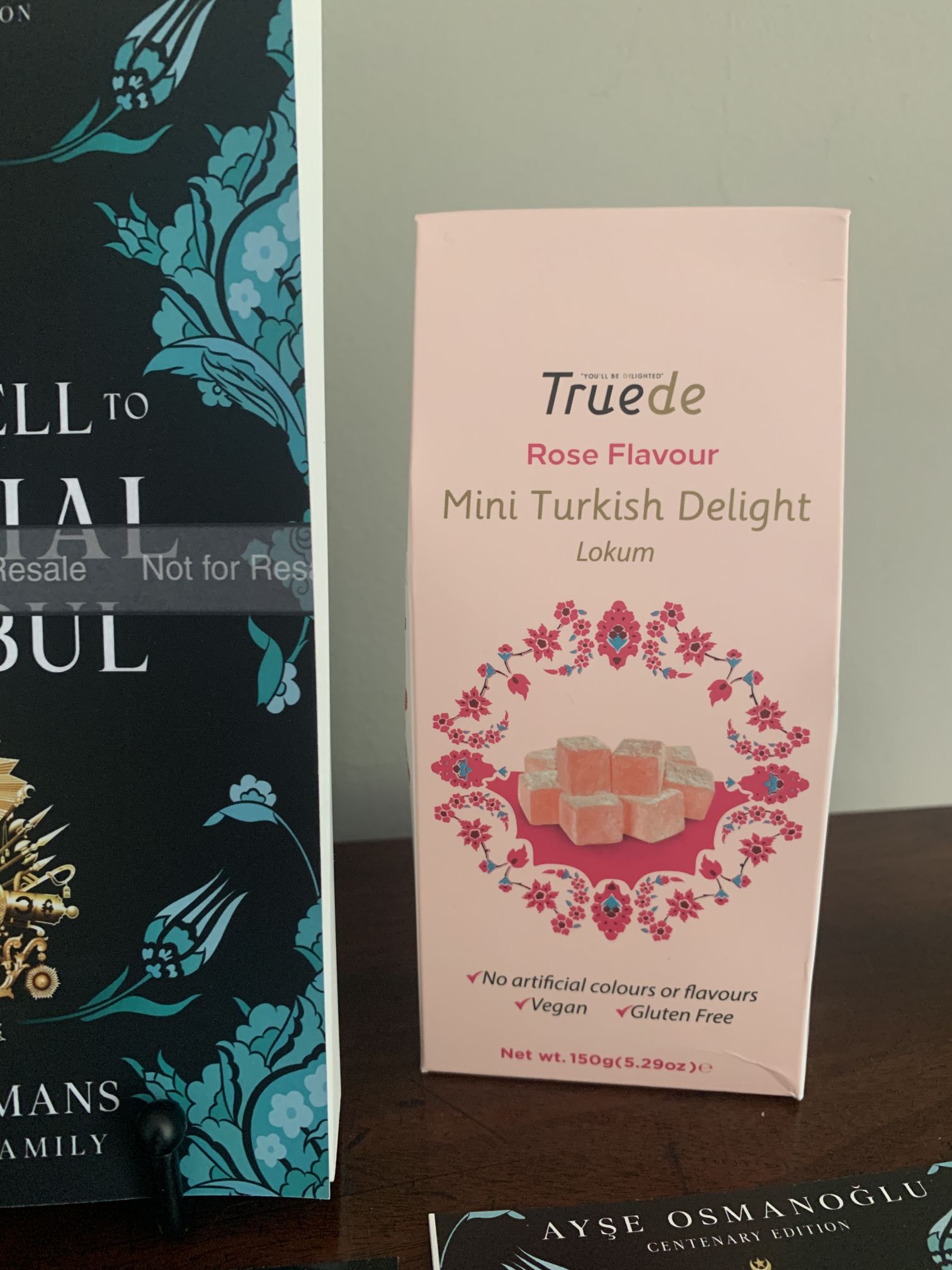
The list of prizes is below: Paperback signed copy of A Farewell to Imperial İstanbul Scented Candle from the Imperial İstanbul Collection – Scent: Harem Garden (Jasmine, Rose & Orange Blossom) Black matchsticks Traditional Rose Turkish Delight A Farewell to Imperial İstanbul postcard Set of four A Farewell to Imperial İstanbul bookmarks
*I was kindly gifted a copy of this book in exchange for taking part in this blog tour, but all opinions remain my own.
**Terms and Conditions –UK entries welcome. Please enter using the Rafflecopter box below. The winner will be selected at random via Rafflecopter from all valid entries and will be notified by Twitter and/or email. If no response is received within 7 days then Rachel’s Random Resources reserves the right to select an alternative winner. Open to all entrants aged 18 or over. Any personal data given as part of the competition entry is used for this purpose only and will not be shared with third parties, with the exception of the winners’ information. This will be passed to the giveaway organiser and used only for fulfilment of the prize, after which time Rachel’s Random Resources will delete the data. I am not responsible for despatch or delivery of the prize.**
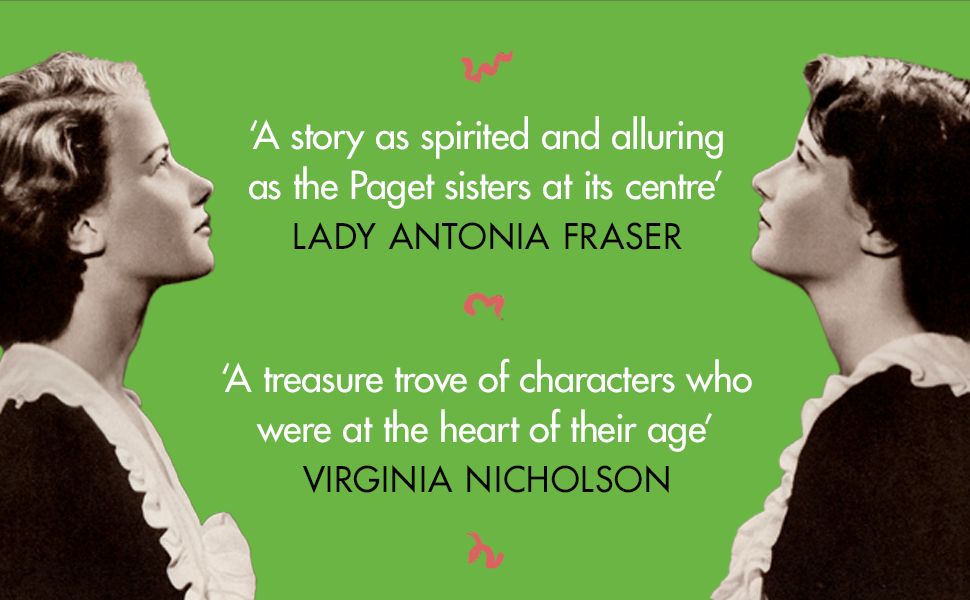
When her mother Celia Paget died, Ariane Bankes inherited a battered trunk stuffed with letters and diaries belonging to Celia and her twin Mamaine. This correspondence charted the remarkable lives of the Paget sisters and their friends and lovers, including Arthur Koestler, Albert Camus, Sartre and de Beauvoir, and George Orwell.
Out of this rich archive, The Quality of Love weaves the story of these captivating and unusually beautiful identical twins who overcame a meagre education to take 1930s London society by storm and move among Europe’s foremost intellectuals during the twentieth century’s most dramatic decades. Above all, it is a sparkling portrait of the deep connection between two spirited sisters.
Ariane Bankes had a long career in publishing, including at John Murray and V&A Publishing, before becoming a writer, critic and curator. Her writing has appeared in the Spectator, TLS, Financial Times,Country Life and Slightly Foxed. She is Honorary President of Koestler Arts, and runs the Hatchards & Biographers’ Club First Biography Prize and the Elizabeth Buccleuch Prize.
My thoughts: I found this book, a biography of the author’s mother and aunt, utterly captivating. They lived through some of the most tumultuous years of the twentieth century, loved and were loved by some of the most extraordinary characters and lived an incredible life.
The Paget twins were beautiful, clever (but not exactly educated – school wasn’t really a priority) and well connected. They were feted by society magazines and fashion pages alike.
They had many long and complicated love affairs and counted people like George Orwell (who proposed to Celia) and Albert Camus (who had a long affair with Mamaine) among their closest friends and admirers. At times it reads a little like a Who’s Who of the mid twentieth century, which I found delightful, seeing as so many of the writers and figures are ones I’m interested in.
Orphaned young, they had a strange childhood, and despite being very bright, little formal education – something I don’t think you’d be able to do now. They were presented at court (twice!) and lived the sort of life that doesn’t sound entirely real, moving around Europe, lunching with the literary elite of London, Paris and beyond.
But they both suffered terrible health problems – related to chronic asthma and possibly as a result of the trauma of their parents’ deaths. In and out of hospitals and sanatoriums in places like Switzerland, for the air. It’s amazing they managed to fit so much living in. Mamaine sadly died quite young, but Celia went on to marry and have two children – the author and her brother, settling into domesticity after all her adventures.
Using her mother’s archive of letters, photos and other documents, as well as the stories she was told growing up, Ariane Bankes has created a beautiful snapshot of a period of time lost to us now but also a love letter to the bond between two extraordinary sisters. It’s really moving and tender at times, as the letters travel back and forth between sisters separated by geography, love affairs and health worries.
*I was kindly gifted a copy of this book in exchange for taking part in this blog tour, but all opinions remain my own.
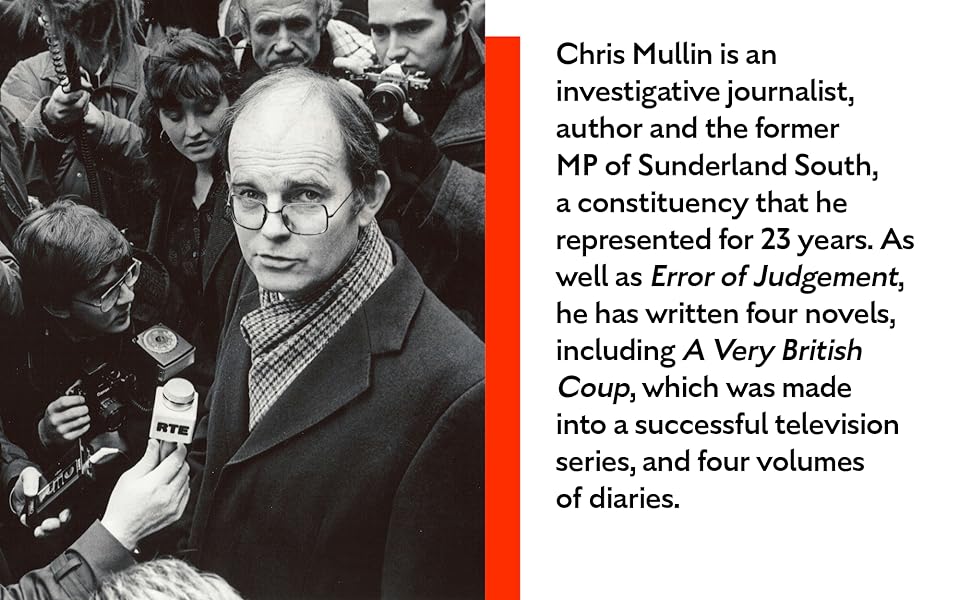
My thoughts: I wasn’t born until 1986, a year after Chris Mullin was asked to write about the Birmingham Six, but I was vaguely aware of it as a huge miscarriage of justice.
Until I read this book I didn’t know exactly how egregious the behaviour of the West Midlands police, and their Lancashire colleagues, truly was. Not only did they violently assault the six men, they fabricated confessions, threatened their lives and basically tortured them. The police falsified their own records and even the officers not directly involved turned a blind eye to the activities of their colleagues.
This led to six men spending over almost two decades in prison despite being completely innocent of all of the charges they were convicted on. All they were guilty of really was being Irish in Birmingham and locatable.
Mullin was a journalist and MP and always seems to have been supportive of the six men’s innocence and the culpability of the police and legal system that allowed the real bombers to go free – and even leave the country. He identified and interviewed the real culprits and names them in this edition of his book, they are dead, and he is not at risk of reprisals.
The book is compelling reading, like the best thriller, but not fiction at all – the lives of six men, their families, friends and the victims of the bombings in 1974 were altered forever and despite being set free eventually, there was no real justice done here.
The police officers were never convicted, the judge and lawyers never apologised for their roles, the dodgy forensic scientist might have lost his job but never admitted fault, and of course the actual bombers never saw the inside of a court room (one of them did, but he claimed to have only been involved in making the devices).
It’s a terrible tragic story and one that should really be more widely understood as the repercussions from the case reverberate in the justice system even today, and should remind us all that the system, from police to courts is not always blind or indeed just.
The book itself is a feat of investigative work and determination, Mullin is a great writer and conveys the sense of hopelessness and then the glimmer of light given as this case moves back and forth between courts, Parliament and the press. His attention to detail, critical eye and engaging style make this both an enjoyable reading experience and a jolting horror at how so many were so betrayed by the system.
*I was kindly gifted a copy of this book in exchange for taking part in this blog tour, but all opinions remain my own.
The female private detective has been a staple of popular culture for over 150 years, from Victorian lady sleuths to ‘busy-body spinsters’ and guntoting modern PIs. But what about the real-life women behind these fictional tales – what crimes did they solve, and where are their stories?
In Private Inquiries, Caitlin Davies traces the history of the UK’s female investigators, uncovering the truth about their lives and careers from the 1850s to the present day. Women such as
• Victorian private inquiry agent Antonia Moser – the first woman to open her own agency
• Annette Kerner, who ran the Mayfair Detective Agency on Baker Street in the 1940s
• Liverpool sleuth Zena Scott-Archer, who became the first woman president of the World Association of Detectives
Caitlin also follows in the footsteps of her subjects, undertaking a professional qualification to become a Private Investigator, and meeting modern PIs to disentangle fact from fiction.
Female investigators are on the rise in the UK – and despite the industry’s sleazy reputation, nearly a third of new trainees are women. After a century of undercover work, it’s time to reveal the secrets of their trailblazing forebears.
CAITLIN DAVIES is a novelist, non-fiction writer, award-winning journalist and teacher. She is the author of six novels and seven non-fiction books, including Bad Girls: The Rebels and Renegades of Holloway Prison, nominated for the Orwell Prize for Political Writing (2019), and Queens of the Underworld, a history of professional female crooks. She lives in Kent and is a trained PI.
My thoughts: I’d heard of a couple of the earliest female detectives before – Maud West and Kate Easton, but there were ones in this book I’d not come across before, and Caitlin Davies brings it into the 21st Century as well as training to become a PI herself, which was super interesting.
I really enjoy this sort of history, women who have somehow faded into the background, ordinary women, but once revealed are often so much more interesting than the men around them. It was such a fascinating and enjoyable read. Puts all those crime novels into context too – women really are out there digging into things and doing a better job at going unnoticed than the men in many cases. If you’re interested in women’s history, social history, crime and that sort of thing, this will be right up your street and written in an engaging and enjoyable way too, with a full list of resources if you want more.
*I was kindly gifted a copy of this book in exchange for taking part in the blog tour but all opinions remain my own.
Renato Cisneros’s great-great-grandmother Nicolasa bore seven children by her long-term secret love, who was also her priest, raising them alone in nineteenth century Peru. More than a century later, Renato, the descendent of that clandestine affair, struggles to wring information about his origins out of recalcitrant relatives, whose foibles match the adventures and dalliances of their ancestors. As buried secrets are brought into the light, the story of Nicolasa’s progeny unfolds, bound up with key moments in the development of the Republic of Peru since its independence.
My thoughts: families are complicated and messy and not always proud of their origins. Secrets are part of the author’s family, no one wants to admit to where they came from and what their ancestors were doing, he has to slowly tease out the stories and details from his relatives.
But what a story. Not the tragic story of a woman who as a priest’s mistress can never announce their love and give their children legitimacy, but the incredible story of a family who are so close to greatness and instrumental in the shaping of the independent Republic of Peru. From the declaration of their separation from Spain in the 1920s to the modern day, the Cisneros family descended from Nicolasa are right at the heart of everything.
Tracing his ancestors, from great-great-grandfather down, the author fills his pages with moving and heartbreaking love stories, cycles that seem doomed to repeat, of children neglected and wives betrayed, of oceans separating generations. There’s exile and intrigue, bravery and foolishness. But the family always survive.
With uncle Gustavo on hand to fill in some of the details from his own research, Renato builds an elaborate and detailed history of an incredible family, who should be proud of their name and place in Peruvian history.
*I was kindly gifted a copy of this book in exchange for taking part in the blog tour but all opinions remain my own.
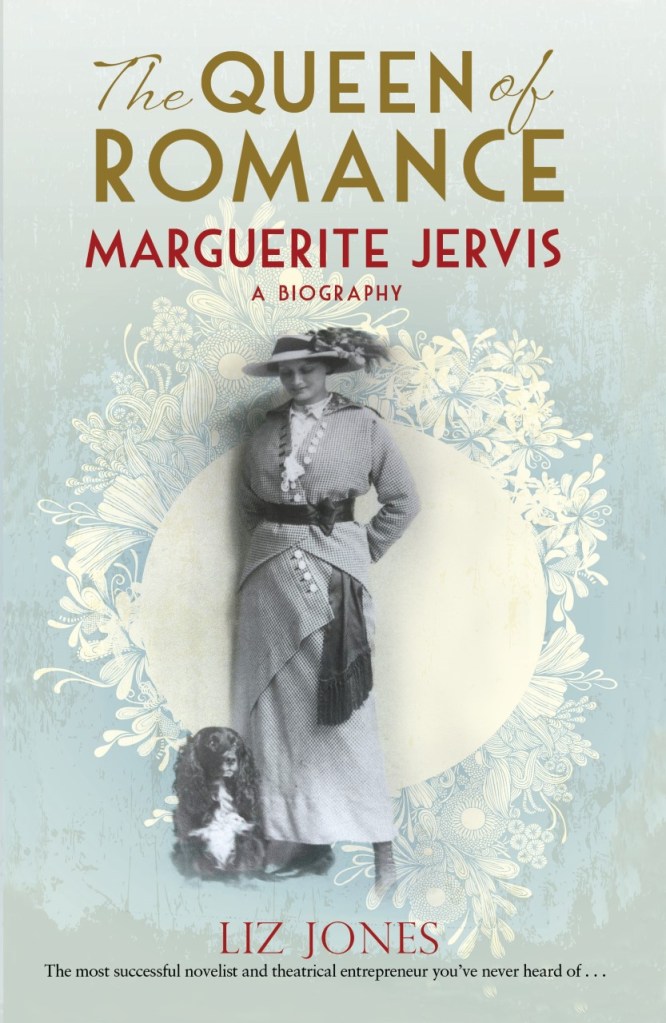
The first biography of the bestselling author and journalist Marguerite Jervis Daughter of an officer of the Indian Medical Corps, Florence Laura Jarvis (1886 – 1964) was born in Marguerite Burma and became one of the most successful novelists of her time .
During the course of her 60-year career, Marguerite published over 150 books, with 11 novels adapted for film, including The Pleasure Garden (1925), the directorial debut of Alfred Hitchcock. In her heyday she sold hundreds of thousands of novels, but is now largely forgotten; under numerous pseudonyms she wrote for newspapers, women’s magazines and the silent movie screen; she married one of Wales most controversial literary figures, Caradoc Evans.
She also trained as an actress and was a theatrical impresario. Known variously as Mrs Caradoc Evans, Oliver Sandys, Countess Barcynska and many other pseudonyms, who was she really?
Liz Jones has dug deep beneath the tale told in Marguerite Jervis’s own somewhat romanticised memoir to reveal what made this driven and determined woman. And what turned her from a spoilt child of the English middle classes to a workaholic who could turn her hand to any literary endeavour and who became a runaway popular success during the most turbulent years of the 20th century.
Liz Jones writes drama and creative non-fiction, reviews, short stories and journalism ranging from Take a Break to New Welsh Review. Along the way she has raised two daughters, tried to change the world, worked in a café-cum-bookshop, a housing association, in community development and lifelong learning. She is now a Teaching Fellow at Aberystwyth University.
My thoughts: this was a really interesting book. I hadn’t heard of Marguerite Jarvis or any of her aliases. Even studying English Literature for years, she never crossed my path as a writer. Which is a shame. Her life was more interesting than fiction. She reinvented herself so many times, as a writer, a “countess”, a theatre owner. Her books were made into films during the silent era, and then adapted into plays for her theatre company.
I really enjoyed learning about this interesting and colourful woman, her life, marriages and work. Her devotion to her last husband, Welsh writer Caradoc Evans, and her son Nicholas meant she never stopped writing, desperate for money to support them. It’s a shame her books seem to be hard to get hold of these days, yes I looked, as while they’re not particularly fashionable, they’re a part of literary history.
*I was kindly gifted a copy of this book in exchange for taking part in the blog tour but all opinions remain my own.
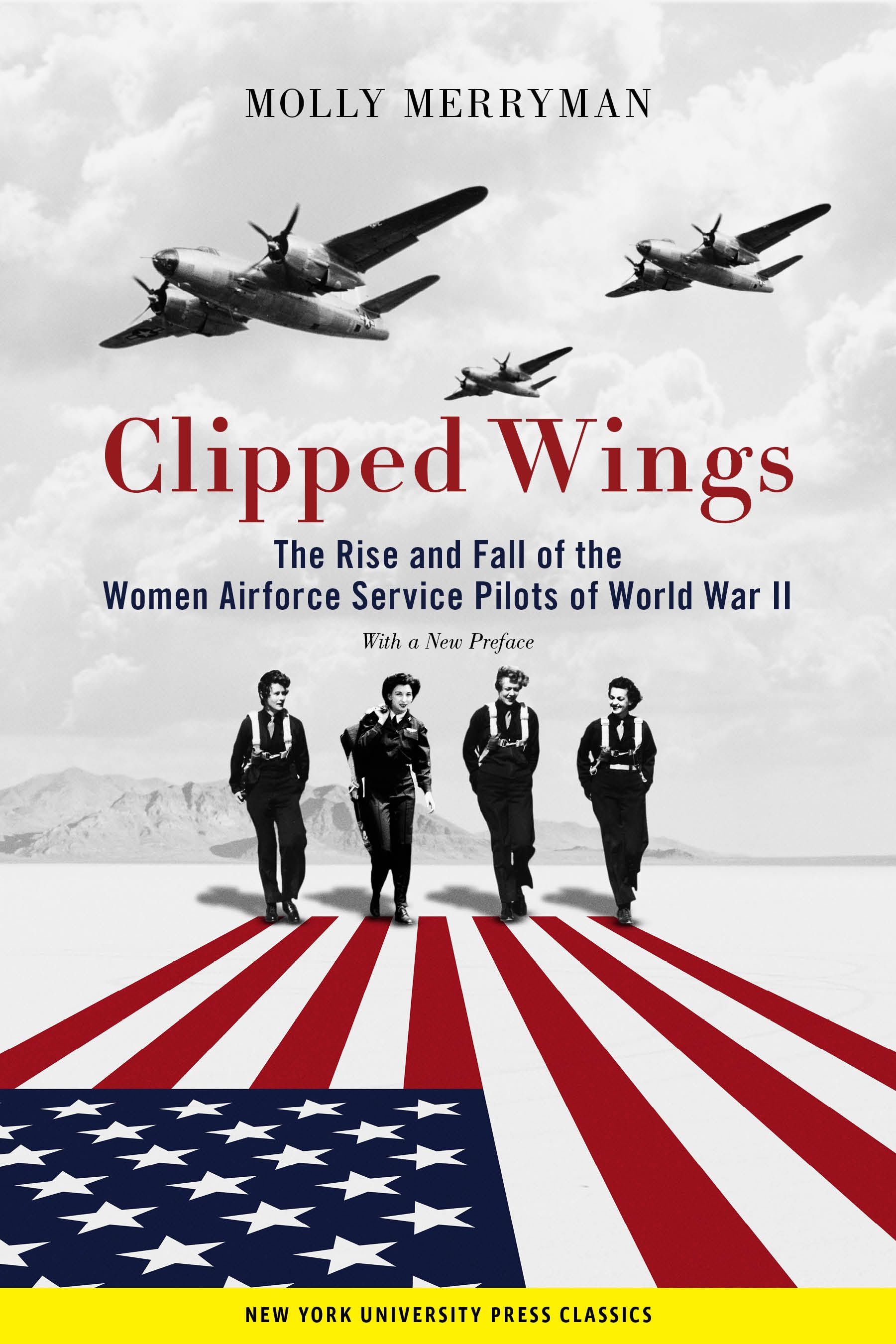
In her exhilerating book Clipped Wings: The Rise and Fall of the Women Airforce Service Pilots of WWII, author Molly Merryman shines light on the critical and dangerous work of the daring female aviators who changed history. New York University Press classics series has just updated the book with Merryman’s reflections on the changes in women’s aviation in the past twenty years. A documentary based on Merryman’s work, Coming Home: Fight For A Legacy, is currently in production.
The WASP directly challenged the assumptions of male supremacy in wartime culture. They flew the fastest fighter planes and heaviest bombers; they test-piloted experimental models and worked in the development of weapons systems. Yet the WASP were the only women’s auxiliary within the armed services of World War II that was not militarized.
In Clipped Wings, Merryman draws upon finally-declassified military documents, congressional records, and interviews with the women who served as WASP during World War II to trace the history of the over one thousand pilots who served their country as the first women to fly military planes. She examines the social pressures that culminated in their disbandment in 1944—even though a wartime need for their services still existed—and documents their struggles and eventual success, in 1977, to gain military status and receive veterans’ benefits.
Airplane ferrying was the initial mission for which WASPs were created, and it would occupy nearly half of all active WASP graduates when the program ended in December 1944. Planes produced in the United States needed to be flown from the factories to air bases at home, in Canada, and overseas. To handle this transportation demand, the ATC hired thousands of male civilian pilots to ferry planes. These male pilots were later commissioned directly into the AAF if they met the requirement and desired commissioning. The WASPs were brought on as ferrying pilots, and by the time they were disbanded in December 1944, they had delivered 12,652 planes on domestic missions. By that time, 141 WASPs were assigned to the ATC. Although they comprised a small percentage of the total Ferrying Division pilots, WASPs had a significant impact. By 1944, WASPs were ferrying the majority of all pursuit planes and were so integrated into the Ferrying Division that their disbandment caused delays in pursuit deliveries.
The days of ferrying pilots were long and unpredictable. At bases that handled a range of planes, pilots did not know from one day to the next what planes they would be flying or how long of a flight to expect. In Minton’s words, “We usually reported to the flight line at seven o’clock in the morning and looked at the board to see what had been assigned us in the way of an airplane, where it went and what we would need in the way of equipment to take along, and then we would go out to find our airplane and sign it out at operations and check it over to be sure everything was okay with the airplane. And then we would take off to wherever the plane was supposed to go.”
Ferrying military aircraft during World War II was not an easy task. The majority of these planes were not equipped with radios, so pilots navigated by comparing air maps with physical cues (highways, mountains, rivers, etc.) or by flying the beam. (The “beam” was a radio transmission of Morse code signals. A grid of such beams was established across the United States. To follow the beam, a pilot would listen on her headphone for aural “blips” or tones to direct her. This required a great deal of concentration and was not always accurate.) Both navigational techniques were difficult, and this was compounded by the facts that many air bases and factories were camouflaged, blackouts were maintained in coastal areas, and the navigational beams were prone to breaking down. Problems sometimes arose with the planes themselves, which ha d been tested at the factories but never flown. Cross-continental flights often took several days, depending on the planes being flown and weather conditions.
In addition, planes equipped with top secret munitions or accessories had to be guarded while on the ground, and WASPs received orders to protect these planes at all cost. WASPs flying these planes were issued .45 caliber pistols and were trained to fire machine guns.
Molly Merryman, Ph.D. is the founding director of the Center for the Study of Gender and Sexuality and an Associate Professor at Kent State University. She is the Historical Research Producer on the upcoming Red Door Films documentary about the WASP, Coming Home: Fight For A Legacy. She has directed and produced nine documentaries that have been broadcast and screened in the United States and United Kingdom. She is the research director for the Queer Britain national LGBT+ museum and is a visiting professor and advisory board member for the Queer History Centre at Goldsmiths, University of London. Merryman is the vice president of the International Visual Sociology Association.
This was really interesting and packed with details from Congressional hearings, people’s memories and official records of the WASPS. At times it was a little hard to engage with all the facts and figures, but I feel like I learnt an awful lot about the fight to allow women to fly, from WW2, right up to recent times.
I am always fascinated by incredibly brave and determined women who repeatedly get shot down and “put in their place” by often incredibly ignorant men who have completely lost sight of the big picture. These women were extraordinary and wanted to fly in combat, just like men, and being smaller and lighter were probably better built for such roles.
A really fascinating insight into the battle for recognition and understanding of how much female pilots could, and indeed have, contributed.
*I was kindly gifted a copy of this book in exchange for taking part in the blog tour but all opinions remain my own.


















 ramblingmads