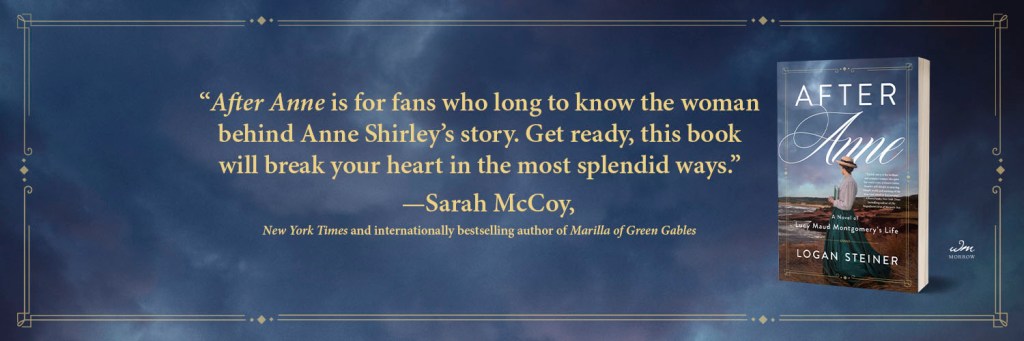
December 1962. EleanorO’Dowd, a middle-aged piano teacher, is found stabbed and bludgeoned to death. As the Great Freeze of 1963 takes hold, local vicar’s daughter Daphne Morgan finds herself forced to navigate the confusing currents of the adult world, where she must face up to her own crimes and what she knows about the murder. A novel about memory and the power of the imagination…
SiânCollins was born in Pembrokeshire and Carmarthenshire. An Edinburgh graduate, she taught Anglo Saxon and Medieval Literature in South Africa, worked as an assistant editor on The Lancet, and ran English and Drama departments in several well-known London secondary schools. She returned to Carmarthenshire to teach, write, and relish life in the beautiful Tywi Valley. Her debut novel, Unleaving, was published in 2019.
My thoughts: seen through the eyes of a child, following the murder of her much disliked piano teacher, this charts the life of a small Welsh town, reeling from the tragedy. The police are convinced a local man – deaf mute Johnny – is their perpetrator, and his inability to communicate makes it all too easy to point the finger at him. But Daphne knows that’s not true, she saw something, or did she?
Meanwhile she and her school friends have worries of their own, have they been cursed? Are they responsible for the village’s recent troubles?
Told with a kind tone and full of the misunderstandings and tiny concerns of children, as well as the growing awareness of the unfairness of life, this is a gentle but moving story of a place and its people.
*I was kindly gifted a copy of this book in exchange for taking part in the blog tour but all opinions remain my own.
A fatal jump. A missing suffragette. An inexplicable murder. London, 1920. When she catches news of a big story, reporter Iris Woodmore rushes to the House of Commons. But it’s a place that holds painful memories. In 1914, her mother died there when she fell into the River Thames during a daring suffragette protest. But in the shadow of Big Ben, a waterman tells Iris her mother didn’t fall – she jumped. Iris discovers that the suffragette with her mother that fateful day has been missing for years, disappearing just after the protest. Desperate to know the truth behind the fatal jump, Iris’s investigation leads her to Crookham Hall, an ancestral home where secrets and lies lead to murder… Purchase
Michelle Salter is a historical crime fiction writer based in northeast Hampshire. Many local locations appear in her mystery novels. She’s also a copywriter and has written features for national magazines. When she’s not writing, Michelle can be found knee-deep in mud at her local nature reserve. She enjoys working with a team of volunteers undertaking conservation activities.
My thoughts: this was a very enjoyable historical crime thriller. Iris is trying to cover a story but the one she really wants answers to is that of her mother’s terrible death, falling into the Thames. But now she has new evidence from a witness – her mother jumped, but why? And where did the other woman, a fellow suffragette, disappear to? Iris is determined to get answers, even if they’re painful to hear.
Two women are contesting an MP’s seat, for the first time and one of them knew her mother. But there’s a lot more going on in this electoral race. Digging into a complicated nest of secrets gives Iris the truth and plenty to cover too. A great start to a new series.
*I was kindly gifted a copy of this book in exchange for taking part in the blog tour but all opinions remain my own.
A dead body. A hoard of forged banknotes. A gangster out for blood. Newcastle, December 1955. Returning home after a weekend away, singer and amateur sleuth Rosie Robson discovers a man lying on a baggage trolley with his throat cut. After the police get involved, an attack on Rosie and her boss prompts Inspector Vic Walton to find a safe house for the pair. But the bad guys seem to be one step ahead of them and Rosie is forced to track down a possible witness to the murder in a bid to learn the truth. Can the canny crooner solve the mystery before a Newcastle gang boss catches up with her? Set on Tyneside, Blood on the Tyne: Red Snow is book #3 in the Rosie Robson Murder Mysteries series. Purchase Link
True-born Geordie Colin Garrow grew up in a former mining town in Northumberland and has worked in a plethora of professions including taxi driver, antiques dealer, drama facilitator, theatre director and fish processor. He has also occasionally masqueraded as a pirate. Colin’s published books include the Watson Letters series, the Terry Bell Mysteries and the Rosie Robson Murder Mysteries. His short stories have appeared in several literary mags, including: SN Review, Flash Fiction Magazine, The Grind, A3 Review, Inkapture and Scribble Magazine. These days he lives in a humble cottage in Northeast Scotland.
My thoughts: this is a fast paced thriller set during one snowy winter in 1955. Without mobile phones or CCTV, the race is on to find a killer. All they can go on is Rosie’s memory and the evidence, all of which points in one direction but the prime suspect says it wasn’t him and scarpers.
Is there a new gang boss making a play for Newcastle? Rumours of a woman with a penchant for red hot pokers and a man with a scarred face have Rosie running scared, nowhere is safe and her friends are at risk too. Can Vic arrest the villains before anyone else gets hurt?
I was totally gripped, the pacing was relentless and I could not put this down. Rosie is a compelling protagonist and her friends and colleagues are a great bunch.
*I was kindly gifted a copy of this book in exchange for taking part in the blog tour but all opinions remain my own.

“Welcome to the Brennenbach of Midnight! The Curse Hours have begun.”
West Germany, 1968
When ten-year-old David Saidel’s parents are murdered, he is sent to live with his grandfather in the anti-Semitic village of Brennenbach. Miserable and lonely, David finds solace in his kindly Grandpa Ernst, who has one strict rule: never go out after midnight.
When David breaks curfew to search for his missing dog, he discovers why Ernst is so serious about his curfew: Brennenbach is cursed. When midnight strikes, the town is thrown back to 1943, the height of Hitler’s reign.
The Nazi ghosts that infest Brennenbach are just as dangerous as they were in life. They’re hunting for David, thinking he is the last member of a family they’ve been ordered to destroy.
Through the help of a little girl named Maria Rahm, David sets out to end the Curse before it claims more victims.
Award-winning author Elyse Hoffman has crafted an expertly woven tale of World War II’s horrors – perfect for readers of Marcus Zusak’s “The Book Thief,” or Michael Reit’s “Beyond the Tracks.”
Check out the wonderful reviews on Goodreads and grab a copy today!
Elyse Hoffman is an award-winning author who strives to tell historical tales with new twists. She loves to meld WWII and Jewish history with fantasy, folklore, and the paranormal. She has written six works of Holocaust historical fiction: The Barracks of the Holocaust five-book series and The Book of Uriel. Elyse’s books are the way to go if you love history and want to read some unique stories.
Spring 1937: Teresa, a young Basque girl, is evacuated to London in the wake of the Guernica bombing. She thinks she has reached safety in the lofty halls of Rochester Place and the soothing arms of Mary Davidson, but trouble seeks her out wherever she goes…
Autumn 2020: Corrine, an emergency services operator, receives a call from a distressed woman called Mary. But when the ambulance arrives at Rochester Place – the address the woman gave them – she is nowhere to be found. No matter how hard she tries to forget, memories of Mary’s raw fear haunt Corinne and secrets, long-hidden in Corinne’s family tree, begin to surface.
Is Mary calling from beyond the grave? And what actually happened at Rochester Place all those years ago?
Set between the dusty halls of Rochester Place and the bustling streets of modern-day Tooting, this emotive, intricately layered mystery tells the spellbinding story of two people, separated by time, yet mysteriously connected through an enchanting Georgian house and the secrets within its walls. The perfect escapist read for fans of Kate Morton, Eve Chase and Lulu Taylor.
My thoughts: inspired by the author’s family, this is a moving and clever timeslip book, set between now and events in the Spanish Civil War and Second World War.
Sadly Spain’s horrific 1930s War is not taught much here, and what little I know I’ve learnt as an adult. But it was the precursor to the horrendous events of WW2, especially the massacre of Guernica. Which is where little Theresa is fleeing from.
Sent to safety in England by her elder sister, Theresa travels by sea with other refugee children. Offered a home by the kind and intriguing Mary, an Irish woman who speaks Basque and lives with her English husband in Rochester Place, she finds herself in a world unlike that she’s known. But Mary has secrets and a past too.
How these two are connected to Corinne, who works as an emergency services call handler, while her wife and sister-in-law run a family restaurant, selling the delicious food their mum used to make. After a strange phone call shakes her, Corinne and her historian uncle Robin look into Rochester Place and its occupants. Then she’s called to Ireland, where her grandmother is ill. And secrets are about to be revealed.
Moving and rather lovely, with several love stories mixed into the history, this is a heartwarming tale of found family, survival and love.
*I was kindly gifted a copy of this book in exchange for taking part in the blog tour but all opinions remain my own.
1933. Hannah Snow is fleeing her unhappy marriage when she finds herself in a small hotel on the banks of Loch Ness. But when a monster is spotted in the depths of the waters, the press descends – and Hannah finds her hiding place is discovered. Someone has been looking for Hannah, and when they find her events will take a devastating turn…
Present day. True crime podcaster Scarlett finds herself intrigued by the mystery of Hannah Snow, wife of a promising government minister who disappeared in 1933 – just months before her husband also went missing, presumed dead. As Scarlett works to uncover the truth, she discovers a tragic family secret, and a story as murky as the depths of the loch where Hannah and her husband were last seen…
My thoughts: I really enjoyed this, Hannah flees her unfortunate marriage for a new life in Scotland on the banks of the Loch Ness, just as monster fever sweeps the land. Can she stay hidden or will someone from her past show up?
True crime podcaster Scarlett is on Hannah’s trail years later. Did she and MP husband Laurie end up in the Loch or did they manage to disappear to new lives back in the 1930s, before the internet and social media would make that impossible?
As Scarlett digs through the archives and talks to locals, falling for a monster hunter and fellow podder along the way, she learns not just some secrets from the past but ones from the present that might make her horrible ex Charlie finally go away.
Fun and cheering, I loved Hannah, a very modern woman who wants to be a journalist and not a trophy wife and certainly not in a sham marriage. Her adventures in Scotland lead to a whole new life and I cheered her, and Scarlett, who also needed a new start, on.
*I was kindly gifted a copy of this book in exchange for taking part in the blog tour but all opinions remain my own.
The King has fled London with the drums of war ringing in his ears. Across the country, lines are being drawn and armies raised.
Influential royalist Lady Carlisle switches sides and presses spice trader Thomas Tallant and his partner Elizabeth Seymour into Parliament’s service.
Soon Thomas faces double-dealing in his hunt for a lethal hoard of gunpowder hidden on the river, while Elizabeth engages in a race against time to locate a hidden sniper picking off Parliamentary officers at will in the city.
The capital also witnesses a vicious gang of jewel thieves take advantage of the city’s chaos to go on the rampage, smashing homes and shops, leaving a trail of destruction in their wake. They hand pick their targets but refrain from selling any of their loot. There are more questions than answers.
When war finally erupts, Elizabeth is caught in the brutalising carnage of Edgehill while Thomas joins the Trained Bands in their defence of the city. As he mans the barricades at Brentford, in a desperate rearguard action to repel Prince Rupert’s surprise attack, he realises the future of London rests in the hands of him and a few hundred troopers.
Meanwhile, Elizabeth believes she has identified the jewel thief and goes underground to trace his hoard.
But all is not as it seems.
Writing has been central to Mike Ward’s professional life. On graduating from university he became a journalist, working in newspapers and for the BBC. He then went into journalism education, teaching and researching journalism practice before becoming head of the UK’s prestigious Journalism School at UCLan. For the last eight years he has run his own content creation company.
My thoughts: we return to Thomas Tallant’s London, in the grips of the English Civil War (Charles I vs. Parliament). London is for Parliament and the King is in Oxford (which he named his capital) with his Royalist soldiers.
Thomas is hired by Parliament to find out where some stolen black powder is being smuggled out of London from, which he does. Getting himself involved with turncoats and conspirators. Can’t see any of today’s MPs on the frontline of a battle wielding a musket somehow!
Meanwhile Elizabeth, Thomas’ friend, has been asked by the King’s physician to assist him in his field hospital. Sickened and saddened by the chaos and death she returns to London angry and traumatised. She’s been tasked to find a jewel thief and us poking around the Goldsmith’s Guild, despite having been warned off. Will this help soothe her after witnessing the brutality of the battlefield?
It was interesting to read about the fighting in Brentford and the taking of Syon House – places I know, and battles that aren’t as well known as Edgehill. The Civil War was a time that saw families divided and brothers on opposite sides. Thomas’ father wants to remain neutral, in the hope that his trading won’t be interrupted, but that’s probably not going to work for long.
The historical facts (the war, the jewel thefts) are real, which adds depth to the story and allows the author to bring things to life that are usually just a list in a textbook. Another enjoyable outing for Thomas and Co.
*I was kindly gifted a copy of this book in exchange for taking part in the blog tour but all opinions remain my own.

Forty years in the making, Bob Mantel’s thrilling debut novel challenges today’s social standards with compelling characters while infusing the Big Apple’s unmistakable presence.
In The Velvet Badge: A New York Noir a tasteless nightclub run by a failed JFK assassination co-conspirator brings out the worst in 1970s New York. Songbird Sadasia Trayne runs into a disco-era buzz saw of wine, women, and murder when she hooks up with the Brooklyn-based creator of a notorious TV sitcom. Her frantic SOS to a long-lost love, the Big Apple’s closeted lesbian Chief of Police Detectives, drives this tale of memory and regret, compromise and topiary, politics and a corrupt press, Kris Kringle and twisted acts of love. Will the headline-grabbing sex crime she sets out to solve max out the Chief’s investigative skills or deep-six her career?
The Velvet Badge combines edge-of-your-seat storytelling with stone-cold hilarity and just a touch of holiday ho-ho-ho. A fast-paced novel embedded with elements of suspense and dark humor, The Velvet Badge is perfect for readers who enjoyed Meatpacking by Michael Heslin, The Burn by Kathleen Kent, or Cold Evidence by Robin James.
Mantel creates a world of mystery while infusing dark comedy in a fresh way. “The novel’s New York episodes were inspired by the 1970s city I lived in during my Columbia College days…I was a classic hick, struggling with classes and discovering the highs and lows of the city. Many of these stories found their way into The Velvet Badge,” he said.
Authentically reflecting the sights and sounds of the city he loves, Mantel’s talent for bringing the diversity of New York to life on the page may seem effortless, but it wasn’t always easy. “Like many other writers, I knew what I wanted to accomplish in my first book but didn’t know how to pull it off,” he said. “I worked on The Velvet Badge, off and on for many years, and even completed several drafts, but never to my satisfaction. I took it up again after I retired in 2017 and, this time, all the missing pieces seemed to fall into place–including an ending that I’d previously been unable to conjure.”
Bob Mantel was educated at Columbia College, where he won the Cornell Woolrich Award for Fiction, and the University of Chicago. He lives in New York and enjoys visiting cities that have ballparks and concert halls. The Velvet Badge is his first novel. Learn more at bobmantel.wordpress.com and follow him on Instagram, Twitter and Facebook.
Bob Mantel Blogger Q&A
How long did it take you to complete The Velvet Badge?
An embarrassingly long time–more than 40 years–although I didn’t work on it steadily and often left it untouched for years. One of my problems was taking Ulysses too much to heart and spending nearly a decade badly imitating Joyce’s prose. I’m sure I’m not alone in this, which is why I call that magnificent book “the great crippler of young adults.” Long story short: you may know what you want to write but have no idea how to bring it off. I completed any number of drafts until I finally figured out a decent ending for the book. After that, everything else finally fell into place.
Have you ever experienced writer’s/creator’s block? How do you get out of it?
Writer’s block for me turns out being a function of not having thought through my material to the point where it’s ready to work on. Whenever one crops up, I make a backup copy of the chapter I’m working on, save it as Chapter X-GARBAGE, then write away as well as I can, not expecting to keep much of what I’m producing. If I keep at it, I eventually understand how I need to shape my material and I can get back to my original draft, revise as needed and move forward.
How much of your work is autobiographical?
All of it, just like every first novel is autobiography. I’ve been inspired and stimulated by the places I’ve lived and the people I’ve known and loved. But I’m not out to draw their portraits “from life.” Instead, I’m interested in drawing on the autobiography of the emotions I felt about them to create unique places and characters that I’m free to work with as I choose.
You use a lot of what used to be called “hard jokes” in your fiction. Are you concerned about offending your readers?
No. The Velvet Badge is a hard-edge black comedy/murder mystery set largely in the 1970s. Much of the book’s humor derives from its describing characters in two ways: first, as they’d be seen in the 1970s and then authorially commenting from the present day. There’s shock value in the first and, hopefully, laughter and healing balm in the second. If any of my readers are looking for hate speech, they should track down the TV channels and websites offering plenty of that these days.
The Velvet Badge seems to contain quite a few references to operas and old movies. Could you mention just a few?
Name-dropping like that isn’t surprising when you consider what was going on in New York back when I first knew it. Take the book’s Oscar Wilde/Richard Strauss “Salome” reference. Back in the day, standing room at the Met was three bucks–and didn’t come with subtitles! More importantly, you could get into any number of revival movie house double features up and down Broadway for only $2.50. There’s a big scene in “Badge” that riffs on “The Pride of The Yankees,” after the book previously sang the praises of the talented, ever-lovely Teresa Wright. Of course, a major plot point in “The Velvet Badge” is a direct homage to Orson Welles’ “Citizen Kane.” And the book closes with a bit of dialogue straight-up stolen from Alida Valli in Carol Reed’s “The Third Man.”
What’s your favorite book-movie adaptation?
I’d have to say it’s a three-way tie between Raymond Chandler and Robert Altman’s “The Long Goodbye,” Thomas Pynchon and Paul Thomas Anderson’s “Inherent Vice” and Larry McMurtry and Peter Bogdanovich’s “The Last Picture Show.” By the way, if anybody wants to buy “The Velvet Badge” movies rights, please give me a call. I’m in the book.
Extract from The Velvet Badge
Faced with life’s deep dish pie of pain, Donny Damon always ordered his slices á la mode. It was a habit he’d acquired from his old man Harry, who’d been born in a land where the streets were paved with gold, days before the Blizzard of ’88 paralyzed the East Coast, and who did little to hang his hat on until 1923, when Harding’s sudden death out west landed brine-faced Coolidge in the Oval Office.
Silent Cal’s pronouncement that “the chief business of the American people is business” was a turning point for Harry Damon, inspiring the colorless street pug to scrape together whatever cash he could, marry the first woman he could fast-talk in front of an altar and make a go of “Damon Truss & Convalescent Supply” on New York’s Lower East Side. The driving force behind this enterprise’s success was the 35-year-old’s decision to have his child bride strut her fine, precocious stuff behind the shop’s plate-glass window, wearing little beyond a leg cast, neck brace and strategically placed Ace bandages. Since such a display was an insult to community standards, it drew the smutty-minded, bogus lame and halt to his establishment from a twelve-block radius and kept its cash register ringing for as long as Olivia Damon continued her risqué showcase.
Harry’s missus gave the act the hook during FDR’s first administration and would eventually divorce her husband claiming alienation of affection. But by then the small business owner hardly even remembered being married and had gone all in on racketeering practices that expanded Damon Truss ten-fold during the Great Depression. By the time the Japanese bombed Pearl Harbor, he was piloting a regional wheelchair powerhouse while also heading a body bag monopoly in New York, Connecticut, and New Jersey. Damon’s stranglehold on these markets, however, couldn’t and didn’t last. America’s entry into World War II gave Feds the excuse they’d been waiting for to nationalize his enterprises rather than let Harry spend the next several years dodging profiteering charges.
Being put out to early pasture may have caught the wheelchair king off guard, but it couldn’t keep him and his enormous wad of buyout cash down for long. Within a few months, Mr. Damon was steering his Studebaker President north along the mighty Hudson to a sleepy river town founded by the Dutch and re-christened by the Brits to honor the neatly trimmed juniper bushes surrounding its village green. Or so the story went.
The actual name change to “Carvéd Hedge” dated only from the 1920s, when those eponymous hedges were first planted. Back then, local politicians and the chamber of commerce decided that a little fudged history would attract new business, along with a better class of people, and make the dusty old place a village to be proud of instead of the shoulder-shrug whistlestop it had been sliding into for decades. This effort hadn’t made much of a difference. But every once in a while, a resident would surprise the neighbors, show some talent or initiative and put the community’s general mediocrity to shame.
Sharpie Bev Boslegovich, for example, parleyed her ability to recognize a born patsy when she saw one into a thriving local real-estate business. So when Harry Damon turned his big sedan onto Main Street in 1942, he couldn’t even put the damn thing in park before “Hiya, handsome! Lookin’ to settle down?” came winging his way from under a mop of Shirley Temple curls.
Since sparkplug Bev believed in telling people what they wanted to hear, she gave a twist to her town’s Jazz Age creation myth that a mark like Damon would be powerless to resist. Namely (“Turn left at this corner!”) that an eyesore property, sitting idle on her books for months, had once been the home of a profligate Tory (“You know, before the Revolution.”) who spent the bulk of his fortune developing a topiary wonderland of trees, bushes and shrubs that a small army of gardeners had stripped, clipped, bent, and chiseled into a stunning array of geometric and animal-shaped confections.
Not a word of this was true, of course, but Bev understood Damon had journeyed to her little piece of heaven on earth because he was in the market for prestige as much as a home. To hear her tell it, the property she was hawking was the true inspiration behind the name of the village that tripped so lightly off her tongue. “Why else would they call it Carvéd Hedge?” Bev demanded as much as wondered.
Moved by the realtor’s aggressive eloquence, Damon’s gullibility made him believe wholeheartedly that the unruly mess he was looking at was precisely the spot where a vital, breathing, European artform had jumped species and taken root in Colonial America. This despite the fact that the “estate,” as Bev called it, was nothing more than a derelict saltbox with a sagging catslide roof, centered on a half-acre lot and thick with oversized, misfit verdure that, if you wanted to believe in it hard enough, at one time might conceivably have served some decorative function. Boslegovich sealed the deal when she told him, “There are some things you just can’t put a price on.” Damon barely flinched when she quoted a ridiculously high ask and bought the place for cash. “None of that buying-on-time crap for me,” he crowed. It was the maraschino cherry topping a forced retirement that had already started to melt.
My thoughts: this was a crazy, black humoured book taking in JFK’s assassination, a nightclub decorated in homage (?) to that event, a singer who might be amazing but who would ever know when she gets involved in the horrific murder of a lesbian TV producer, and turns to her ex – the Velvet Badge of the title – female chief of detectives, Ellia, who grew up in a house with Christmas obsessed parents and is still scarred by her younger brother’s death.
The murder seems fairly straightforward – the laundry delivery man fits the detective’s motive and suspicions very well, maybe a little too well. But as long as there’s no murder similar to this, he’ll do. There are other bodies, but if you can’t find them, are they there?
A local “businessman” has an interesting story to tell, tying up a few loose ends, but the damage is done and various people (like the mayor) just want this all to go away. A wandering, freewheeling format, slowly connecting the characters together is a bit confusing at first but then brings it all together at The Umbrella Man.
*I was kindly gifted a copy of this book in exchange for taking part in the blog tour but all opinions remain my own.
One for sorrow, two for spice triggers a game of three blind mice.
While vacationing in New England, PI Jax Diamond and his courageous canine partner, Ace, bite off more than they can chew when two small town deaths reveal two big time killers, and the locals don’t take too kindly to strangers.
Laura Graystone, Broadway star, auto expert, and Jax’s heartthrob, is once again front and center digging for clues while trying to ditch an old boyfriend. That is, until her brother becomes Jax’s prime suspect. Then all hell breaks loose, and Ace is left in the lurch, tracking down leads with his new sidekick, Susie.
A crazy duet of crimes sends Jax, Laura and Ace into a tailspin in small-town USA during the Roaring Twenties. Where no one is above the law, everyone is a suspect, and time is running out before the clock strikes one.
Award-winning author Gail Meath writes historical romance novels that will whisk you away to another time and place in history where you will meet fascinating characters, both fictional and real, who will capture your heart and soul. Meath loves writing about little or unknown people, places and events in history, rather than relying on the typical stories and settings.
My thoughts: another cracking case for Jax and Co, most importantly Ace, always the best canine PI the Roaring Twenties has. Things are going great till they’re very much not and Jax and Laura find themselves on opposite sides of the case. Ace is helping new pal Susie, while the lovebirds are at odds and the clock is ticking.
I love this team, obviously Ace makes them extra good at crime solving. This was another corker and the historic setting is a bonus as I’m a history nerd!
*I was kindly gifted a copy of this book in exchange for taking part in the blog tour but all opinions remain my own.

Erdington, September 1944 As events in Europe begin to turn in favour of the Allies, Chief Inspector Mason of Erdington Police Station is once more prevailed upon to solve a seemingly impossible case. Called to the local mortuary where a man’s body lies, shockingly bent double and lacking any form of identification, Mason and O’Rourke find themselves at Castle Bromwich aerodrome seeking answers that seem out of reach to them. The men and women of the royal air force stationed there are their prime suspects. Or are they? Was the man a spy, killed on the orders of some higher authority, or is the place his body was found irrelevant? And why do none of the men and women at the aerodrome recognise the dead man? Mason, fearing a repeat of the cold case that dogged his career for two decades and that he’s only just solved, is determined to do all he can to uncover the identity of the dead man, and to find out why he was killed and abandoned in such a bizarre way, even as Smythe demands he spends his time solving the counterfeiting case that is leaving local shopkeepers out of pocket. Join Mason and O’Rourke as they once more attempt to solve the impossible in 1940s Erdington. Purchase
MJ Porter is the author of many historical novels set predominantly in Seventh to Eleventh-Century England, as well as three twentieth-century mysteries. Raised in the shadow of a building that was believed to house the bones of long-dead Kings of Mercia, meant that the author’s writing destiny was set.
My thoughts: this was a good old-fashioned whodunnit, with an intriguing victim – a man with no identifying documents or even clothes, found bent double near the airfield in wartime. Easy to see why Mason and O’Rourke look closely at the RAF stationed there.
Theres other strange goings on too, someone is tampering with the AA’s road side boxes, and there’s still a case Mason doesn’t even want to be investigating to be resolved – Jones would love the counterfeiting case.
But there’s more crime than coppers, so Mason, aided by the very resourceful O’Rourke (not limited to filing and tea making as sadly female police officers really were for a long time) to solve all of these cases and identify the mysterious dead man in order to return him to his family and find his killer. Highly enjoyable.
*I was kindly gifted a copy of this book in exchange for taking part in the blog tour but all opinions remain my own.