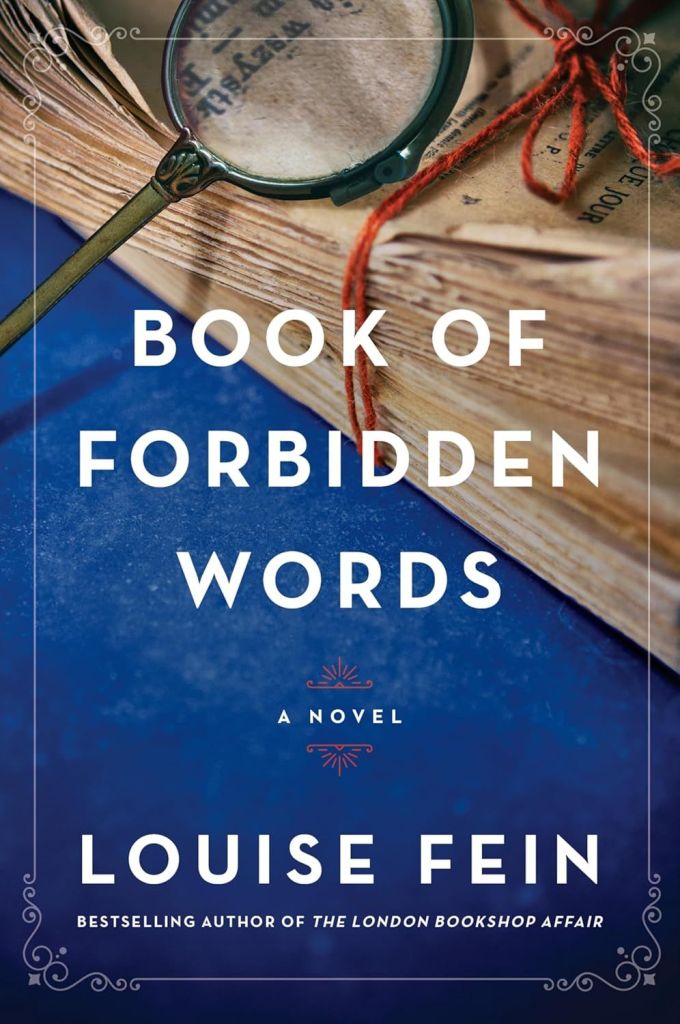
“What power lay there in words on a page. And with that thought, Charlotte knew she would not rest until she had seen what was in the manuscript that Lysbette so desperately wanted to preserve in print.”
1552, Paris: Against a backdrop of turmoil, suspicion, and paranoia, the printing press is quickly spreading new ideas across Europe, threatening the power of church and state and unleashing a wave of book burning and heretic hunting. When frightened ex-nun Lysbette Angiers arrives one day at Charlotte Guillard’s famous printing shop with her manuscript, neither woman knows just how far the powerful elite will go to prevent the spread of Lysbette’s audacious ideas.
1952, New York: Milly Bennett, lonely and unmoored, is a seemingly ordinary housewife with a secretive past. Balancing the day-to-day boredom of keeping house and struggling to find her way with the mothers at her children’s school, she finds her life taking an unexpected turn as conspiracies spread amidst the paranoid clamors of McCarthy’s America. When a relic from her past presents her with a 400-year-old manuscript to decipher, she is reluctantly pulled into a vortex of danger that threatens to shatter her world.
From the risky backstreets of sixteenth-century Paris to the unpredictable suburbs of midtwentieth century New York, the stakes couldn’t be higher when, 400 years apart, Milly, Lysbette, and Charlotte each face a reality where the spread of ideas are feared and every effort is made to suppress them.
Dramatic and affecting, and inspired by the real-life encrypted Voynich manuscript, Book of Forbidden Words is both an engrossing story about a timeless struggle that echoes through the ages and a testament to the indomitable spirit of those who dare to let their words be heard.
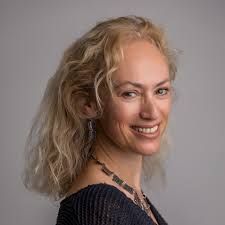
Louise Fein is the author of Daughter of the Reich, which has been published in thirteen territories, the international bestseller The Hidden Child, and The London Bookshop Affair. She holds an MA in Creative Writing from St Mary’s University. She lives in Surrey, UK, with her family.
My thoughts: I really enjoyed this book, it wove a fascinating story through the lives of three women whose lives are affected by the manuscript.
Lysbette was a ward of Thomas More, who inspired by his Utopia she creates her incredible document, offering a proto-feminist idyll, a world where women are not at the whims of men.
Charlotte, based on a real life historical figure, is the person Lysbette entrusts her manuscript to, asking for it to be printed shortly before she is tragically murdered.
Finally the manuscript resurfaces 400 years later and is given to Milly, who once worked at Bletchley Park, with the request that she attempt to decode it and find out what is contained within. She was once a bit of an expert in Ancient Greek and Latin, before the war and her marriage. Her language skills come back to her as she attempts to interpret the secrets hidden in Lysbette’s work.
All three women face adversity and are overlooked and poorly treated by the men around them. Each is ahead of her time in so many ways.
Lysbette’s incredible writing was too much for her own time, but could have been seen as incendiary in the tense religious and political environment she lives in. As a practicing Catholic and former nun in newly Protestant England, she runs a terrible risk. Forced into an unwanted marriage with a violent man, she takes a risk in taking the manuscript to Charlotte.
Charlotte in her turn is already on the list of subversives for publishing books that the church disapproves of. Her printers is raided following a supposed tip off that she’s once again printing illegal works. But her decision to produce a singular copy of Lysbette’s text, encoded in the hope that one day the world will be ready for it, is still incredibly brave and surprising.
Milly was probably my favourite character. Having worked at Bletchley Park decoding the messages of the Nazi war machine, and with an unfinished degree in Classics, she’s a bored and frustrated 50s housewife, trapped in America’s new suburbia.
Being given the mysterious manuscript by her former boss changes everything. It’s the height of McCarthyism and the world is filled with conspiracies and neighbours watching each other. Milly already doesn’t fit in, and her preoccupation with the manuscript looks suspicious to the paranoid residents of the town.
Her only real friends, librarian Susan and editor Myra, are also under investigation as ‘subversives’. Because anyone, especially women, who don’t fit into the mould, can’t be trusted.
There is plenty to make me angry, because it doesn’t feel like much has changed sometimes, and it’s so frustrating that even today, something like Lysbette’s incredible manuscript would still be considered questionable. All the progress we’ve made so far, and a women led Utopia would still be seen as too much.
It’s a really, really good book, and I am fascinated by the inspiration for it, the as yet unencrypted Voynich manuscript, which might also be written by a woman or women, and might even contain something as incredible as the one in this book.
*I was kindly gifted a copy of this book in exchange for taking part in this blog tour, but all opinions remain my own.

 ramblingmads