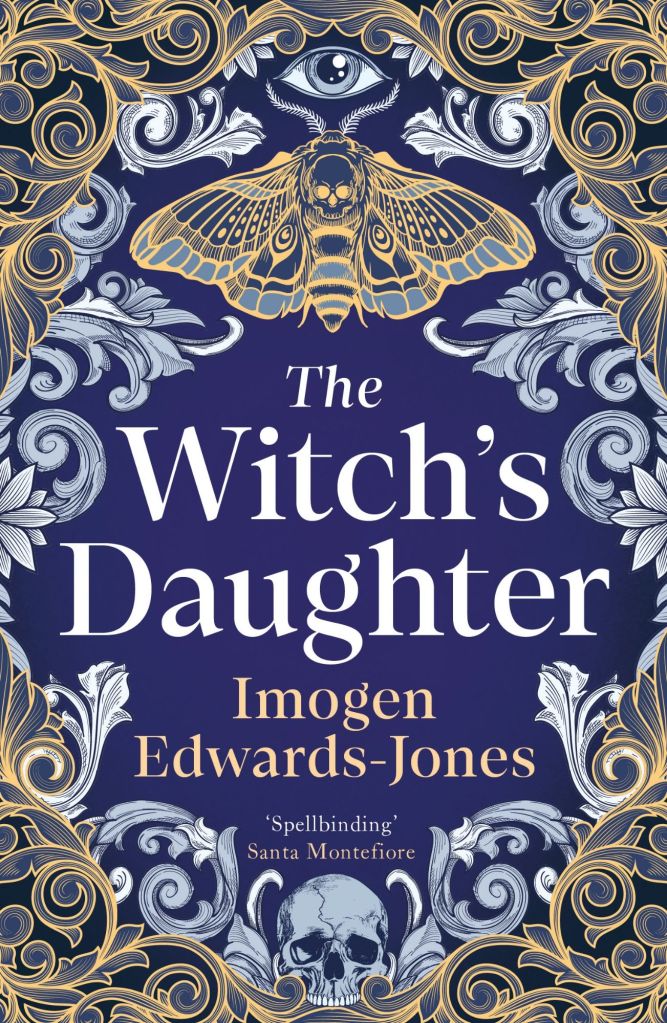


A city burning. A revolution raging. A woman on the run.
Nadezhda has never wanted to be a witch. But the occult is in her blood. Her mother, Militza, conjured Rasputin and introduced him into the Romanov court, releasing the devil himself.
Now he is dead, but Militza still dreams of him – stalking her sleep and haunting her waking hours. As Petrograd burns and the Russian Empire crumbles, Nadezhda escapes through the capital, concealing a book of generational magic. But as danger grows closer, she may be forced to embrace her heritage to save what she loves most…
Based on a true story, The Witch’s Daughter is an epic tale of women rising from the ashes of an empire, perfect for fans of Elodie Harper’s The Wolf Den and Madeline Miller’s Circe.



Imogen Edwards-Jones studied Russian at Bristol University. Her first book, The Taming of Eagles, was about the first 100 days of the collapse of communism. A writer and journalist, she has travelled extensively within the old Soviet Union, studying in Kyiv. She is the author of twenty books including the best-selling Babylon series. Married with two children, Imogen lives in London. She is also a member of the London College of Psychic Studies and an honorary Cossack. Her latest novel, The Witch’s Daughter, is the sequel to The Witches of St Petersburg.
My thoughts: I was really excited to read this book, I am a huge Russian history nerd and have been to St Petersburg some years ago, and even been to the palace that features in the opening of this book, where Rasputin was killed. It’s very creepy, our tour guide was a descendant of the Prince who organised the murder. And behind a door on the way out is a terrifying waxwork figure of the monk himself. I think she kept it there to traumatise visitors. It worked!
This is the sequel to The Witches of St Petersburg, but you can read it as a standalone if you haven’t read the first book (but I also recommend it). Opening with the dramatic death of the monk many blamed for the Romanovs’ downfall (he was poisoned, shot and drowned) is very dramatic, winter on the river Nev, beautiful and deadly.
It’s 1916, the First World War is consuming millions of young men from across Europe, including Russia, unrest is gathering as the serfs finally have enough of their aristocratic masters, the boyars and princes of the Russian Empire, there have been poor harvests, people are starving but the Imperial Family continue to throw parties and enjoy life.
As the wartime years gather pace, so do the Bolsheviks, including Vladimir Lenin, and the tide turns against the Romanov dynasty. It can be hard to feel sorry for them but when you read about the deaths, torture and imprisonment, including children, you do, all their wealth and privilege did not stop them being horrifically murdered (the deaths of the Tsar and Tsarina’s siblings, burnt alive in a mine shaft are particularly gruesome and cruel).
I have been to Peter and Paul Fortress where the Romanovs were interred after their bodies were recovered from Ekaterinberg, they lie under huge marble blocks in an austere and silent chapel, far more fitting than the holes they were thrown into by the furious soldiers.
The family members that survived, rescued from house arrest in Crimea, by the British navy, are the ones this story focuses on, the Dowager Empress never truly believing her son the Tsar, and his family had been murdered. Terrified and traumatised the extended remaining royals stayed in their summer homes, guarded by soldiers, surrounded by their enemies, the chef is something of a hero, valiantly scrounging up meals from potatoes and a few bits and pieces in the kitchen, providing a feast from almost nothing.
Militza and Stana are survivors, but the life their children are living is tough and frightening, Nadezhda loses her first love to war, and almost loses her second to the revolution. Struggling to survive in Yalta, she finally embraces the gifts of her mother’s line, the witchcraft she has long denied.
There is tragedy and heartbreak aplenty as the Russian Revolution takes grip, it’s something when the German army are seen as heroes, arriving to relieve the house arrest of the family and negotiate their eventual release.
This was a fascinating read, seeing the Revolution from a very different angle, not that of the Bolsheviks or the Soviets but from the perspective of the extended Romanov family, those that survived the horrific deaths of so many.

*I was kindly gifted a copy of this book in exchange for taking part in this blog tour, but all opinions remain my own.

 ramblingmads
Omg that coverrrr! 😍
LikeLiked by 1 person