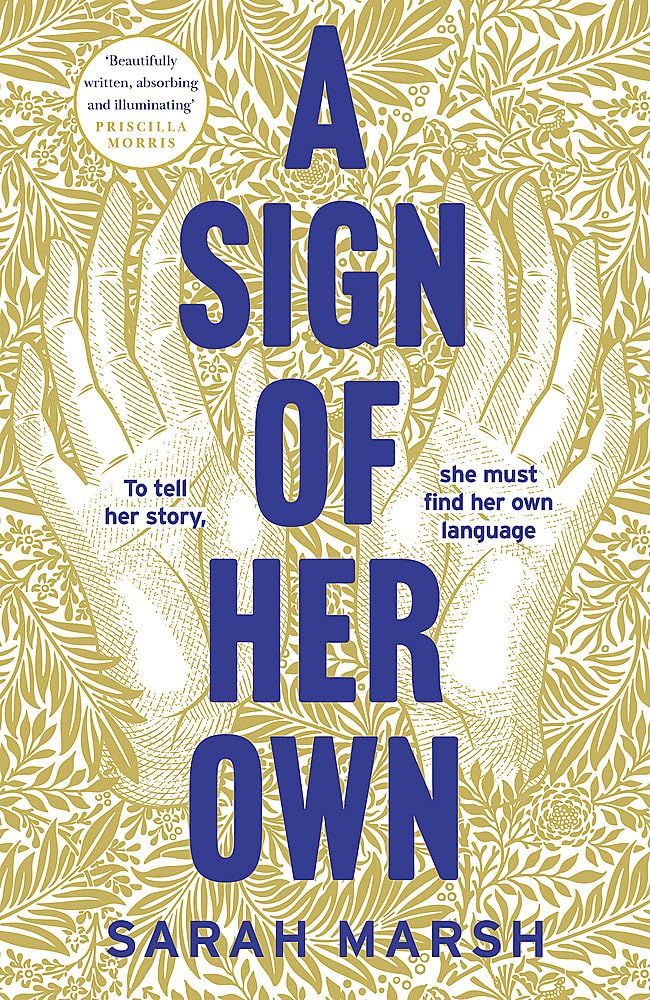
Ellen Lark is on the verge of marriage when she and her fiancé receive an unexpected visit from Alexander Graham Bell.
Ellen knows immediately what Bell really wants from her. Ellen is deaf, and for a time was Bell’s student in a technique called Visible Speech. As he instructed her in speaking, Bell also confided in her about his dream of producing a device which would transmit the human voice along a wire: the telephone. Now, on the cusp of wealth and renown, Bell wants Ellen to speak up in support of his claim to the patent to the telephone, which is being challenged by rivals.
But Ellen has a different story to tell: that of how Bell betrayed her, and other deaf pupils, in pursuit of ambition and personal gain, and cut Ellen off from a community in which she had come to feel truly at home. It is a story no one around Ellen seems to want to hear – but there may never be a more important time for her to tell it.
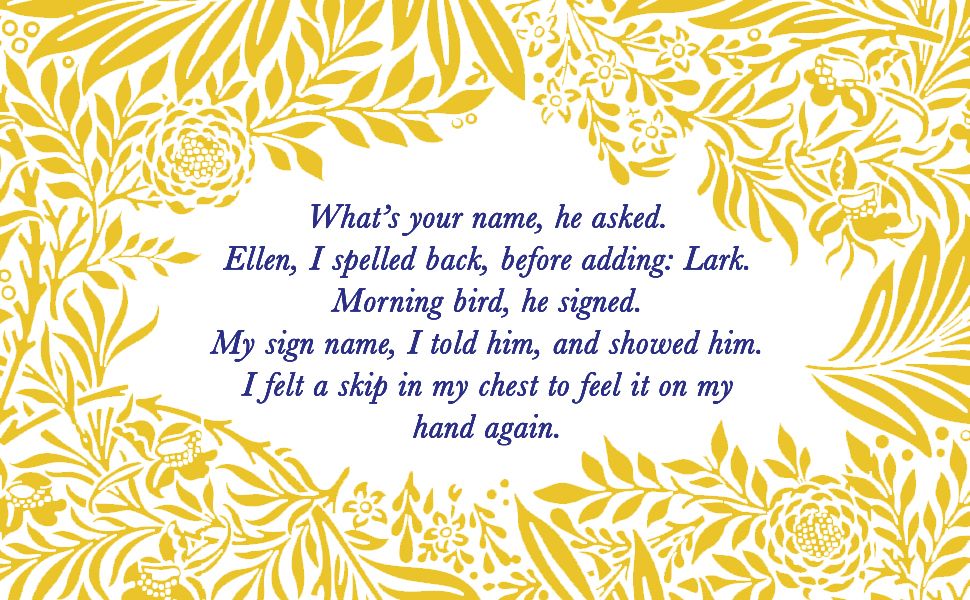

Sarah Marsh was shortlisted for the Lucy Cavendish prize in 2019 and selected for the London Library Emerging Writers programme in 2020. A Sign of Her Own is her first novel, inspired by her experiences of growing up deaf and her family’s history of deafness. She lives in London.

My thoughts: I knew of Alexander Graham Bell as the Scottish born inventor of the telephone, as I’m sure many people do, but not that he worked with D/deaf people and taught something called Visible Speech – essentially getting his students to speak by teaching them the shapes of letters and words in the mouth – but they still couldn’t understand another person.
I used some of his techniques as an ESL teacher, teaching English, when it comes to voiced and invoiced letters – B and P – for example. Ellen compiles lists of homophenes, words that appear the same when lipreading, which are harder to parse, for Bell, and writes an essay he never publishes as promised, on the subject. It’s an early sign of his reluctance to really engage with the deaf community.
Sign language is a valid and completely legitimate way of communicating, but it wasn’t always so. Deaf students were banned from using their hands in schools and expected to learn to speak, and lip read the responses. Through the characters of Ellen and Frank, both of whom attended these Oral Schools, the story of how sign language was oppressed is told.
Much like any language, it has its own rules, grammar and syntax – and varies both nationally and even regionally. BSL (British Sign Language) is not the same as ASL or AusLan (American Sign Language and Australian Sign Language), nor is it the same as spoken English, much as American or Australian English varies from British English, despite being nominally the same.
Ellen speaks both ASL and BSL. Her mother is British, and while she grows up in America, she moves to Britain and learns the signs. She is lucky to be exposed to other members of the deaf community and to have a supportive and loving mother, who understands when she quits her lessons with Bell. Visible Speech, which gives him the idea for the telephone, feels to Ellen in the end, a betrayal of the deaf community and sign language.
This is a really fascinating look at the history of the deaf community more than it is a book about Bell, and I really liked Ellen and her story. Bell is apparently quite a controversial figure in deaf history, with his insistence on speech and dislike of sign language, even after working with deaf people and being married to a deaf woman. Ellen may be the fictional character but she was much more appealing and likeable than the real life one, who doesn’t come across well at all.
*I was kindly gifted a copy of this book in exchange for taking part in this blog tour, but all opinions remain my own.

 ramblingmads